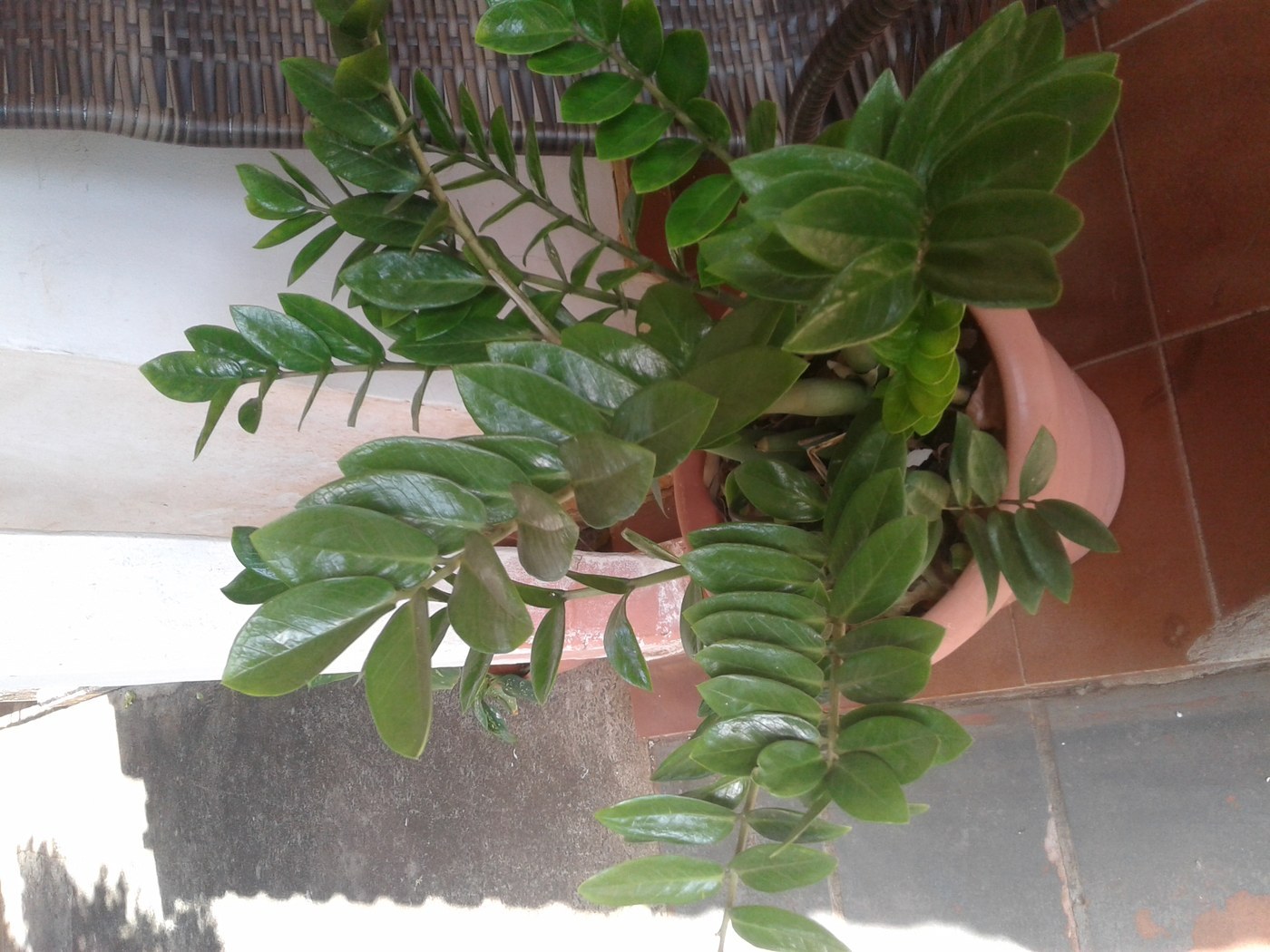
ZZ Plant
Zamioculcas zamiifolia
The ZZ plant is an exceptionally tough houseplant with glossy, waxy leaves and thick water-storing rhizomes that let it survive drought and low light. It is nearly indestructible and ideal for beginners or neglectful owners.
- Light
- Low to bright indirect light
- Water
- Sparingly; let soil dry
- Difficulty
- Easy
Got a plant like this?
Identify any plant from a photo, free.
Overview
The ZZ plant (Zamioculcas zamiifolia) is an evergreen perennial in the arum family, native to eastern Africa. Its abbreviated name comes from its tongue-twisting botanical name.
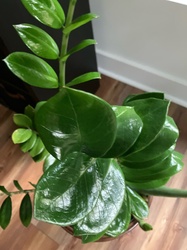
It grows from thick underground rhizomes that store water, allowing it to tolerate extended drought and very low light — earning it nicknames like the 'eternity plant.' Its stems are lined with paired, glossy leaflets that look almost artificial in their sheen.
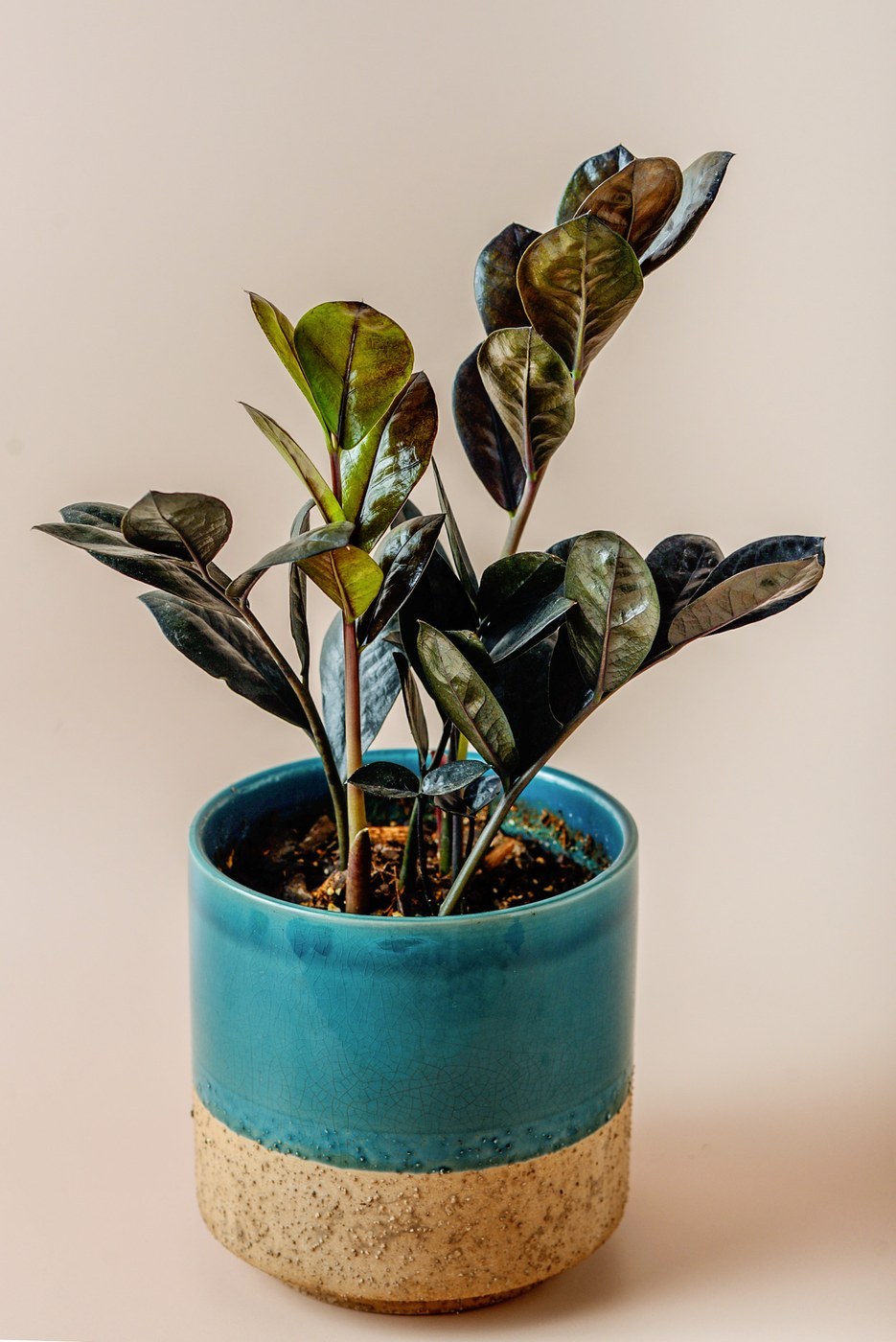
A newer dark cultivar, 'Raven,' emerges bright green and matures to near-black foliage. The ZZ plant is among the most low-maintenance houseplants available.
How to identify it
- Leaves: Glossy, dark green, oval leaflets arranged in pairs along arching stems; thick and waxy with a near-plastic sheen
- Stems: Smooth, upright to arching, thickened at the base
- Rhizomes: Large, potato-like underground rhizomes that store water
- Habit: Upright clumping, typically 2-3 feet tall indoors
- Cultivars: 'Raven' features near-black mature foliage
Care & growing
Light: Tolerates low light very well but grows fastest in bright, indirect light. Avoid direct sun.
Water: Water sparingly, letting the soil dry out almost completely between waterings — typically every 2-4 weeks. Overwatering is the only reliable way to kill it.
Soil: Well-draining potting mix.
Temperature: Prefers 60-80°F (15-27°C).
Feeding: Light feeding once or twice during the growing season.
Propagation: Divide the rhizomes, or root individual leaflets in soil (slow but reliable).
Habitat & origin
Zamioculcas zamiifolia is native to eastern Africa, from Kenya and Tanzania (including Zanzibar) south to South Africa, where it grows in dry grasslands and forest, surviving long dry seasons thanks to its water-storing rhizomes.
It is grown outdoors only in frost-free tropical climates and otherwise worldwide as a hardy, low-light houseplant.
Frequently asked questions
How often should I water a ZZ plant?
Only when the soil is nearly dry, roughly every 2-4 weeks. It stores water in its rhizomes and is very drought tolerant.
Can a ZZ plant survive in low light?
Yes, it is one of the best plants for low-light rooms, though it grows faster in bright, indirect light.
How do I recognize a ZZ plant?
Look for arching stems lined with paired, glossy, waxy dark-green oval leaflets, rising from thick potato-like underground rhizomes.
Why are the leaves turning yellow?
Yellowing leaves are almost always a sign of overwatering and root rot. Let the soil dry out more between waterings.
ZZ Plant guides
In-depth guides for identifying, growing, and caring for ZZ Plant.
How to Care for ZZ Plant
The ZZ plant (Zamioculcas zamiifolia) is a nearly indestructible houseplant that thrives on low light and infrequent watering.
ZZ Plant Identification Guide
Identify the ZZ plant (Zamioculcas zamiifolia) by its glossy, stiff, feather-like leaflets on upright fleshy stems and its potato-like underground rhizomes.
ZZ Plant identified by the community
Real specimens identified with Plant Identifier.