ZZ Plant Identification Guide
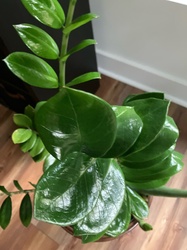
Identify the ZZ plant (Zamioculcas zamiifolia) by its glossy, stiff, feather-like leaflets on upright fleshy stems and its potato-like underground rhizomes.
Read the full ZZ Plant encyclopedia entry →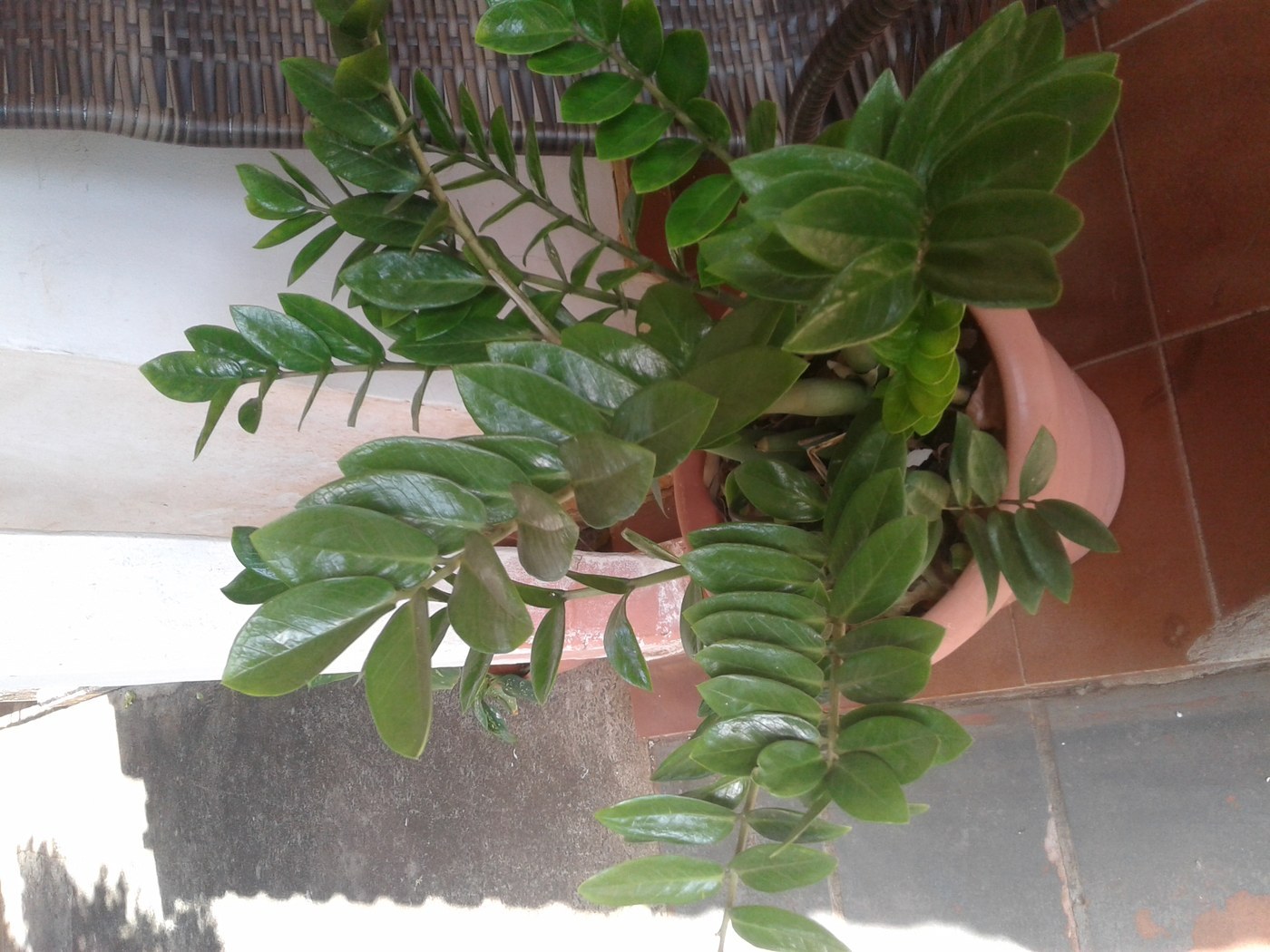
Key Identifying Features
The ZZ plant (Zamioculcas zamiifolia) is identified by:
- Upright, arching stems lined with pairs of glossy, dark green, oval leaflets — like a thick, waxy feather.
- A stiff, almost artificial-looking shine on the foliage.
- Plump, water-storing stems and underground rhizomes.
Its highly symmetrical, lacquered look often makes people think it's fake.
Leaves & Stems
What looks like a stem is actually a single pinnately compound leaf: a thick fleshy rachis bearing 6–8 pairs of smooth, teardrop-shaped leaflets, each waxy and rigid. These leaves arise directly from a large potato-like rhizome at soil level that stores water, letting the plant survive long droughts.
Leaves are bright to deep green and very glossy; the dark cultivar 'Raven' emerges green and matures to near-black. The leaf bases are swollen and the whole leaf can reach 40–90 cm (1.5–3 ft). Snapping a leaflet shows it's juicy and firm.
Flowers & Fruit
Flowering is uncommon indoors but does occur: a small, pale green-to-bronze aroid spadix partly hidden by a short, hood-like spathe, usually tucked low among the leaf bases near the soil. It's easy to miss and not a primary ID feature.
How to Tell It Apart from Look-Alikes
- Cycads / sago palm: also feather-like, but cycad leaflets are stiff, narrow, and often spine-tipped, the plant has a woody trunk, and it lacks the high gloss and rhizome.
- Zamia (a true cycad): superficially similar name and look but tougher, leathery leaflets and cone reproduction.
- Ferns: soft, matte fronds with spore dots underneath — never the thick, waxy, succulent leaflets of a ZZ.
The deciding trait: glossy waxy oval leaflets on a fleshy stem rising from a fat rhizome = ZZ plant.
Where You'll Find It
Native to dry grassland and forest in eastern Africa (Kenya to South Africa). Worldwide it's prized as a nearly indestructible low-light, drought-tolerant houseplant and office plant. Outdoors it grows only in warm, frost-free climates (USDA zones 9–11).
Quick ID Checklist
- Upright, arching feather-like compound leaves
- Glossy, waxy, stiff oval leaflets in pairs
- Fleshy stems swollen at the base
- Grows from a potato-like rhizome
- Looks almost artificial; very drought-tolerant
A stiff, lacquer-shiny plant with feather-arranged leaflets on succulent upright stems from a fat rhizome is the ZZ plant.
Frequently asked questions
Is the ZZ plant's stem really a leaf?
Yes. Each upright 'stem' is actually one large pinnately compound leaf, with the paired leaflets attached to a fleshy central rachis. The true stem is the rhizome below the soil.
How do I tell a ZZ plant from a sago palm?
The ZZ has soft-looking but waxy, glossy oval leaflets and a fleshy rhizome, while a sago palm (a cycad) has stiff, narrow, often sharp-tipped leaflets and a woody trunk. The ZZ's high-gloss finish is a giveaway.
Why does my ZZ plant look fake?
Its leaflets are exceptionally smooth, symmetrical, and waxy, which gives a plastic-like sheen. This natural glossiness, not artificiality, is one of its identifying features.
How big does a ZZ plant get?
Each upright compound leaf can reach about 40 to 90 cm (1.5 to 3 ft) long, and the plant grows in a clumping rosette from a thick, potato-like underground rhizome.
ZZ Plant identified by the community
Recent ZZ Plant specimens identified with Plant Identifier.