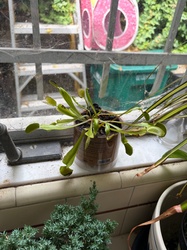
How to Care for Venus Flytrap
Grow Dionaea muscipula, the Venus Flytrap, with full sun, pure mineral-free water, nutrient-poor soil, and a winter dormancy.
Read the full Venus Flytrap encyclopedia entry →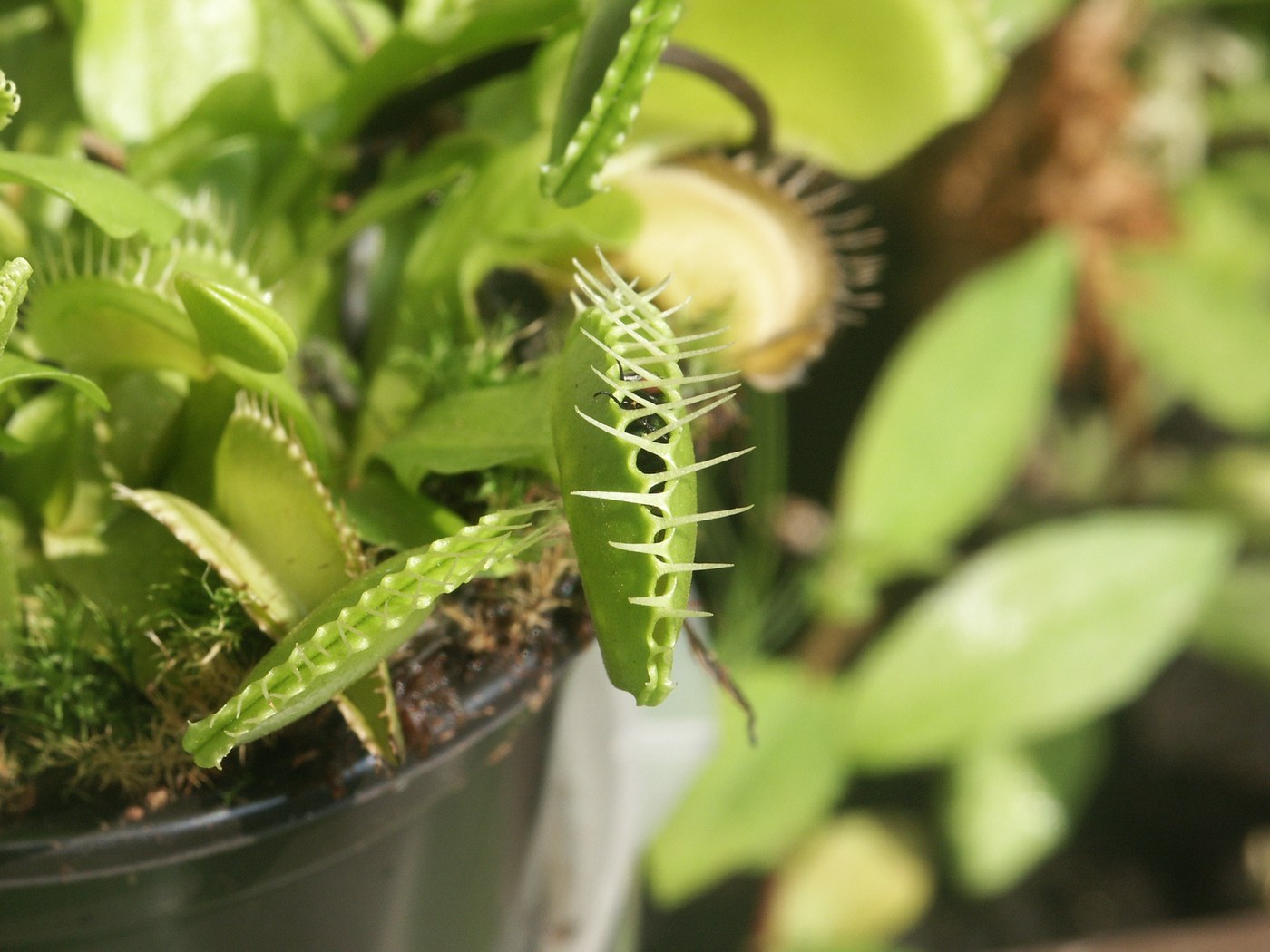
The Venus Flytrap (Dionaea muscipula) is a fascinating carnivorous plant with hinged, jaw-like traps that snap shut. It has very specific needs and is considered challenging, but consistent conditions make it rewarding to grow.
Light
Give the flytrap as much light as possible: full sun or the brightest window you have, ideally several hours of direct sun daily. Strong light produces vigorous traps with rich red interiors and short, sturdy leaves. In weak light the plant becomes pale, stretched, and floppy. Outdoors in a sunny spot during the growing season is ideal; indoors, supplement with a strong grow light if a bright sunny window is not available.
Water
Keep the soil consistently moist to wet using only rainwater, distilled water, or reverse-osmosis water. Tap water and mineral-rich water contain salts that accumulate and harm the plant. The classic method is to stand the pot in a shallow tray of pure water so the soil wicks moisture upward. Reduce (but do not eliminate) moisture during winter dormancy, keeping the soil just damp.
Soil & Potting
Use a nutrient-poor, mineral-free medium: a mix of sphagnum peat moss or long-fibered sphagnum with perlite or silica sand. Never use regular potting soil, compost, or fertilizer-enriched mixes, which will burn the roots. Use tall plastic pots (the roots run deep) with drainage, standing in a water tray.
Humidity & Temperature
The flytrap enjoys warm temperatures during the growing season and tolerates a wide range as long as light and water are right. It does not require exceptionally high humidity if kept properly watered. Critically, it needs a cool winter dormancy of several weeks to a few months with temperatures near or slightly above freezing to stay healthy long term.
Feeding
Do not add fertilizer to the soil. Grown outdoors in sun, the plant catches its own insects and needs no help. Indoors without access to insects, you can occasionally offer a small live or freshly killed insect to an individual trap, but this is optional; light is far more important than feeding. Do not overstimulate traps, as each trap can only close a limited number of times before dying.
Propagation
Propagate by dividing offsets from the rhizome in spring, or grow from leaf pullings taken with a bit of the white base, laid on damp sphagnum. Mature plants also produce flower stalks that yield seed, though flowering can drain a plant, so many growers cut the stalk off to redirect energy into the traps.
Repotting / Pruning
Repot every year or two in spring using fresh mineral-free medium, which prevents salt buildup and refreshes the peat. Handle the roots gently. Trim off blackened, spent traps and dead leaves regularly; it is normal for individual traps to blacken and die after catching prey or with age.
Common Problems & Pests
The most common failures are using tap water or fertilizer and skipping winter dormancy. Blackening traps are often normal turnover but can indicate mineral stress if widespread. Watch for aphids and fungus gnats, and for fungal rot in stagnant, overly warm, poorly lit conditions. Bright light and pure water prevent most problems.
Seasonal Care Tips
During spring and summer, maximize sun and keep the tray topped with pure water. In fall the plant naturally slows and forms smaller ground-hugging leaves as it enters dormancy; provide a cool rest through winter with reduced watering, then resume full care as growth restarts in spring.
Frequently asked questions
What kind of water should I use for a Venus Flytrap?
Use only rainwater, distilled water, or reverse-osmosis water. Tap and mineral water contain salts that build up in the soil and damage the plant.
Why are the traps on my Venus Flytrap turning black?
Individual traps blacken and die naturally after catching prey or with age, which is normal. Widespread blackening can signal mineral-laden water, too little light, or missed dormancy.
Does a Venus Flytrap need winter dormancy?
Yes. It requires a cool rest of several weeks to a few months near freezing each winter. Skipping dormancy weakens the plant over time. Keep the soil just damp during this period.
Why is my Venus Flytrap floppy and pale?
Weak, stretched, pale growth means too little light. Move it to full sun or add a strong grow light; healthy flytraps grow short, sturdy traps with red interiors.
Venus Flytrap identified by the community
Recent Venus Flytrap specimens identified with Plant Identifier.