Venus Flytrap Identification Guide
Identify the Venus flytrap (Dionaea muscipula) by its hinged, toothed snap-traps that close on insects.
Read the full Venus Flytrap encyclopedia entry →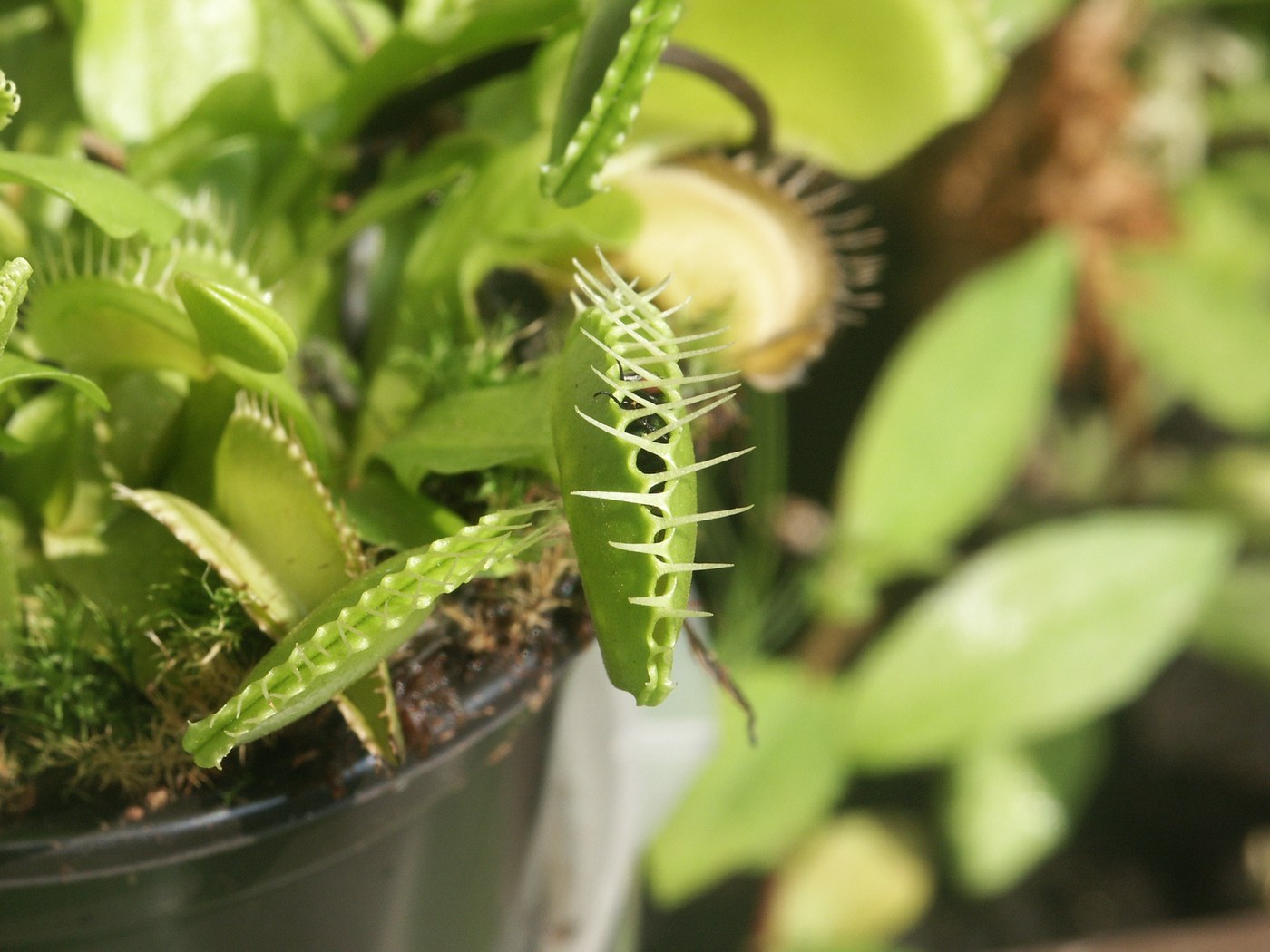
Key Identifying Features
The Venus flytrap (Dionaea muscipula) is the most famous carnivorous plant, identified instantly by its traps. Look for:
- Hinged, clam-like traps made of two lobes
- Spiky 'teeth' (cilia) fringing the trap edges that interlock when closed
- Reddish-pink interior on the trap lobes in good light
- Low rosette growth with traps at the end of flat leaf stalks
Leaves & Stems
Each leaf has two parts: a flat, broad petiole (leaf base) and a terminal snap-trap. The trap is two hinged lobes lined inside with tiny trigger hairs; when an insect touches two hairs (or one hair twice) the trap snaps shut in a fraction of a second, the marginal spines interlocking like a cage. The inner surface is often bright red in strong light, fading to green in shade. Plants grow as a ground-hugging rosette, typically only a few inches across; traps are usually 1-1.5 inches long. New traps emerge from a central crown.
Flowers & Fruit
In spring it sends up a tall, thin flower stalk (well above the traps) bearing small white flowers with green veins. The tall stalk keeps pollinators away from the traps. Tiny black seeds follow. Many growers remove the flower stalk to conserve energy for the traps.
How to Tell It Apart from Look-Alikes
- Pitcher plants: use passive fluid-filled tubes, not snapping traps.
- Sundews (Drosera): catch prey with sticky dew-tipped tentacles, no hinged trap.
- Cobra lily / other carnivores: lack the toothed clam-trap entirely.
Nothing else has the two-lobed, toothed, fast-snapping trap, making the Venus flytrap unmistakable.
Where You'll Find It
Native to a small region of boggy wetlands in North and South Carolina, USA, growing in nutrient-poor, acidic, sunny bogs. It traps insects to obtain nitrogen. As a houseplant it needs full sun, distilled/rain water, no fertilizer, and a winter dormancy. You will find it in specialty nurseries, terrariums, and protected wild sites (wild collection is illegal).
Quick ID Checklist
- Two-lobed hinged snap-trap
- Spiky teeth (cilia) on trap margins
- Red interior in bright light
- Trigger hairs inside the trap
- Low rosette of flat-stalked leaves
- Tall white flower stalk in spring
Frequently asked questions
How does the Venus flytrap know when to close?
Tiny trigger hairs inside each lobe sense movement. When an insect touches two hairs, or one hair twice within about 20 seconds, the trap snaps shut, helping it avoid wasting energy on false alarms.
Why is the inside of the trap red?
Bright light brings out the red pigmentation inside the lobes, which also helps attract insects. In low light the interior stays green.
Should I let my flytrap flower?
Flowering takes a lot of energy. Many growers cut off the tall flower stalk so the plant puts its resources into producing healthy traps instead.
Where do Venus flytraps grow naturally?
They are native only to a small area of boggy wetlands in North and South Carolina in the United States.
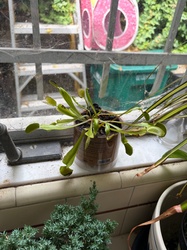
Venus Flytrap identified by the community
Recent Venus Flytrap specimens identified with Plant Identifier.