
How to Care for Anthurium Warocqueanum
Master the demanding Queen Anthurium with bright indirect light, high humidity, an airy aroid mix, and evenly moist roots for dramatic velvet leaves.
Read the full Anthurium Warocqueanum encyclopedia entry →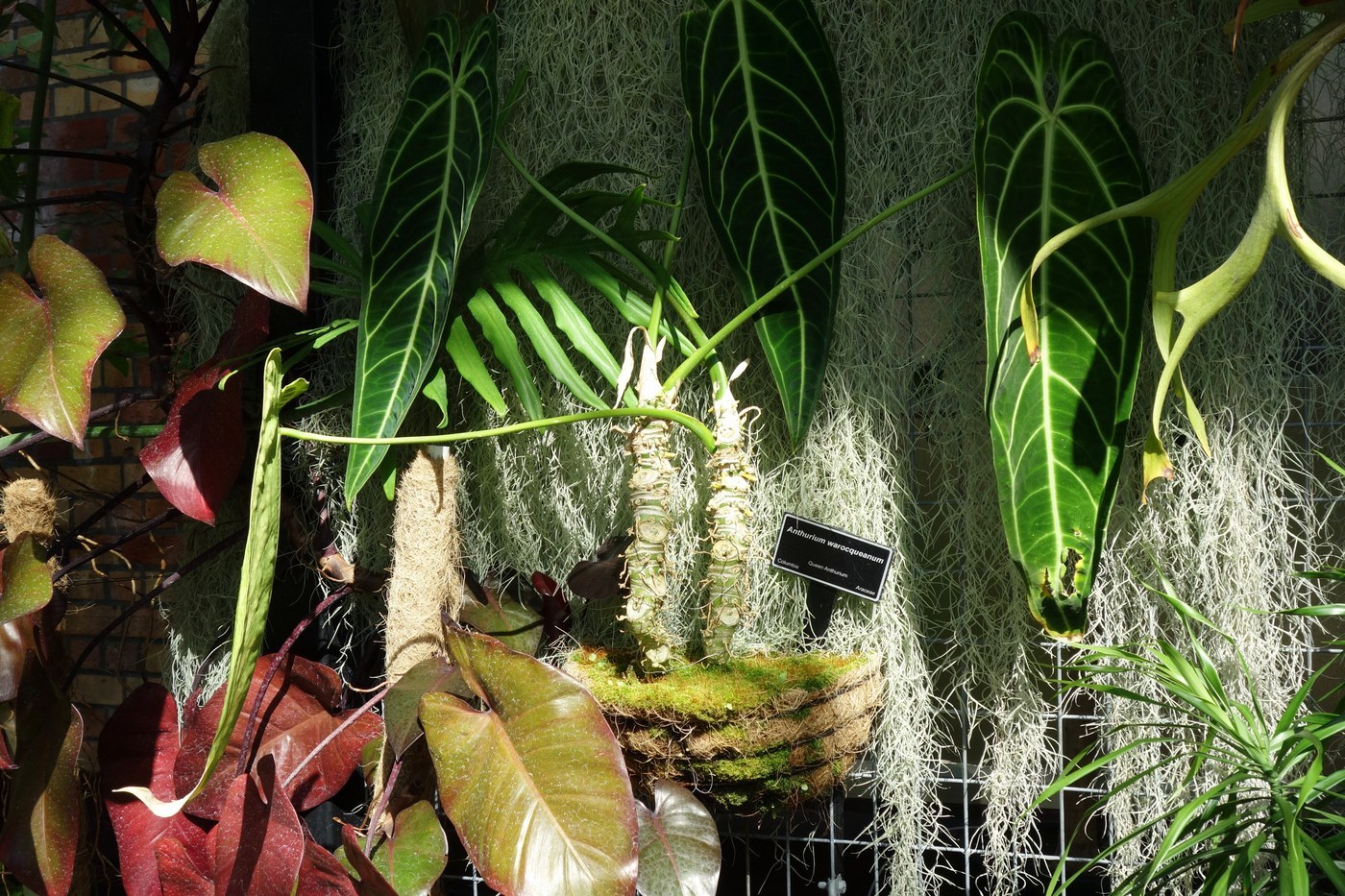
Anthurium warocqueanum, the Queen Anthurium, is a prized velvet-leaved aroid grown for its spectacularly long, pendant, dark-green leaves with pale silvery veins. It is a demanding plant that rewards attentive, consistent care with breathtaking foliage, but it punishes neglect and swings in its environment, earning its reputation as a plant for experienced growers.
Light
Provide bright, indirect light. This epiphyte grows beneath the canopy in nature, so it wants strong ambient light without direct sun, which scorches the velvety leaves. An east window, filtered south or west light, or a grow light suits it well. Too little light produces smaller leaves and slow, weak growth.
Water
Keep the chunky mix evenly moist but never soggy. Water thoroughly when the top layer begins to dry, letting excess drain freely. The roots need both moisture and abundant air; constant wetness causes rot, while full drying stresses the plant and browns leaf edges. Use room-temperature water and consistent timing.
Soil & Potting
Use a very airy, chunky aroid mix rather than dense potting soil. A blend of orchid bark, perlite, coco chunks, sphagnum moss, and a little charcoal gives the roots the aeration they demand while holding some moisture. Plant in a pot with excellent drainage. Many growers succeed with this species in pure or high-sphagnum mixes kept carefully moist.
Humidity & Temperature
High humidity is essential, ideally 70 percent or more; this is the single most important factor for growing large, unblemished leaves. Grow it in a cabinet, greenhouse, or with a strong humidifier. Keep temperatures warm and stable at 65-80F (18-27C) and avoid cold drafts and sudden environmental changes, which trigger leaf damage.
Feeding
Feed with a dilute, balanced fertilizer during active growth in spring and summer, applying at quarter to half strength every two to four weeks. This aroid is sensitive to fertilizer salts, so keep concentrations low and flush the mix periodically. Reduce or stop feeding in the darker, cooler months when growth slows.
Propagation
Propagate by division or stem cuttings. Mature plants can be divided at the root, or a stem section with a node and aerial root can be rooted in moist sphagnum under high humidity. It can also be grown from fresh seed, though that is slow and uncommon. Keep cuttings warm, humid, and stable until new roots and growth appear.
Repotting / Pruning
Repot every year or two in spring, or when roots outgrow the pot or the mix breaks down. Refresh the chunky medium and handle the delicate roots gently. Pruning is minimal; simply remove old, browned, or damaged leaves at the base to keep the plant tidy and channel energy into new foliage.
Common Problems & Pests
Browning leaf tips and edges usually signal low humidity, inconsistent watering, or fertilizer salt buildup. Yellowing can mean overwatering or root rot. Watch closely for spider mites, thrips, mealybugs, and scale, which love this plant; inspect leaves often and treat promptly with insecticidal soap or horticultural oil. Stable conditions are the best defense.
Seasonal Care Tips
In spring and summer, maintain warmth, high humidity, and steady moisture and feeding to fuel large new leaves. In fall and winter, reduce feeding, water slightly less as growth slows, and work harder to keep humidity high and temperatures warm against dry, cold indoor air. Consistency year-round is the secret to success.
Frequently asked questions
Why are the leaf tips on my Anthurium warocqueanum turning brown?
Browning tips and edges usually point to low humidity, inconsistent watering, or fertilizer salt buildup. Raise humidity to 70 percent or more, keep the mix evenly moist, and feed only lightly, flushing the medium periodically.
What kind of soil does the Queen Anthurium need?
It needs a very airy, chunky aroid mix of orchid bark, perlite, coco chunks, sphagnum moss, and charcoal, or a high-sphagnum mix, planted in a well-draining pot so the roots get both moisture and plenty of air.
Why is Anthurium warocqueanum considered hard to grow?
It demands consistently high humidity, stable warmth, bright indirect light, and careful watering, and reacts poorly to swings in its environment. Missing any of these often leads to browning leaves or pest problems, so it suits experienced growers.
How much humidity does the Queen Anthurium require?
High humidity, ideally 70 percent or more, is the most important factor for growing large, unblemished leaves. A humidity cabinet, greenhouse, or strong humidifier is usually needed to maintain it indoors.