
Anthurium Warocqueanum Identification Guide
Identify the Queen Anthurium (Anthurium warocqueanum) by its enormous, pendant, velvety dark-green leaves with striking silvery-white veins.
Read the full Anthurium Warocqueanum encyclopedia entry →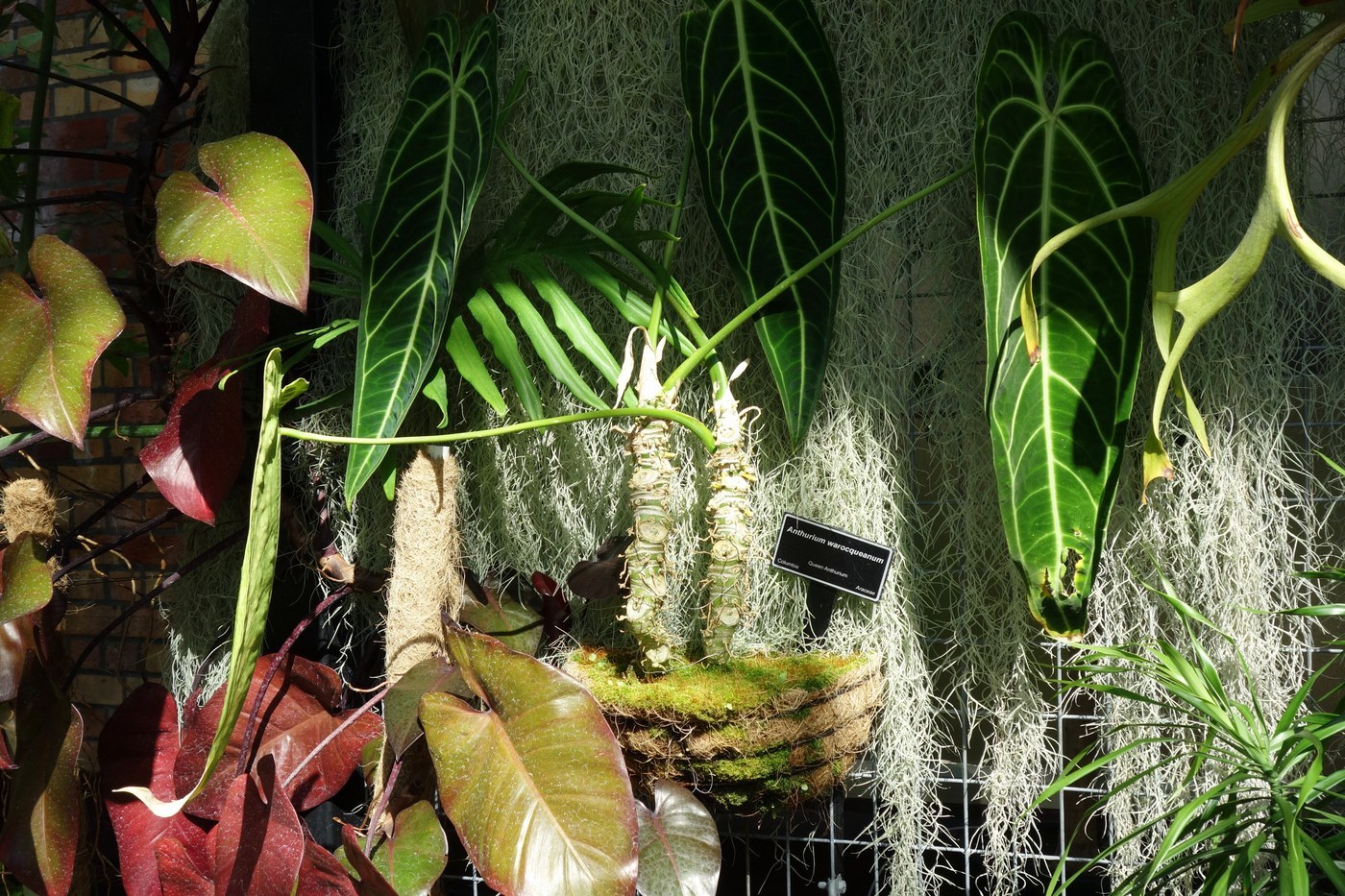
Key Identifying Features
Anthurium warocqueanum, the Queen Anthurium, is a prized velvet-leaf aroid famous for dramatically long, hanging leaves. The defining traits are elongated, downward-pointing (pendant) leaves with a deep velvety green surface and bold silver-white veins.
- Very long, narrow, lance/sword-shaped leaves
- Velvety, matte dark green surface
- Striking contrasting silvery-white venation
- Leaves hang downward (pendulous) from the crown
Leaves & Stems
The leaves are the whole point: mature blades can reach 2 to 4 feet long (occasionally far longer on exceptional plants), yet remain relatively narrow and strap-like, tapering to a point. The texture is suede-soft and velvety, absorbing light into a deep blackish-green, against which the primary and secondary veins glow silvery-white in a regular pattern. New leaves often emerge with a lighter, more bronze tone before deepening.
It grows from a short stem/crown with thick roots, often as an epiphyte or hemiepiphyte, with leaves cascading downward, which is why it is typically displayed where its long foliage can hang freely.
Flowers & Fruit
Like all anthuriums it produces an inflorescence of a slender spadix with a narrow green-tan spathe, but the bloom is inconspicuous and not the reason it is grown. Identify by the long velvety silver-veined leaves.
How to Tell It Apart from Look-Alikes
- Anthurium clarinervium / crystallinum: also velvety with silver veins, but their leaves are heart-shaped and held outward/upright, not long and pendant.
- Anthurium veitchii (King Anthurium): also enormous, but leaves are heavily corrugated/rippled (bullate) and held more horizontally, with a different vein texture.
- Anthurium regale: large heart-shaped velvet leaves, not the narrow hanging strap of warocqueanum.
- Philodendron melanochrysum: velvety and long, but a climbing philodendron with leaves that point outward, not a pendant anthurium crown.
The ID lock is extremely long, narrow, velvety, silver-veined leaves that hang downward.
Where You'll Find It
Native to the humid cloud forests of Colombia, it grows in constant high humidity and gentle light as an epiphyte. As a houseplant it is a coveted, demanding collector's species needing very high humidity, warmth, bright indirect light, and excellent airflow.
Quick ID Checklist
- Leaves very long and narrow (often 2-4+ ft)
- Velvety matte dark green surface
- Bold silver-white veins
- Leaves hang downward from the crown
- Grows epiphytically with thick roots
A pendant curtain of long, velvety, silver-veined dark leaves is the unmistakable Queen Anthurium.
Frequently asked questions
Why are the leaves so long and hanging down?
In its native Colombian cloud forest, Anthurium warocqueanum grows as an epiphyte on tree trunks with leaves cascading downward to shed rain and catch filtered light. That naturally pendant, elongated form is a key identifying trait.
How do I tell it from Anthurium clarinervium?
Both are velvety with silver veins, but clarinervium has compact heart-shaped leaves held outward, while warocqueanum has dramatically long, narrow, strap-like leaves that hang down. Leaf shape and orientation are the giveaway.
Why does my Queen Anthurium struggle indoors?
It is a cloud-forest species needing very high humidity, steady warmth, bright indirect light, and good airflow. In average dry home air it can develop crispy edges and stalled growth, which is an environmental issue, not an ID feature.
What color are new leaves when they emerge?
New leaves typically emerge with a lighter, more bronze tone and darken to a deep velvety blackish-green as they mature and the silver veins become more pronounced.