Arborvitae Identification Guide
Identify Arborvitae (Thuja), the evergreen with soft, flat sprays of scale-like foliage, by its fans of foliage and small upright cones.
Read the full Arborvitae encyclopedia entry →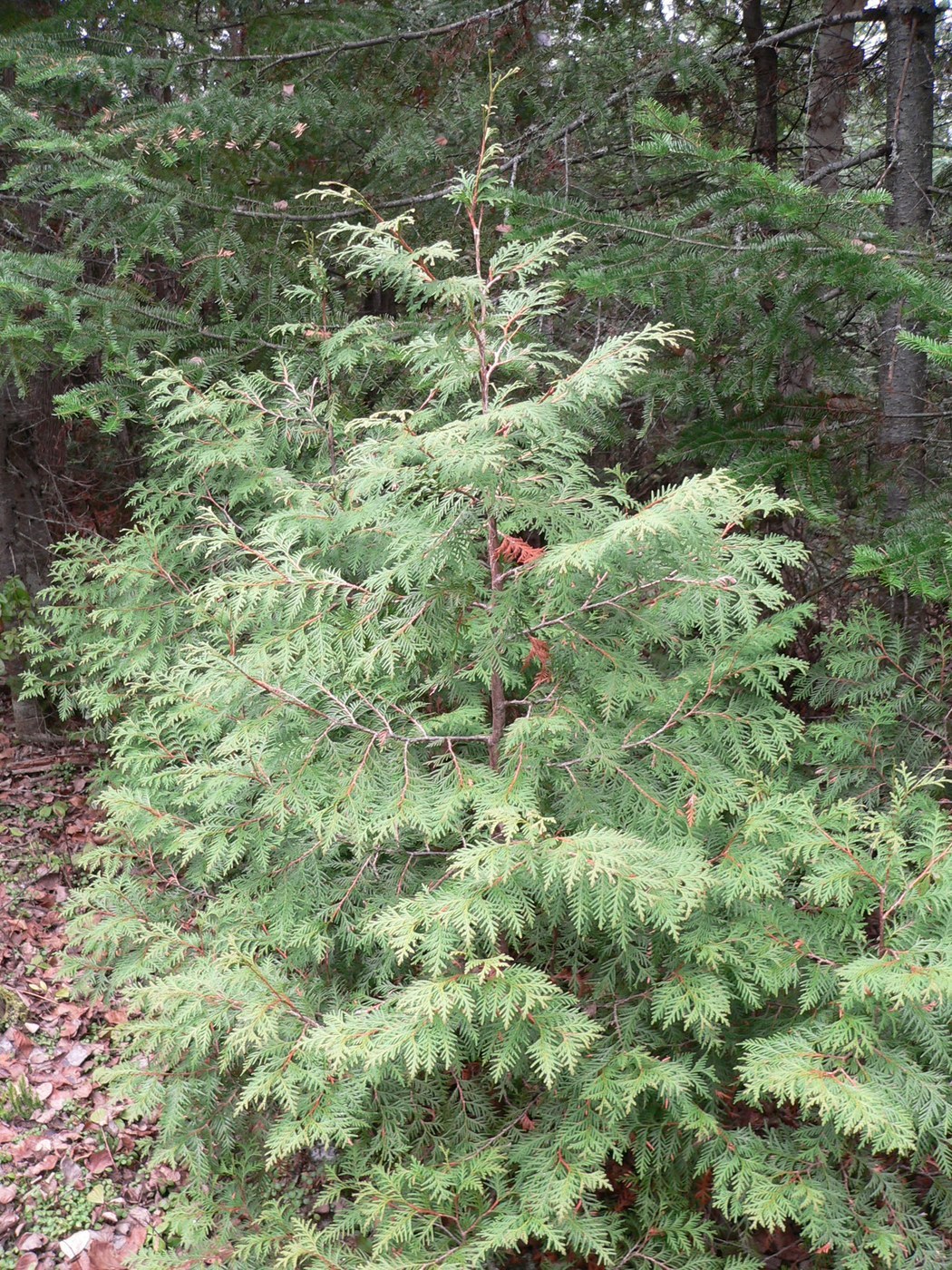
Key Identifying Features
Arborvitae (Thuja, most commonly Thuja occidentalis, eastern arborvitae or northern white-cedar) is an evergreen conifer grown as trees, screens and hedges. Its hallmark is soft, flattened sprays of tiny scale-like leaves arranged in vertical, fan-like planes. Landscape forms range from narrow columns and globes (3-15 ft) to wild trees 40+ ft tall. The name means "tree of life."
- Foliage: flat, fern-like or fan-shaped sprays, not needles
- Form: dense, often conical or columnar; many dwarf cultivars
- Aroma: crushed foliage is strongly fragrant
Leaves & Stems
The "leaves" are tiny, overlapping, scale-like, and pressed flat against the twig, giving each spray a smooth, braided look. The foliage lies in flattened, horizontal fans (a key distinction from rounder juniper foliage). Color is medium to yellow-green, often turning bronze or brownish in cold winters - a normal seasonal change, not death. Crushed foliage smells distinctly aromatic (sweet, slightly fruity in T. occidentalis; like pineapple or tansy in some). Twigs are flattened, not round. Bark is thin, reddish-brown, and peels in narrow vertical strips.
Flowers & Fruit
Cones are tiny and easy to miss. Seed cones are small (about 1/3 to 1/2 inch), oval, upright, and leathery, with a few paired scales; green ripening to brown, opening like little tulips to release seeds. They cluster near branch tips. There are no showy flowers.
How to Tell It Apart from Look-Alikes
- Junipers (Juniperus): young plants have prickly needle-like leaves; adult scale foliage is arranged in rounded, 3-D sprays, not flat fans, and they bear fleshy blue "berries" instead of dry woody cones.
- False cypress (Chamaecyparis): also flat sprays, but foliage often has white X- or Y-shaped markings on the underside and rounded woody cones; sprays are usually finer and more drooping.
- Eastern red cedar: actually a juniper - blue berries, not cones.
The combination of flat fan-shaped sprays + small upright woody cones + aromatic scale foliage points to arborvitae.
Where You'll Find It
Native to eastern North America (often on limestone cliffs and wet ground), arborvitae is one of the most planted landscape evergreens for privacy hedges and screens ('Emerald Green', 'Green Giant'). Look for tidy columns lining property lines, plus wild trees in northern swamps and rocky uplands.
Quick ID Checklist
- Flat, fan-like sprays of scale-like (not needle) foliage
- Foliage held in vertical planes; soft to the touch
- Crushed foliage strongly aromatic
- Small (1/3-1/2 in) upright woody cones, not berries
- May bronze in winter; reddish peeling bark
Frequently asked questions
How is arborvitae different from a juniper?
Arborvitae foliage forms flat, fan-shaped sprays and produces small dry woody cones. Junipers have rounder 3-D foliage, often prickly juvenile needles, and fleshy blue berry-like cones.
Why did my arborvitae turn brown in winter?
Many arborvitae, especially eastern types, naturally bronze or brown in cold weather and green up again in spring. It usually indicates winter discoloration, not death, though desiccation can occur in harsh winters.
Does it have needles?
No. Mature arborvitae has tiny scale-like leaves pressed flat against flattened twigs, forming soft braided sprays rather than individual needles.
What does crushed arborvitae smell like?
It is strongly aromatic - eastern arborvitae has a sweet, slightly fruity or pineapple-like scent, which helps separate it from less fragrant cypresses.
Arborvitae identified by the community
Recent Arborvitae specimens identified with Plant Identifier.