
Areca Palm Identification Guide
Recognize Dypsis lutescens by its clustering yellow-green bamboo-like canes and arching feathery fronds, and tell it apart from majesty and kentia palms.
Read the full Areca Palm encyclopedia entry →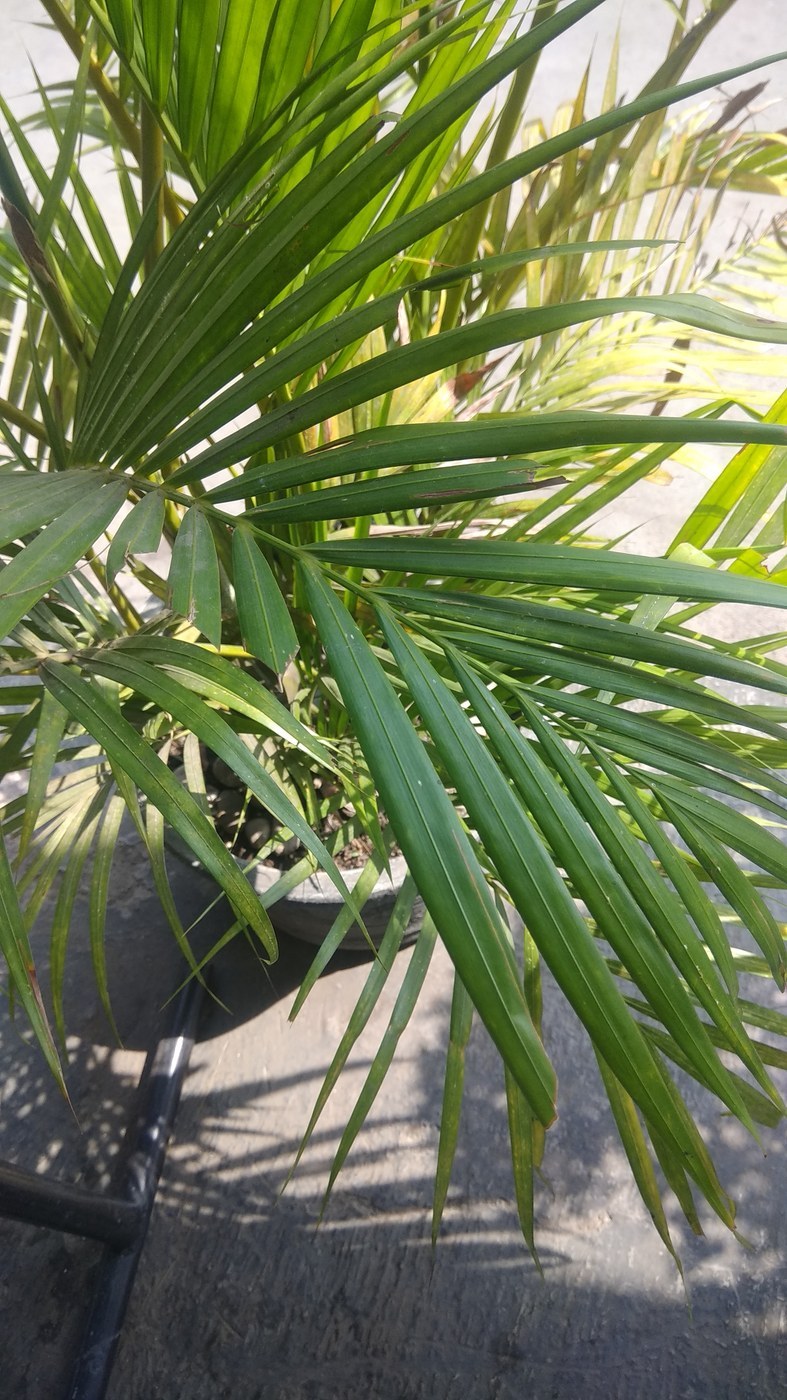
Key Identifying Features
The Areca Palm (Dypsis lutescens), also called butterfly or golden cane palm, is a clumping feather palm with multiple slender, yellow-green, bamboo-like canes topped by gracefully arching fronds.
- Clustering habit: many thin reed-like stems from the base
- Canes yellow-green to golden, ringed like bamboo
- Feather (pinnate) fronds that arch upward and outward like butterfly wings
- Leaflets narrow, soft, yellow-green, numerous (40-60+ per side)
Leaves & Stems
The fronds are long and gently arching, each bearing many slim, lance-shaped leaflets that give a soft, feathery look. Foliage tends toward yellow-green, especially in good light, and the leaflet tips often droop slightly. New fronds emerge from the top of each cane.
The canes (stems) are the giveaway: smooth, slender, bamboo-like with distinct rings (leaf scars), and yellowish to golden, growing in a dense clump of many stems rather than one trunk. The base of each leaf wraps the cane in a smooth yellowish sheath (crownshaft-like).
Flowers & Fruit
Mature outdoor plants produce branched sprays of small yellow flowers from below the leaves, followed by oval yellow fruits that ripen to near-black, roughly 2 cm long. Indoors it rarely flowers. Identification relies on the clumping golden canes and arching fronds rather than reproductive parts.
How to Tell It Apart from Look-Alikes
- Majesty palm (Ravenea rivularis) has a single, thicker, grey trunk and darker, stiffer fronds, versus areca's many yellow bamboo canes.
- Bamboo palm (Chamaedorea) also clusters but has greener, broader leaflets and thinner, greener canes.
- Kentia palm (Howea) is solitary-trunked with dark drooping leaflets.
- The combination of multiple golden, ringed, bamboo-like canes and butterfly-arching yellow-green fronds confirms areca palm.
Where You'll Find It
Native to Madagascar (where it is endangered in the wild), but one of the most common indoor palms worldwide and widely planted outdoors in tropical and subtropical gardens. Indoors it wants bright indirect light and moderate watering.
Quick ID Checklist
- Multiple slender yellow-green bamboo-like canes
- Clumping, not single-trunked
- Arching feathery fronds (butterfly-like)
- Narrow soft yellow-green leaflets
- Ringed leaf-scar canes; rarely flowers indoors
Frequently asked questions
How do I know if I have an areca palm or a majesty palm?
Areca palm grows as a clump of many slender, yellow-green bamboo-like canes, while majesty palm has a single, thicker grey trunk with darker, stiffer fronds.
Why are the canes yellow, is the plant sick?
Golden-yellow canes are natural for areca palm, which is also called golden cane palm. The yellow tone is strongest in bright light and is not a sign of disease.
Does an areca palm flower indoors?
Rarely. Outdoors mature plants produce sprays of small yellow flowers and dark fruits, but indoor plants are identified by their clumping golden canes and arching fronds.