How to Care for Arrowhead Plant
Care for Syngonium podophyllum, the easy arrowhead vine, with this guide to light, watering, humidity, and keeping foliage lush.
Read the full Arrowhead Plant encyclopedia entry →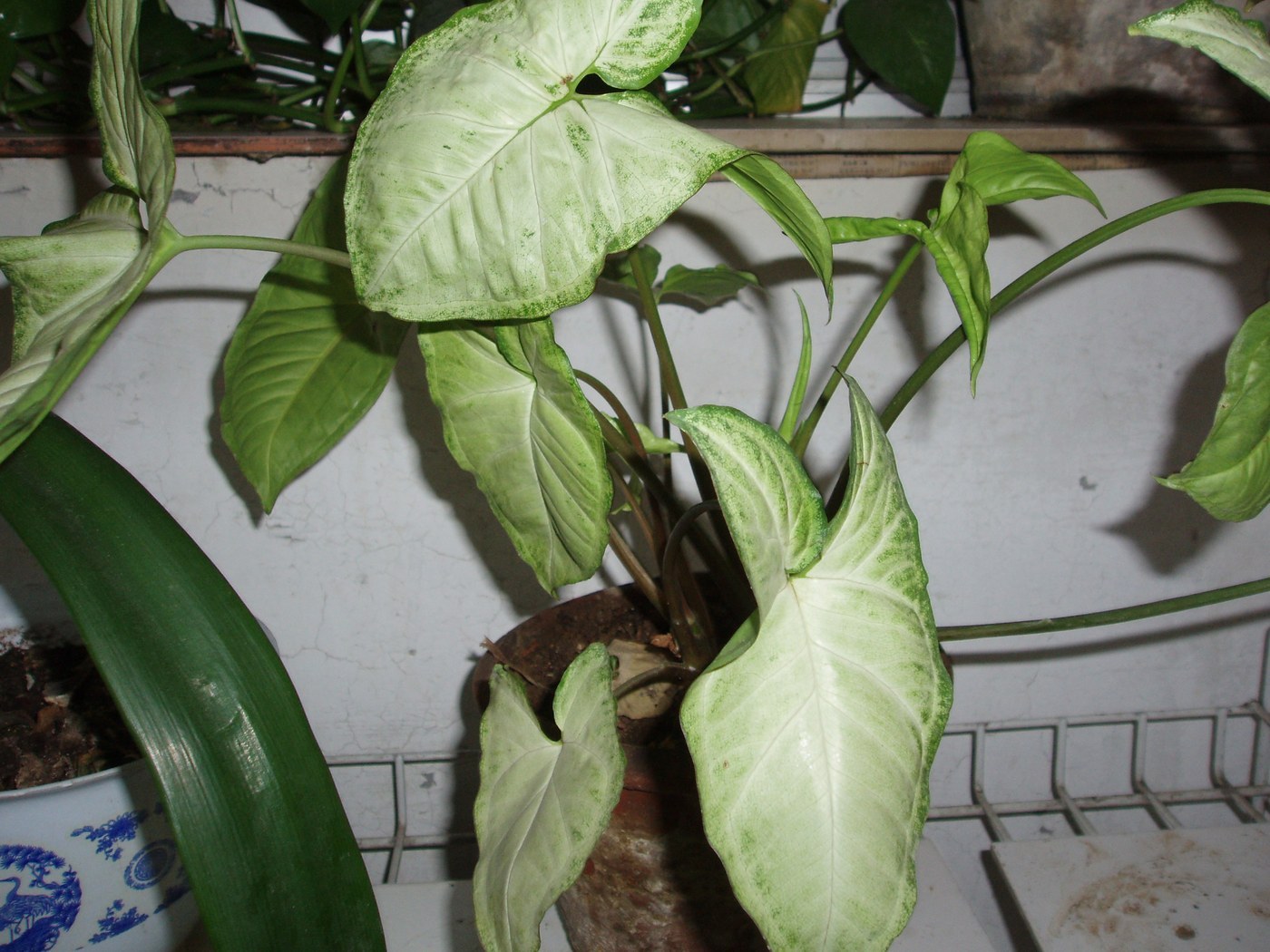
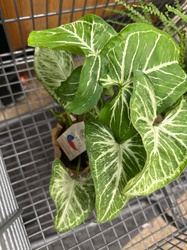
Arrowhead Plant (Syngonium podophyllum) is a fast, adaptable tropical houseplant grown for its arrow-shaped leaves that shift from compact rosettes to trailing or climbing vines as they mature. Available in green, pink, cream-variegated, and near-white forms, it is one of the most forgiving foliage plants.
Light
Bright, indirect light brings out the best color and fullest growth, especially in variegated and pink cultivars. It tolerates medium and lower light, though growth slows and variegation fades. Keep it out of harsh direct sun, which scorches the thin leaves. An east or a filtered south or west window is ideal.
Water
Water when the top inch of soil dries out. Arrowhead likes evenly moist but not soggy soil during active growth; let it dry a bit more in winter. Droopy, curling leaves signal thirst and usually perk up after watering, while yellowing lower leaves often mean it has been kept too wet. Always empty the saucer.
Soil & Potting
Use a light, well-draining aroid-friendly mix: general potting soil lightened with perlite, orchid bark, and a little coconut coir works well. Good drainage is essential to prevent root rot. Any pot with drainage holes suits it; it does not mind being slightly snug.
Humidity & Temperature
As a tropical it enjoys moderate to high humidity, which keeps leaf edges from browning, but it adapts to average household air. Warmth between roughly 60 and 85 degrees Fahrenheit suits it; protect from cold drafts and keep it above about 50 degrees. Grouping plants or using a humidity tray helps in dry rooms.
Feeding
Feed with a balanced liquid houseplant fertilizer at half strength every two to four weeks during spring and summer. Reduce or stop feeding in the low-light months of late fall and winter when growth naturally slows.
Propagation
Very easy from stem cuttings. Cut a section with at least one node and an aerial root, and root it in water or directly in moist mix. Roots form within a couple of weeks. Pot several cuttings together for a fuller plant.
Repotting / Pruning
Repot every year or two in spring when roots fill the pot, moving up one size. To keep a bushy, compact form, pinch or prune the trailing stems regularly; without pruning it becomes a climbing vine. Trimmed stems double as propagation material, and providing a moss pole encourages larger, more mature leaves.
Common Problems & Pests
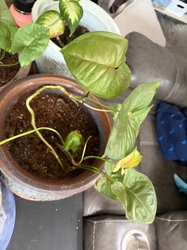
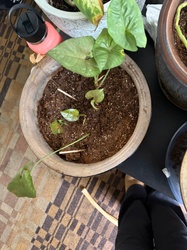
Root rot from overwatering is the main risk, seen as mushy stems and yellow leaves. Brown crispy edges point to low humidity or dry soil, while faded variegation means too little light. Watch for spider mites in dry air, plus mealybugs and aphids; wipe leaves and treat with insecticidal soap or neem as needed.
Seasonal Care Tips
Growth is fastest in spring and summer, when watering and feeding should be most regular. Ease off both in fall and winter as light drops and the plant rests. Refresh the soil and repot in spring, and dust the leaves periodically so they photosynthesize efficiently.
Frequently asked questions
Why are the leaves on my Arrowhead Plant turning yellow?
Yellowing lower leaves usually mean overwatering or soggy soil. Let the top inch dry before watering, make sure the pot drains freely, and empty any water from the saucer.
How do I keep my Arrowhead Plant bushy instead of vining?
Pinch and prune the trailing stems regularly. This encourages branching and keeps a compact mounded shape. Left unpruned it naturally becomes a climbing vine.
Why is my variegated Arrowhead losing its color?
Faded or reverting variegation is a sign of too little light. Move it to a brighter spot with plenty of indirect light to restore the pink or cream markings.
How often should I water an Arrowhead Plant?
Water when the top inch of soil dries, keeping it evenly moist in spring and summer and slightly drier in winter. Adjust to your home's light and warmth.
Arrowhead Plant identified by the community
Recent Arrowhead Plant specimens identified with Plant Identifier.