Arrowhead Plant
Syngonium podophyllum
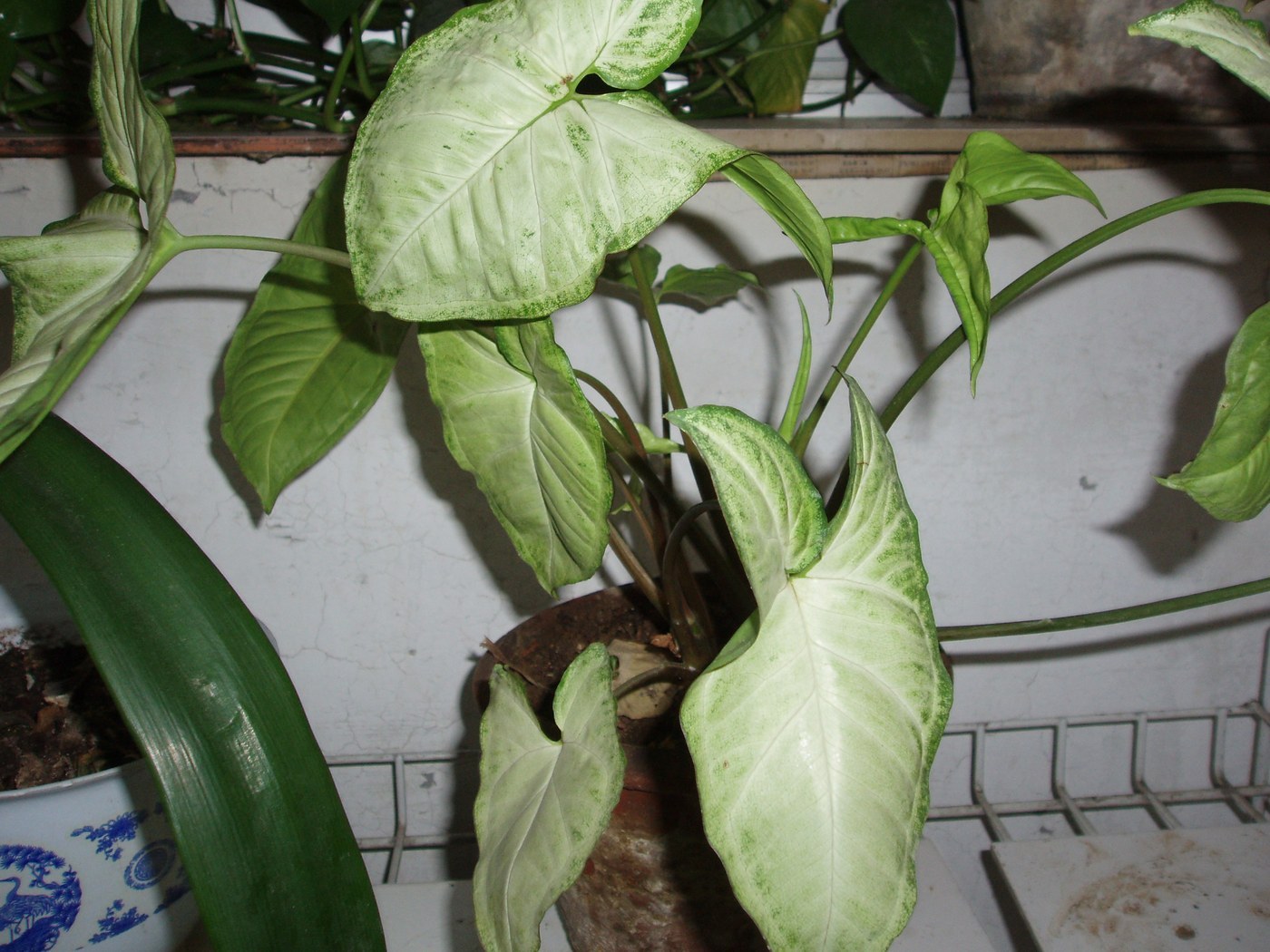
The arrowhead plant is an easy, fast-growing tropical vine whose leaves shift from arrowhead-shaped to deeply lobed as the plant matures. It comes in green, variegated, and pink-tinged forms.
- Light
- Bright indirect to medium light
- Water
- When top inch of soil dries
- Difficulty
- Easy
Got a plant like this?
Identify any plant from a photo, free.
Overview
Syngonium podophyllum is a versatile aroid grown for its attractive, shape-shifting foliage. Young plants form a compact mound of arrowhead-shaped leaves, while mature plants climb and develop larger, multi-lobed leaves.
It is one of the most forgiving houseplants available, tolerating a wide range of light and watering conditions. Numerous cultivars offer green, white-variegated, and soft pink coloration.
It can be grown bushy in a pot, trained up a moss pole, or left to trail from a hanging basket.
How to identify it
Key identifying features include:
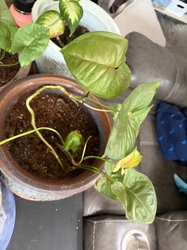
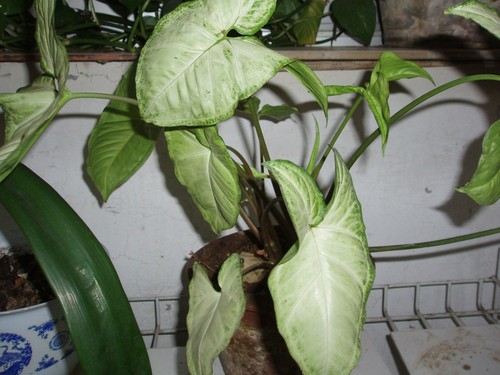
- Juvenile leaves: simple, arrowhead or spade-shaped, often with pale veins
- Mature leaves: divided into 3-5 (up to 11) finger-like lobes
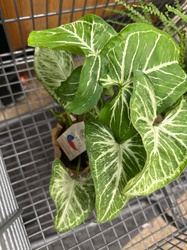
- Color: ranges from solid green to white- or cream-variegated and pink cultivars
- Habit: climbing or trailing vine with aerial roots along the stems
- Sap: milky when stems are cut
Care & growing
- Light: bright, indirect light is ideal; variegated types need more, green types tolerate lower light
- Water: water when the top inch of soil dries; avoid soggy soil
- Humidity: average to high; tolerates normal indoor air but appreciates extra moisture
- Soil: standard well-draining potting mix
- Temperature: 60-80 degrees F; protect from cold below 50 degrees F
- Feeding: monthly balanced fertilizer during spring and summer
- Propagation: very easy from stem cuttings rooted in water or soil; cut below a node
Habitat & origin
The arrowhead plant is native to a broad range of tropical Central and South America, from Mexico to Bolivia and Brazil, where it grows as a climbing vine on the rainforest floor and up tree trunks.
It has naturalized in parts of Florida, the Caribbean, and Southeast Asia, and is grown worldwide as a popular, low-maintenance houseplant.
Frequently asked questions
Why are my arrowhead plant's leaves losing variegation?
Insufficient light causes variegated cultivars to revert toward green. Move it to a brighter spot with more indirect light to preserve the pattern.
How do I keep my arrowhead plant bushy?
Pinch or prune the growing tips regularly. This prevents it from vining and encourages dense, compact growth.
Can I grow it as a climber?
Yes. Provide a moss pole or trellis and the stems will climb, producing larger, more deeply lobed mature leaves.
Arrowhead Plant guides
In-depth guides for identifying, growing, and caring for Arrowhead Plant.
How to Care for Arrowhead Plant
Care for Syngonium podophyllum, the easy arrowhead vine, with this guide to light, watering, humidity, and keeping foliage lush.
Arrowhead Plant Identification Guide
Identify the Arrowhead Plant (Syngonium podophyllum) by its shape-shifting arrow-shaped leaves and climbing, vining habit.
Arrowhead Plant identified by the community
Real specimens identified with Plant Identifier.