
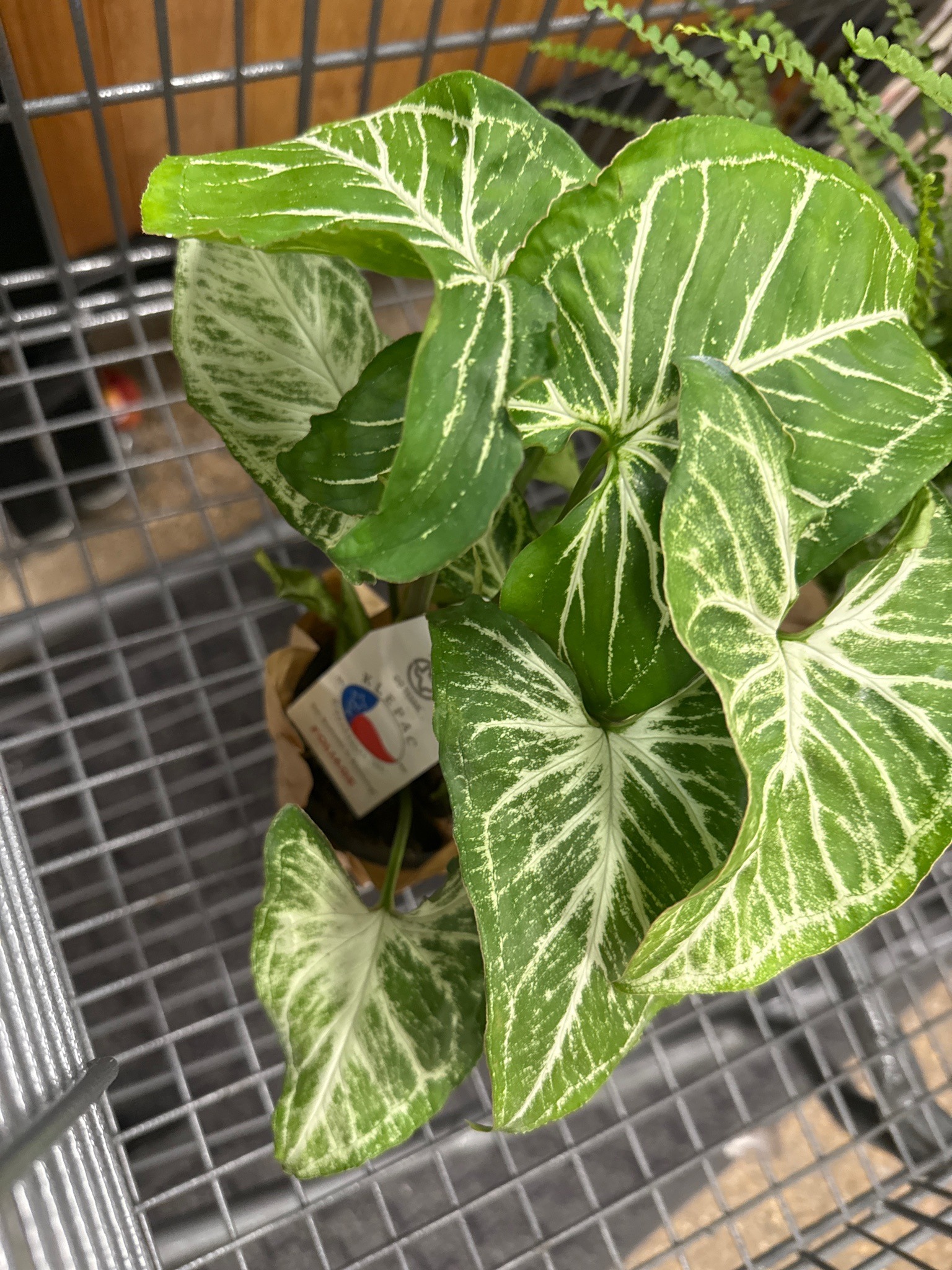
Arrowhead Plant
Syngonium podophyllum
A popular tropical houseplant featuring characteristic arrowhead-shaped leaves that transition from simple arrow shapes in juvenile plants to more deeply lobed, multi-part leaves as the plant matures. Foliage displays prominent white or silvery-green variegation along the veins.
- Light
- Prefers bright, indirect light for 6 to 8 hours daily. Avoid direct sunlight, which can scorch the leaves, though it can adapt to lower light conditions with slower growth and reduced variegation.
- Water
- Water when the top 1-2 inches of soil are dry. Reduce watering frequency during the winter months when growth naturally slows down. Ensure proper drainage to prevent standing water.
- Growth
- Climbing or trailing perennial vine. When supported, it can climb up to 3 to 6 feet or more; in hanging baskets or pots, it forms a dense, cascading mound.
Care instructions
Provide bright, indirect sunlight and maintain moderate to high humidity. Water thoroughly when the top two inches of soil become dry to the touch. Feed with a balanced, water-soluble fertilizer every four to six weeks during the spring and summer growing season.
Growing details
Sunlight
Prefers bright, indirect light for 6 to 8 hours daily. Avoid direct sunlight, which can scorch the leaves, though it can adapt to lower light conditions with slower growth and reduced variegation.
Watering
Water when the top 1-2 inches of soil are dry. Reduce watering frequency during the winter months when growth naturally slows down. Ensure proper drainage to prevent standing water.
Soil
Well-draining, rich potting mix containing peat moss, perlite, or orchid bark to ensure aeration and moisture retention. Optimal pH range is 5.5 to 6.5.
Hardiness zone
USDA zones 9 through 11, typically grown indoors as a houseplant in cooler temperate climates.
Growth habit
Climbing or trailing perennial vine. When supported, it can climb up to 3 to 6 feet or more; in hanging baskets or pots, it forms a dense, cascading mound.
Bloom season
Rarely blooms when grown indoors as a houseplant. In its natural tropical habitat, it produces inconspicuous inflorescences consisting of a pale green or yellowish spathe enclosing a spadix.
Propagation
Easily propagated through stem cuttings taken just below a node, placed either in water until roots develop or planted directly into moist potting mix.
Common pests & issues
Susceptible to common indoor pests such as mealybugs, spider mites, and scale insects. Over-watering can lead to root rot, while dry air may cause leaf tips to turn brown and crisp.
Similar species
Can be confused with Philodendron or Alocasia species due to the similar heart or arrowhead leaf shapes, but Syngonium is distinguished by its unique vine-like climbing habit and distinct silvery-white vein patterns.