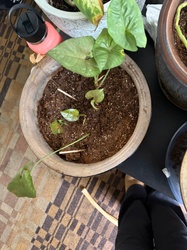
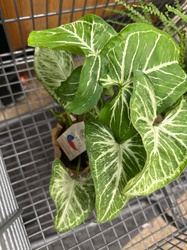
Arrowhead Plant Identification Guide
Identify the Arrowhead Plant (Syngonium podophyllum) by its shape-shifting arrow-shaped leaves and climbing, vining habit.
Read the full Arrowhead Plant encyclopedia entry →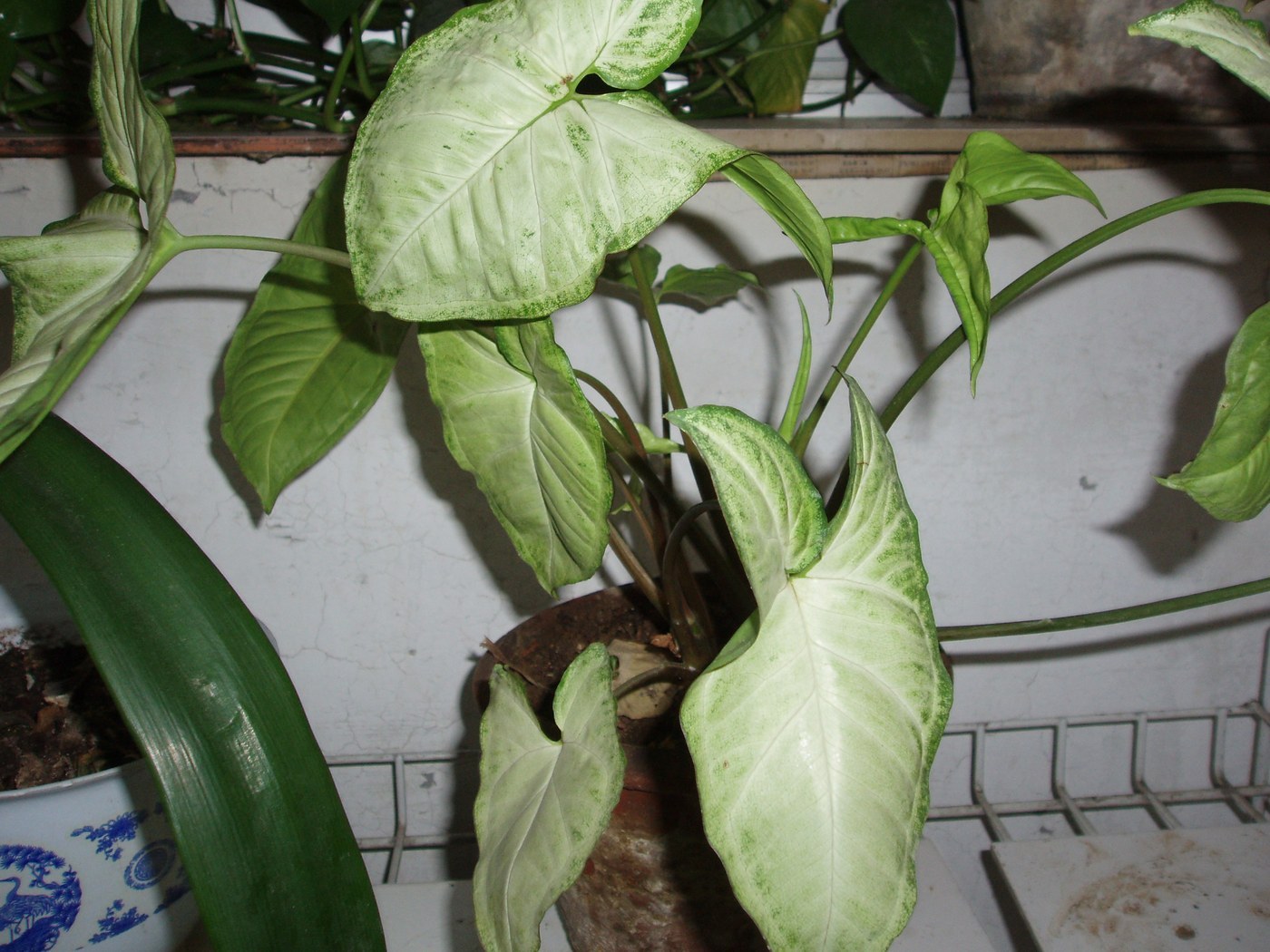
Key Identifying Features
The Arrowhead Plant (Syngonium podophyllum), also called arrowhead vine or goosefoot, is a member of the arum family (Araceae) grown for its distinctive leaf shape. The signature trait is in the name: young leaves are shaped like an arrowhead or spade, and they change form dramatically as the plant matures.
- Juvenile leaves are simple, arrow- or heart-shaped
- Mature leaves become lobed or fully divided into 3-9 finger-like segments
- Habit shifts from a bushy clump to a climbing vine as it ages
Leaves & Stems
This leaf metamorphosis is the best diagnostic. Young plants form a tidy rosette of arrowhead leaves on long petioles. As the plant climbs, adult leaves develop separate leaflets in a bird's-foot (palmate) arrangement.
- Leaf color ranges from plain green to variegated forms with cream, white, silver, or pink markings along the veins
- Leaves are soft, slightly fleshy, and matte to semi-glossy
- Stems are green, trailing or climbing, producing aerial roots at the nodes that grip supports
- Cutting the stem releases a milky sap typical of aroids
Flowers & Fruit
Flowering is uncommon on houseplants but, like other aroids, it produces:
- A greenish-white spathe (hood) wrapped around a pale spadix (central spike)
- The spathe is modest and not showy, often partly hidden by foliage
- In the wild it can form a cluster of berries; indoors this is rare
How to Tell It Apart from Look-Alikes
- Philodendron and Pothos: have heart-shaped, not arrow-shaped, leaves and never split into finger-like leaflets.
- Caladium: has larger, thinner, more colorful arrow leaves but dies back to a tuber and lacks the climbing aerial-rooting stems.
- Syngonium's giveaway is the arrow-to-divided leaf transformation plus aerial roots and milky sap — watch one plant change shape over time and the ID is confirmed.
Where You'll Find It
A hugely popular houseplant worldwide, the Arrowhead Plant is grown in pots, hanging baskets, and on moss poles. Native to tropical Central and South America, it has naturalized in warm, humid regions of Florida, Hawaii, and Southeast Asia, where it scrambles up tree trunks as a vigorous groundcover and climber.
Quick ID Checklist
- Young leaves shaped like an arrowhead or spade
- Older leaves split into 3-9 lobes/leaflets
- Trailing or climbing stems with aerial roots
- Milky sap when cut
- Often variegated with white, silver, or pink
The arrow-shaped juvenile leaves combined with the dividing mature foliage make Syngonium podophyllum easy to confirm.
Frequently asked questions
Why do my Arrowhead Plant's leaves change shape?
Syngonium is naturally dimorphic: it starts with simple arrow-shaped juvenile leaves and develops lobed or finger-divided adult leaves as it climbs and matures. This shape change is a key identification trait.
Is the Arrowhead Plant the same as a Philodendron?
No, though they are related aroids. Philodendrons keep heart-shaped leaves, while the Arrowhead Plant has distinctly arrow-shaped young leaves that later split into separate leaflets.
How do I tell a variegated Arrowhead from a Caladium?
Caladiums have thinner, more papery, intensely colored leaves and grow from a tuber, dying back seasonally. Arrowhead Plants have thicker leaves, climbing aerial-rooting stems, and stay evergreen.
Is the Arrowhead Plant a climber or a bushy plant?
Most plants form a tidy bushy rosette of arrow-shaped leaves when young, then send out trailing or climbing stems with aerial roots as they mature. Providing a moss pole encourages the climbing, mature-leaf form.
Arrowhead Plant identified by the community
Recent Arrowhead Plant specimens identified with Plant Identifier.