Arugula Identification Guide
How to identify arugula / rocket (Eruca vesicaria) by its deeply lobed leaves, peppery smell, and creamy cross-shaped flowers.
Read the full Arugula encyclopedia entry →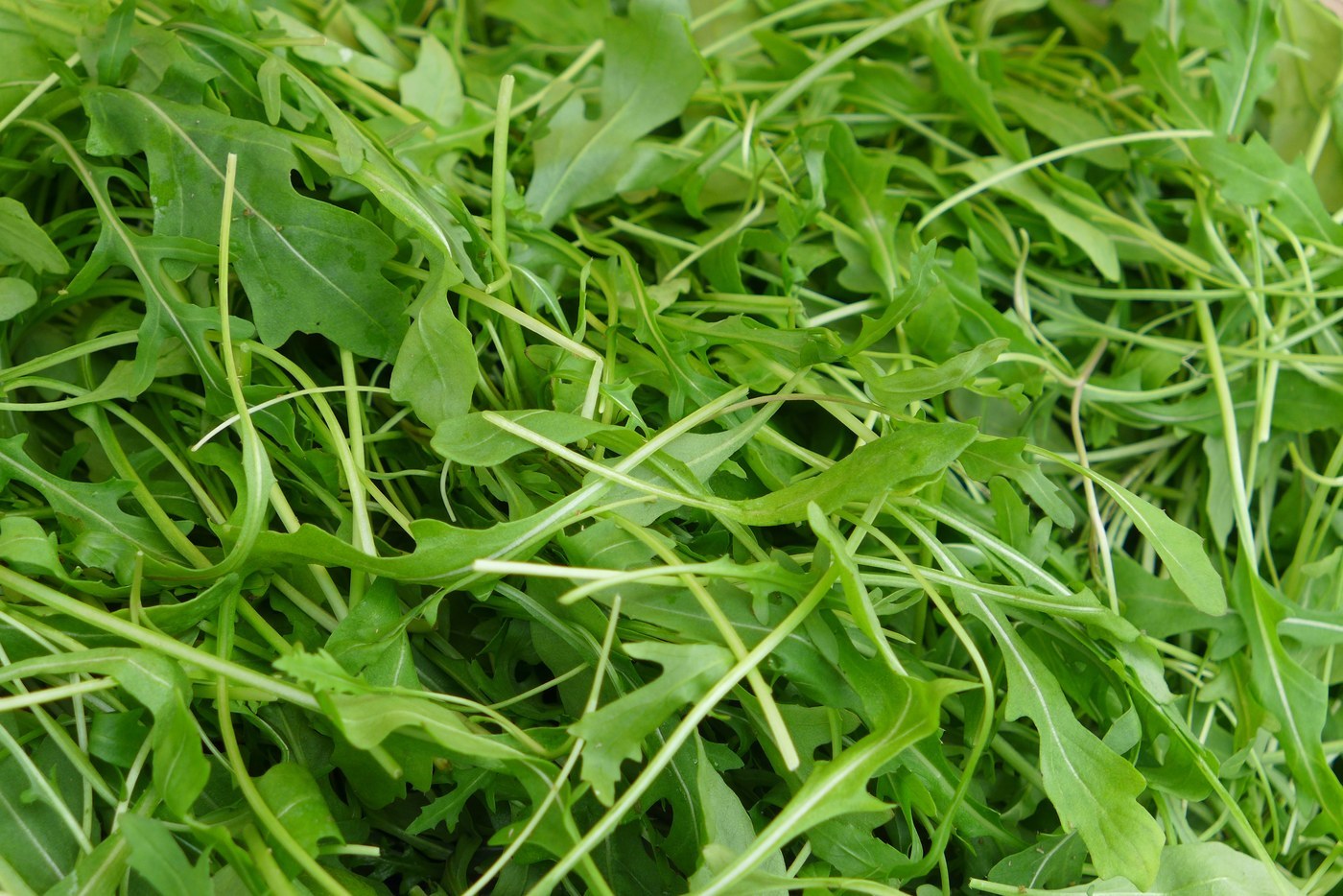
Key Identifying Features
Arugula, also called rocket (Eruca vesicaria; wild rocket is Diplotaxis tenuifolia), is a fast-growing leafy green in the mustard family (Brassicaceae). Recognize it by the low rosette of deeply lobed, oak-leaf-shaped leaves, a strong peppery, mustardy smell and taste, and small cream-colored, dark-veined cross-shaped flowers.
- Low rosette of pinnately lobed leaves with a large rounded end lobe
- Sharp peppery/nutty mustard aroma when crushed
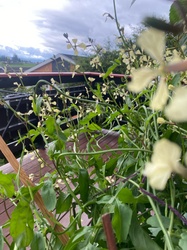
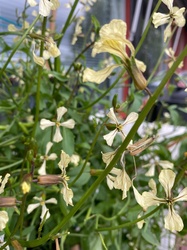
- Small 4-petaled creamy-white to pale-yellow flowers with purple-brown veins
- Slender erect seed pods (siliques)
Leaves & Stems
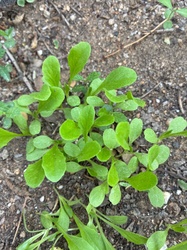
Leaves form a basal rosette and are deeply pinnately lobed (lyrate): a series of side lobes along the stalk ending in a larger, rounded terminal lobe, giving an oak-leaf or dandelion-like outline. They are smooth to slightly bristly, bright to deep green, tender, and emit a distinct peppery, sesame-like smell when bruised, the surest field cue. Wild/perennial rocket (Diplotaxis) has narrower, more finely cut leaves and a stronger bite. As the plant bolts, it sends up branching, sparsely leaved flower stalks.
Flowers & Fruit
Flowers are typical crucifers: four petals in a cross, about 1/2 in, creamy white to pale yellow and notably marked with purple-brown veins (in Eruca; wild rocket flowers are plain bright yellow). They appear in loose clusters atop the stalks. The fruit is a slender, upright silique (pod) holding small seeds; the seeds are the source of arugula's mustardy pungency. Bolting and flowering happen quickly in warm weather.
How to Tell It Apart from Look-Alikes
- Dandelion and wild lettuce: similar lobed rosette leaves, but these exude milky sap and have yellow dandelion/composite flowers; arugula has no milky sap, a peppery smell, and four-petaled flowers.
- Mustard greens and other brassicas: related and also peppery, but arugula's leaves are more deeply and regularly lobed with the big rounded end lobe, and the flowers are cream with dark veins.
- Wild rocket (Diplotaxis): narrower, more dissected leaves and plain yellow flowers; stronger, more bitter taste.
Where You'll Find It
Grown in vegetable gardens, salad beds, containers, and cold frames as a quick cool-season crop; it also self-seeds and naturalizes in waste ground, fields, and roadsides in Mediterranean and temperate climates. It germinates and matures fast, so it is common in home salad gardens worldwide.
Quick ID Checklist
- Low rosette of deeply lobed (lyrate) leaves with a big end lobe
- Strong peppery/mustard smell when crushed
- No milky sap (rules out dandelion/lettuce)
- Cream-white flowers with purple-brown veins (or yellow in wild rocket)
- Slender upright seed pods
Frequently asked questions
What's the easiest way to confirm a plant is arugula?
Crush a leaf and smell it. Arugula has a distinctive sharp, peppery, nutty mustard aroma. Combined with its deeply lobed oak-leaf-shaped rosette leaves and lack of milky sap, that smell is a reliable confirmation.
How do I tell arugula from dandelion, which has similar leaves?
Both have lobed rosette leaves, but dandelion bleeds milky white sap when broken and has yellow composite flowers, while arugula has no milky sap, a peppery scent, and small four-petaled cream flowers with dark veins.
What is the difference between salad arugula and wild rocket?
Cultivated salad arugula (Eruca vesicaria) has broader, rounded-lobed leaves and creamy flowers with purple veins. Wild or perennial rocket (Diplotaxis) has narrower, more finely cut leaves, plain yellow flowers, and a stronger, more bitter bite.
Why has my arugula suddenly grown tall and started flowering?
That is bolting. Warm weather and long days trigger arugula to send up flower stalks quickly. The leaves turn more bitter once it bolts, but the cross-shaped flowers and seed pods help confirm the plant's identity.
Arugula identified by the community
Recent Arugula specimens identified with Plant Identifier.