
Arugula
Eruca vesicaria
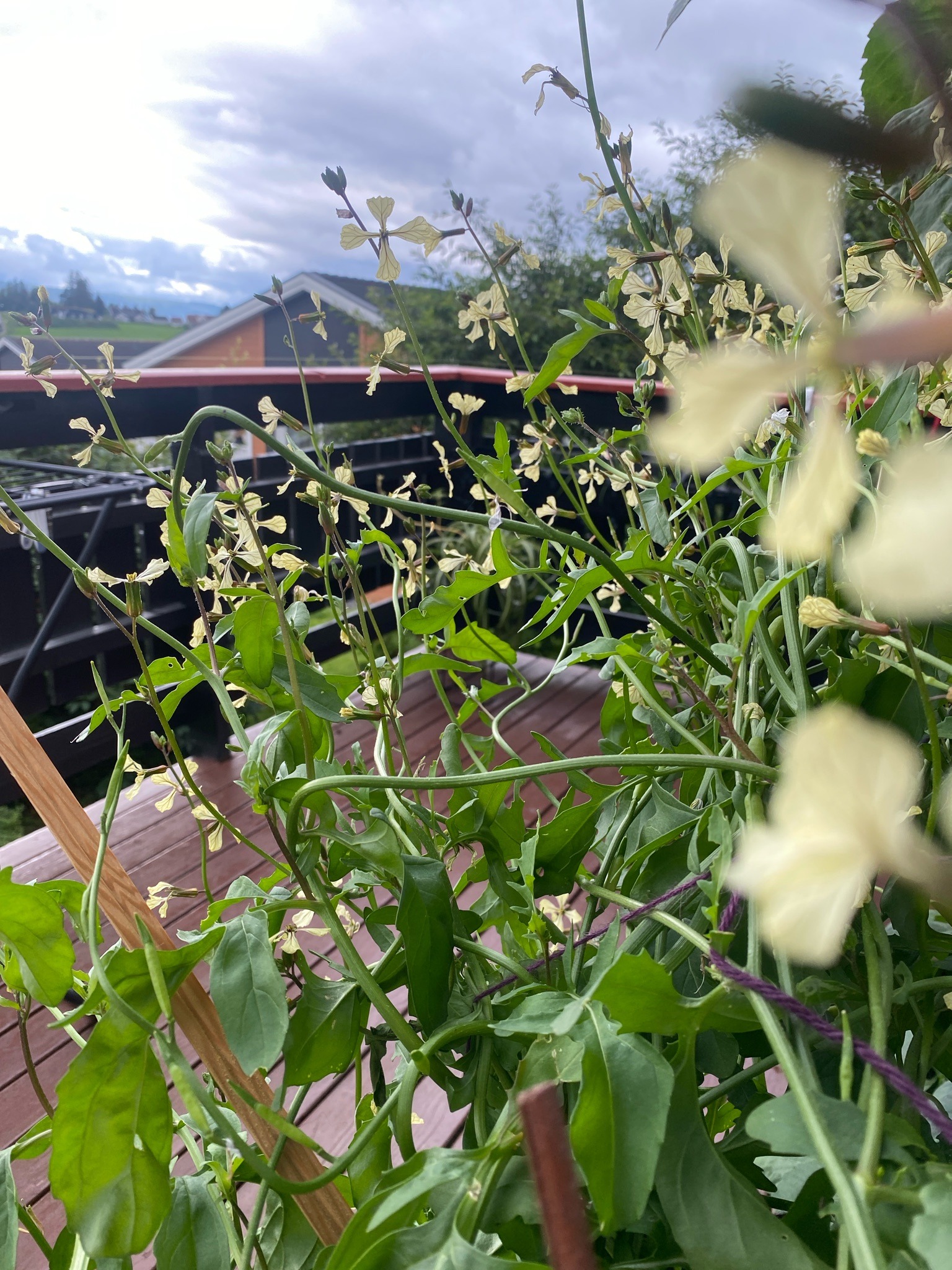
An herbaceous plant featuring deeply lobed, pinnatifid green leaves and slender stems bearing small flowers with four petals, typically pale yellow or white with dark veining.
- Light
- Full sun to partial shade, requiring about 6 hours of direct sunlight per day.
- Water
- Requires moderate and consistent watering. Keep the soil evenly moist but not waterlogged. Drought can trigger early bolting, while overwatering can cause root rot.
- Growth
- Herbaceous annual plant with an upright, branching growth habit, reaching heights of 20 to 100 centimeters and spreading around 15 to 30 centimeters with a moderate growth rate.
Care instructions
Grow in full sun to partial shade with consistently moist, well-draining soil. Provide regular watering to maintain steady moisture and apply a balanced, water-soluble fertilizer periodically during active vegetative growth.
Growing details
Sunlight
Full sun to partial shade, requiring about 6 hours of direct sunlight per day.
Watering
Requires moderate and consistent watering. Keep the soil evenly moist but not waterlogged. Drought can trigger early bolting, while overwatering can cause root rot.
Soil
Prefers rich, loamy, well-draining soil with a neutral pH range between 6.0 and 7.5.
Hardiness zone
USDA hardiness zones 3 through 11, behaving as a hardy annual or short-lived perennial depending on local climates.
Growth habit
Herbaceous annual plant with an upright, branching growth habit, reaching heights of 20 to 100 centimeters and spreading around 15 to 30 centimeters with a moderate growth rate.
Bloom season
Flowers in late spring to summer, producing delicate four-petaled cream or yellow flowers with prominent dark purple veins.
Propagation
Propagated easily from seeds sown directly into the soil in early spring or late summer, germinating rapidly within a week at moderate temperatures.
Common pests & issues
Susceptible to flea beetles, aphids, and cabbage loopers, as well as fungal issues like downy mildew in damp conditions. Prevent by maintaining good air circulation and using row covers.
Similar species
Look-alike species include wild rocket (Diplotaxis tenuifolia), which has more deeply divided, narrow leaf lobes, and watercress (Nasturtium officinale), which features rounded leaflets along a creeping stem.