
Ashwagandha Identification Guide
Identify ashwagandha (Indian ginseng) by its dull green oval leaves, small bell-shaped greenish flowers, and bright red-orange berries enclosed in a papery husk.
Read the full Ashwagandha encyclopedia entry →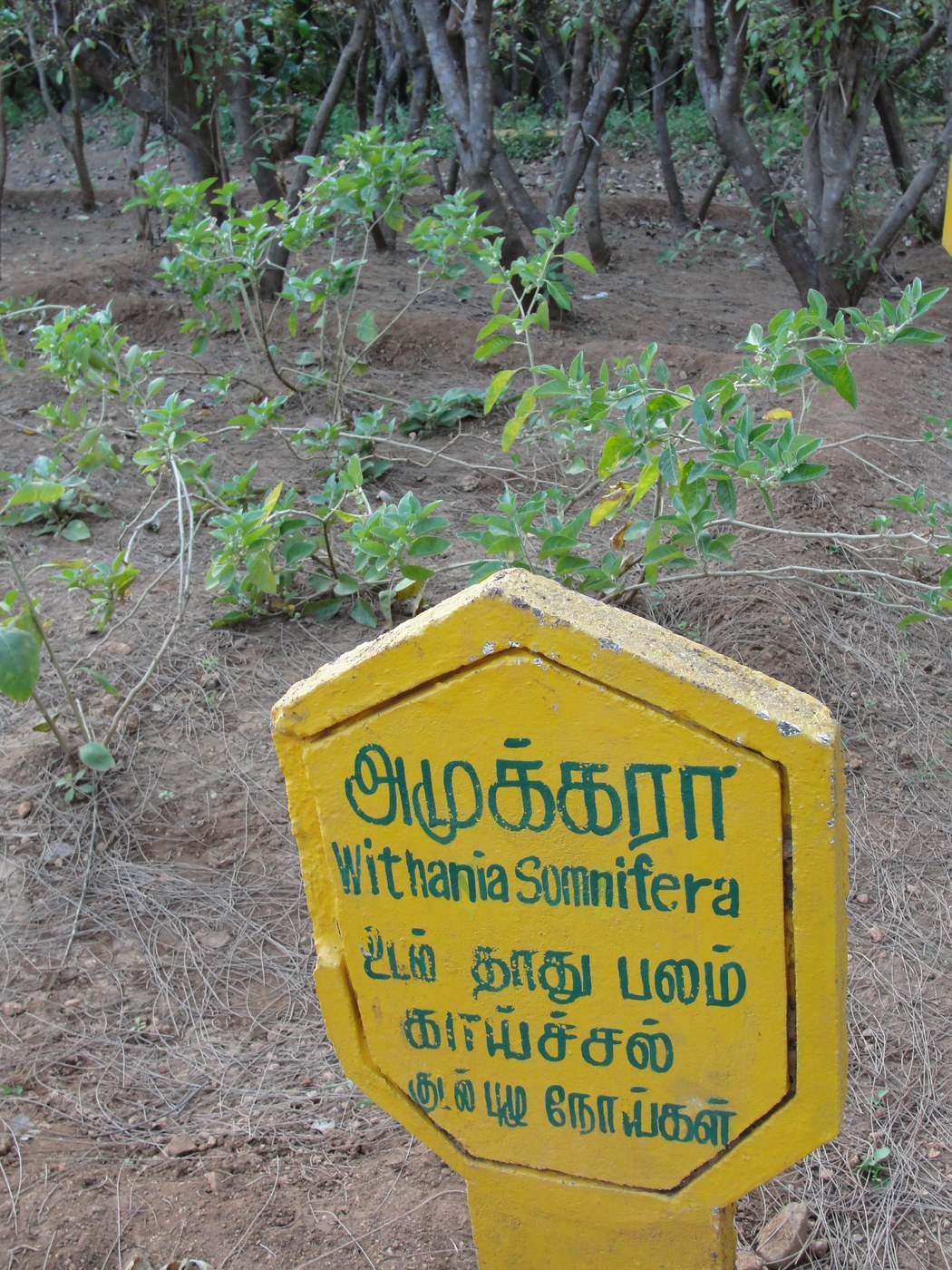
Key Identifying Features
Ashwagandha (Withania somnifera), also called Indian ginseng or winter cherry, is a short woody shrub in the nightshade family (Solanaceae). Its fleshy, tuberous roots smell faintly of horse — ashwagandha means "smell of the horse" in Sanskrit. The most recognizable above-ground feature is its small orange-red berry enclosed in a papery, lantern-like husk, much like a tomatillo or Cape gooseberry.
- Erect, branching shrub 35–150 cm (1–5 ft) tall
- Dull green, oval (elliptic) leaves with a soft, slightly downy surface
- Small, greenish-yellow bell-shaped flowers
- Red-orange berries inside inflated papery calyces
Leaves & Stems
The leaves are simple, ovate, untoothed (entire), and dull grayish-green, typically 4–12 cm long, with a covering of fine star-shaped hairs (tomentose) that gives them a soft, slightly velvety feel. They are arranged alternately on stems, though they may appear paired near flowers. Stems are erect, branching, and woolly when young, becoming woody at the base.
Flowers & Fruit
Flowers are small, about 1 cm, bell-shaped, and greenish-yellow, appearing in small clusters in the leaf axils. The fruit is the key clue: a smooth, round berry that ripens orange to red, enclosed within a papery, inflated, ribbed husk (the persistent calyx) — strongly resembling a miniature Chinese lantern or husked tomatillo.
How to Tell It Apart from Look-Alikes
- Tomatillo / Cape gooseberry (Physalis): also nightshades with husked berries, but their leaves are larger, often toothed, and more heart-shaped; ashwagandha's foliage is duller and softly hairy.
- Other Withania species: very similar; positive ID often relies on root and regional context.
- The horse-like smell of the crushed root is a strong confirming trait unique among common look-alikes.
Where You'll Find It
Ashwagandha is native to dry regions of India, the Middle East, and parts of Africa, growing in dry, stony, disturbed ground, wastelands, and scrub in full sun. It is widely cultivated in India and grown in warm gardens elsewhere. It tolerates poor, sandy soils and drought.
Quick ID Checklist
- Woody branching shrub up to ~1.5 m
- Dull, softly hairy, oval untoothed leaves
- Small greenish-yellow bell flowers in leaf axils
- Orange-red berry in a papery husk
- Tuberous root with a faint horsey smell
A dry-climate nightshade shrub with dull velvety leaves and husked orange berries that smells horsey at the root is ashwagandha.
Frequently asked questions
Why is ashwagandha called the 'smell of horse' plant?
The Sanskrit name refers to the distinctive horse-like odor of its fresh roots, which is a useful identifying trait.
What does the fruit look like?
It is a small round berry that ripens orange to red, enclosed in a papery, inflated, ribbed husk resembling a tiny Chinese lantern or husked tomatillo — a hallmark of the nightshade family.
How is it different from a tomatillo plant?
Both are husked-berry nightshades, but ashwagandha has duller, softly hairy, untoothed oval leaves and is a woody shrub, while tomatillos have larger, often toothed, smoother leaves and a sprawling herbaceous habit.
Where does ashwagandha grow naturally?
It grows in dry, stony, disturbed ground and scrubland in India, the Middle East, and parts of Africa, thriving in full sun and poor sandy soils.