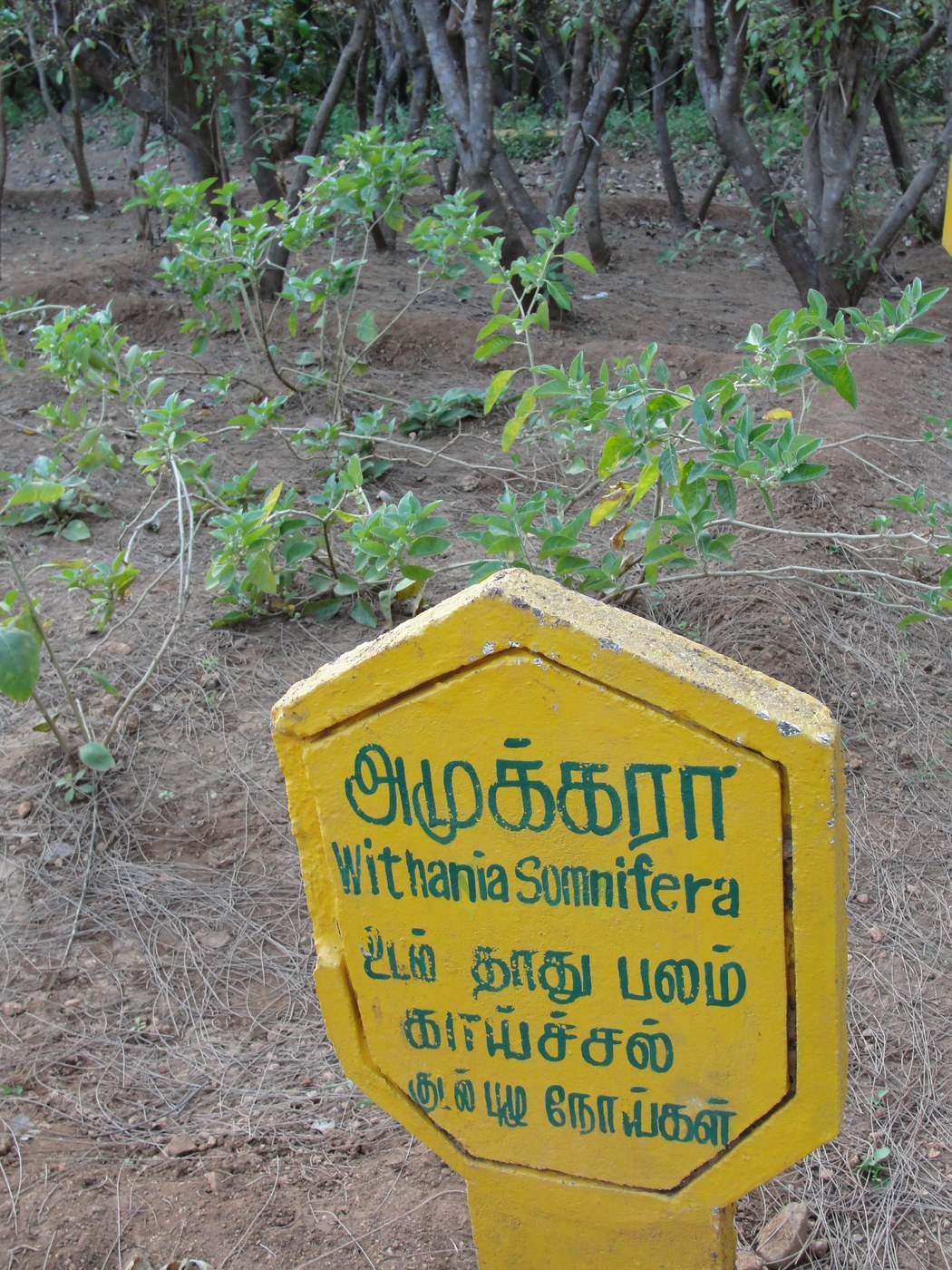
Ashwagandha
Withania somnifera
Ashwagandha is a small, drought-tolerant evergreen shrub of India and the Mediterranean in the nightshade family. It has dull green leaves and small berries held in papery husks.
- Light
- Full sun
- Water
- Low; drought-tolerant once established
- Difficulty
- Moderate
Got a plant like this?
Identify any plant from a photo, free.
Overview
Ashwagandha is a small, woody, evergreen shrub in the nightshade family (Solanaceae), reaching 35-75 cm (sometimes up to 1.5 m).
The name 'ashwagandha' is Sanskrit, roughly 'smell of a horse', referring to the odor of the fresh root.
How to identify it
- Leaves: Dull green, oval, simple, up to 10-12 cm, often slightly hairy
- Flowers: Small, bell-shaped, greenish-yellow, in clusters in the leaf axils
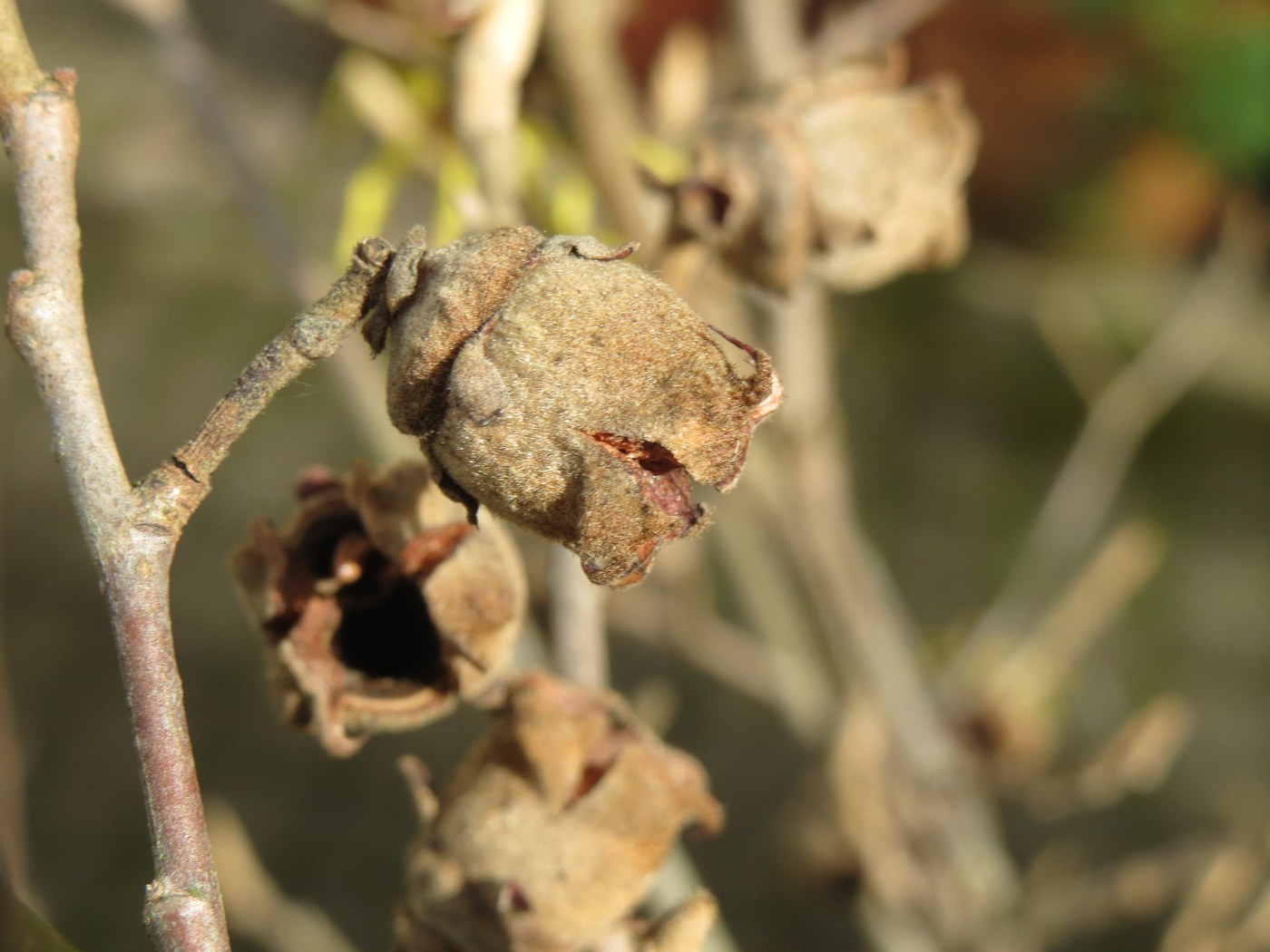
- Fruit: Small round berries that ripen orange-red, enclosed in a papery husk (calyx), like a tiny tomatillo or Cape gooseberry
- Habit: Erect, branching small shrub with a stout taproot
- Roots: Thick, fleshy, whitish taproot
Care & growing
- Light: Full sun; needs warmth and bright light
- Water: Low; drought-tolerant once established, overwatering rots the roots
- Soil: Well-drained, sandy or loamy soil; tolerates poor, dry ground
- Temperature: Warm-climate plant (roughly zones 8-11); grown as a summer annual in cooler regions, sensitive to frost
- Feeding: Minimal; it naturally grows in lean soils
- Propagation: From seed sown in warm soil in spring
Habitat & origin
Ashwagandha is native to dry regions of India, the Middle East, North Africa and the Mediterranean, growing on disturbed ground, wastelands and dry rocky slopes. It is widely cultivated in India (notably Rajasthan, Madhya Pradesh and Gujarat).
It thrives in hot, arid to semi-arid climates and is now grown commercially in parts of Africa and increasingly elsewhere.
Frequently asked questions
What does ashwagandha look like?
It is an erect, branching shrub 35-75 cm tall with dull green oval leaves, small bell-shaped greenish-yellow flowers, and round orange-red berries enclosed in papery husks, like a tiny tomatillo.
Where does ashwagandha grow?
It is native to dry regions of India, the Middle East, North Africa and the Mediterranean, on disturbed ground and dry rocky slopes, and thrives in hot, arid climates.
Can I grow ashwagandha in a cool climate?
Yes, but treat it as a summer annual. Start seed indoors and transplant after the last frost, as the plant is frost-sensitive.
Why is it called 'smell of a horse'?
The Sanskrit name refers to the distinctive odor of the plant's fresh root.
Ashwagandha guides
In-depth guides for identifying, growing, and caring for Ashwagandha.
How to Care for Ashwagandha
Ashwagandha is a heat-loving, drought-tolerant shrub for full sun; grow it in gritty soil with light watering.
Ashwagandha Identification Guide
Identify ashwagandha (Indian ginseng) by its dull green oval leaves, small bell-shaped greenish flowers, and bright red-orange berries enclosed in a papery husk.