Thimbleberry
Rubus parviflorus
Thimbleberry is a thornless North American shrub with large maple-like leaves, white flowers, and soft red berries shaped like thimbles. It thrives in cool, shaded woodlands.
- Light
- Partial shade to full sun
- Water
- Keep moist; tolerates some dryness in shade
- Difficulty
- Easy
Got a plant like this?
Identify any plant from a photo, free.
Overview
Thimbleberry (Rubus parviflorus) is a thornless deciduous shrub in the rose family, native to western and northern North America. It is easily recognized by its large, soft, maple-shaped leaves and showy white flowers.
The fruit is a shallow, dome-shaped aggregate of drupelets that, when picked, slips off the core like a thimble, giving the plant its name. The berries are soft and delicate, so they are rarely seen in commerce.
Thimbleberry forms spreading colonies by rhizomes and is valued in native and woodland gardens for its lush foliage, pollinator-friendly flowers, and wildlife value.
How to identify it
- Fruit: Shallow, cap-shaped cluster of red drupelets that pulls off hollow like a thimble; soft and seedy
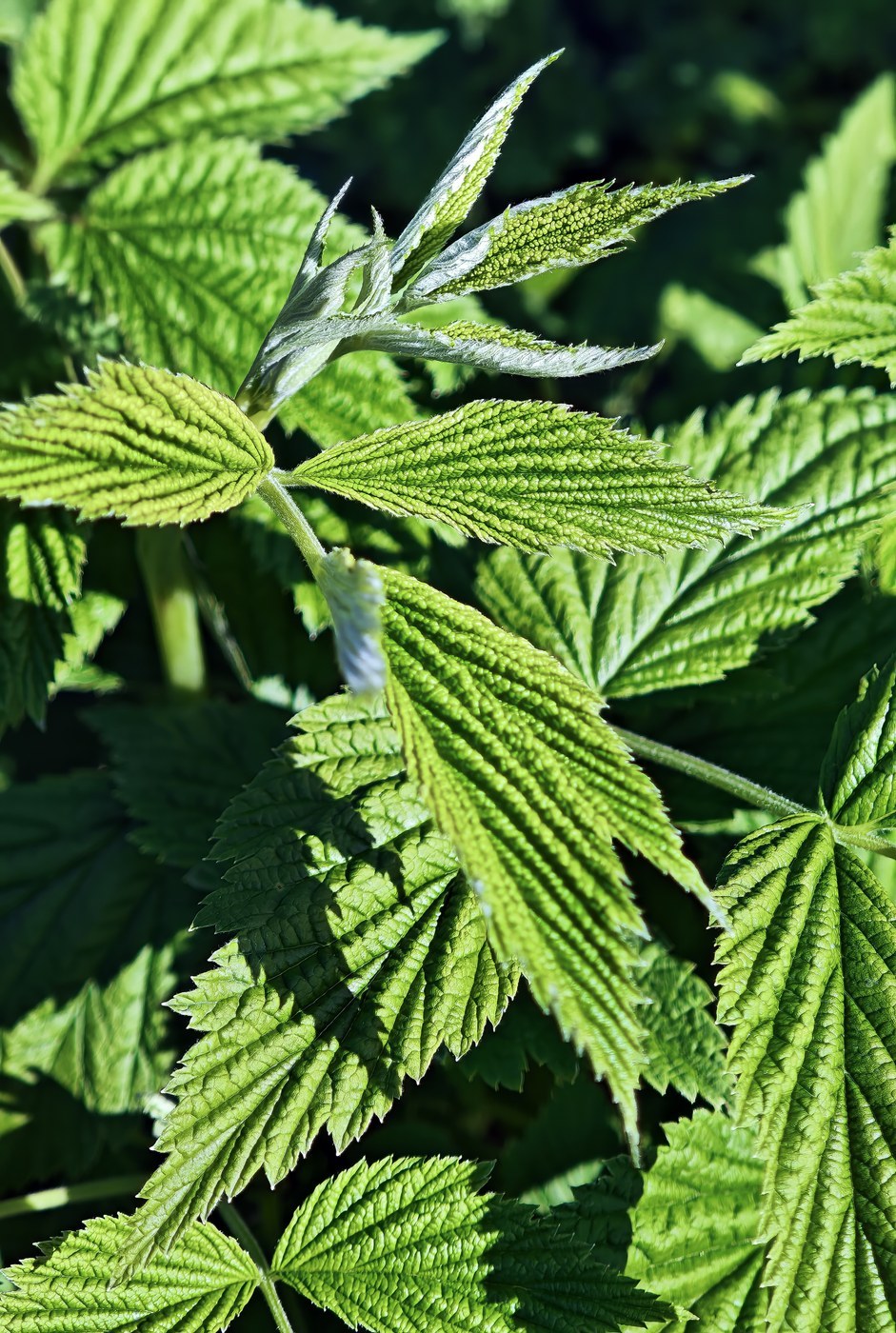
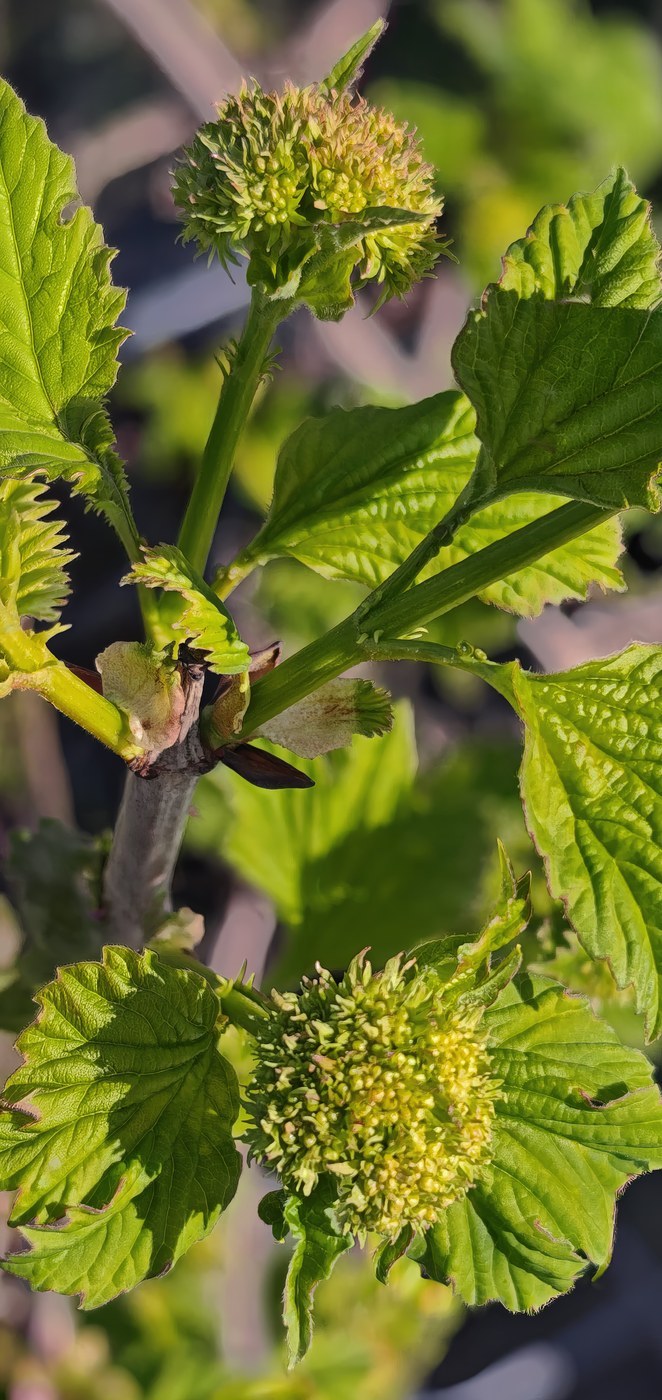
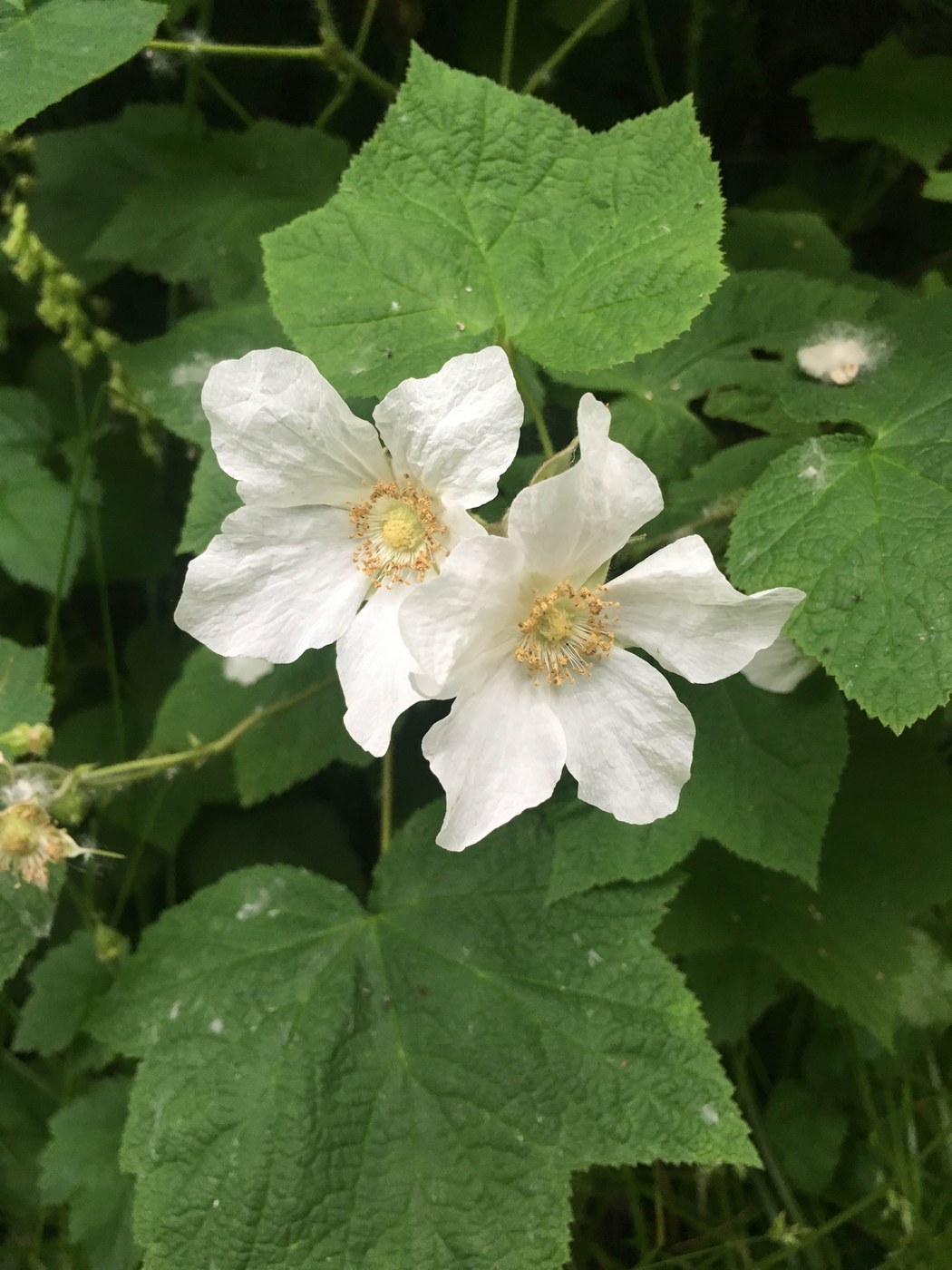
- Leaves: Large (up to 6 in), soft, fuzzy, with 3–5 lobes resembling a maple leaf
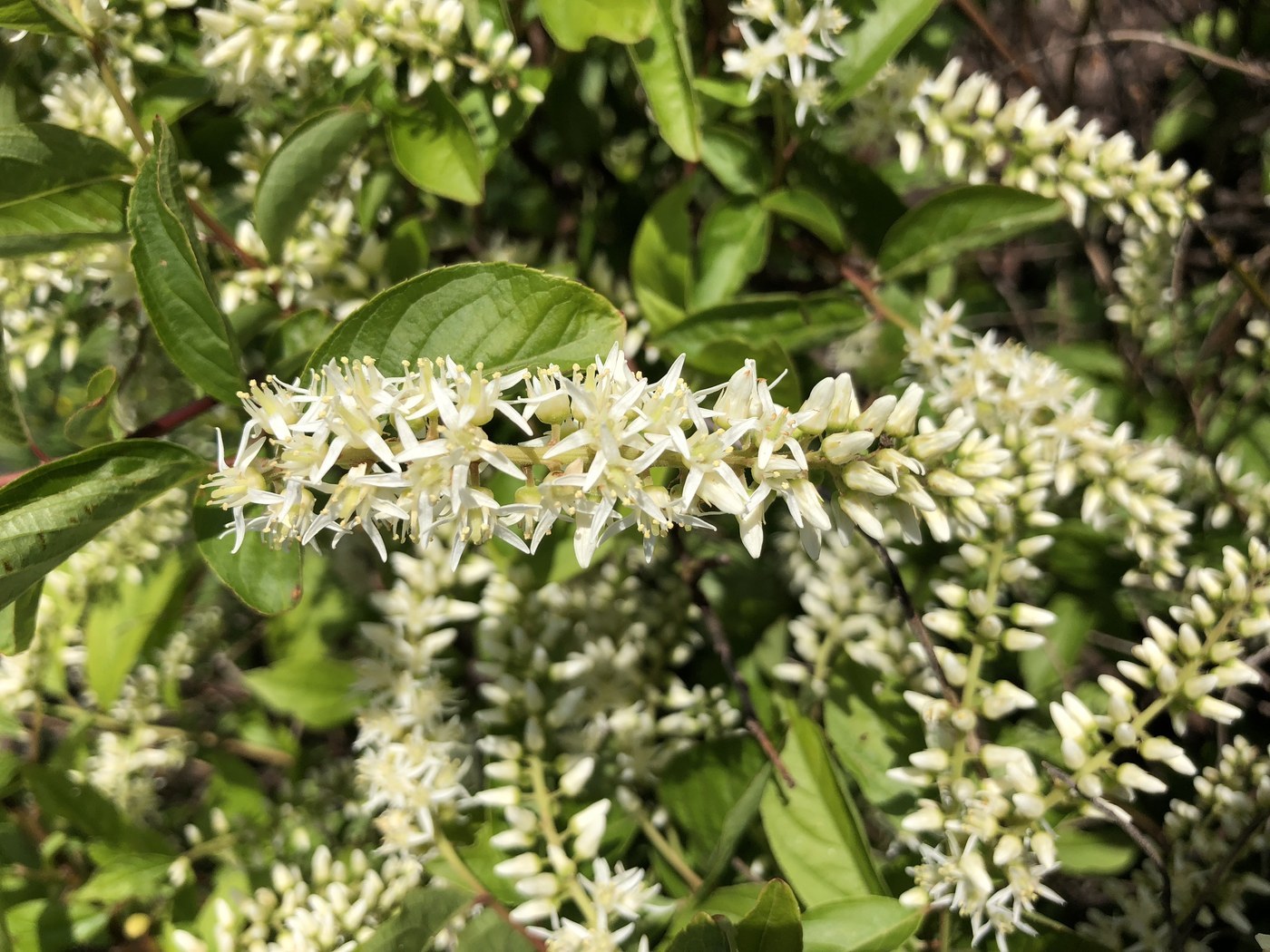
- Flowers: Large, white, papery, five-petaled, in small clusters
- Stems: Erect, thornless, with shredding brown bark
- Size: Typically 2–8 ft tall, thicket-forming
Care & growing
Light: Grows in partial shade to full sun; tolerates more sun where soil stays moist.
Water: Prefers consistently moist soil but tolerates some dryness in shaded sites once established.
Soil: Rich, well-draining woodland soil with organic matter; adaptable to a range of pH.
Temperature: Cold-hardy across roughly USDA zones 3–9; well suited to cool climates.
Feeding: Minimal; mulching with leaf litter or compost suits its woodland nature.
Propagation: Spreads readily by rhizomes; also propagated by division, cuttings, or seed. It naturalizes easily.
Habitat & origin
Thimbleberry is native to western and northern North America, from Alaska and Canada south through the western mountains to Mexico, and around the Great Lakes. It grows in moist forests, clearings, roadsides, and along streams.
A common pioneer of disturbed and open woodland sites, it is also planted in native, pollinator, and woodland gardens and used in habitat restoration.
Frequently asked questions
Why is it called a thimbleberry?
When you pick the ripe fruit, it separates from the core and forms a hollow, dome-shaped cap that fits over a fingertip like a thimble.
Does thimbleberry have thorns?
No. Unlike most raspberries and blackberries, thimbleberry is thornless, making it pleasant to handle.
Does thimbleberry spread?
Yes, it spreads by underground rhizomes to form thickets. This makes it good for naturalizing and erosion control but worth containing in small gardens.
How do I recognize thimbleberry?
Look for a thornless shrub with large, soft, fuzzy maple-shaped leaves, large white papery flowers, and shallow cap-shaped red fruit.
Thimbleberry guides
In-depth guides for identifying, growing, and caring for Thimbleberry.
How to Care for Thimbleberry
Grow spineless native thimbleberry for big maple-like leaves and white spring flowers in moist, part-shade woodland settings.
Thimbleberry Identification Guide
Identifying thimbleberry by its large fuzzy maple-shaped leaves, thornless stems, white flowers, and shallow thimble-like red fruit.