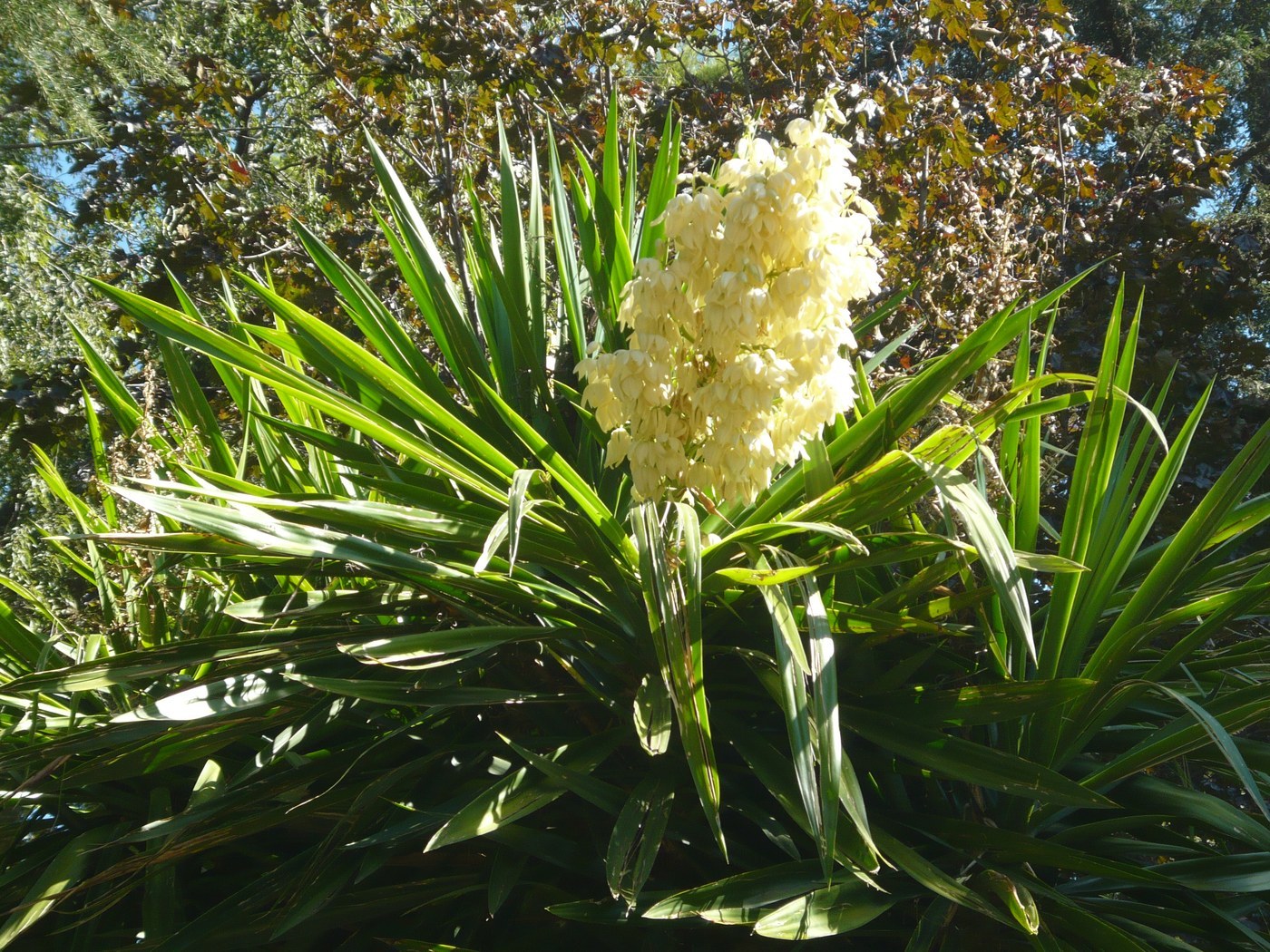
Yucca Palm
Yucca elephantipes
The yucca palm is not a true palm but a tough, drought-tolerant evergreen from Central America, prized as an architectural houseplant with rosettes of sword-shaped leaves atop woody canes.
- Light
- Bright direct to indirect light
- Water
- Sparingly; let soil dry deeply
- Difficulty
- Easy
Got a plant like this?
Identify any plant from a photo, free.
Overview
Despite its common name, the yucca palm is not a palm at all but a member of the asparagus family (Asparagaceae). It is grown indoors and out for its bold, tree-like silhouette of thick canes topped by fountains of strappy green leaves.
Native to Mexico and Guatemala, Yucca elephantipes is one of the most forgiving large houseplants you can own. It thrives on neglect, tolerating bright sun, dry air, and infrequent watering, which makes it a favorite for offices and sunny rooms.
How to identify it
Look for these defining traits:
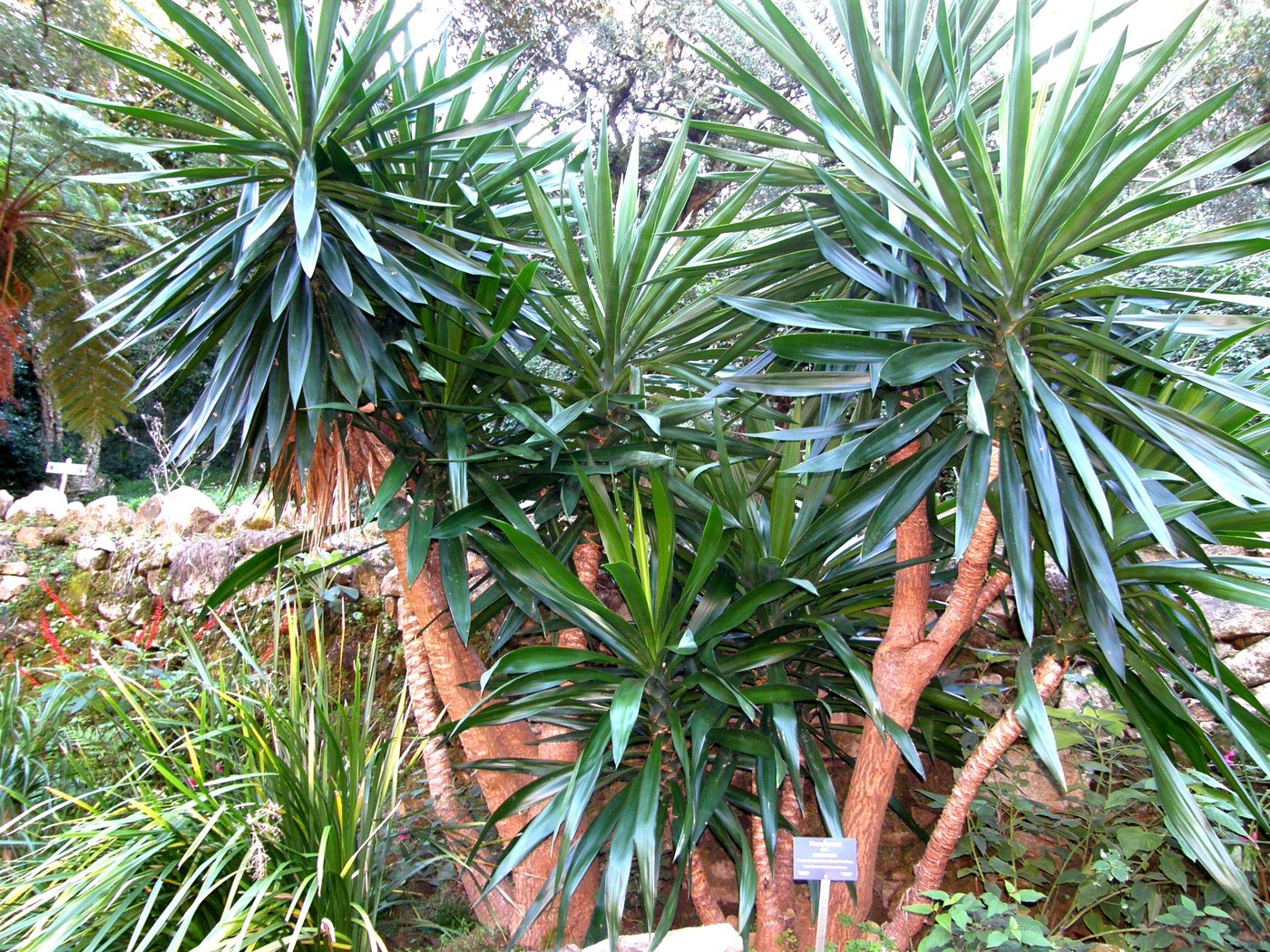
- Canes: thick, woody, often branched trunks that swell at the base (hence elephantipes, "elephant foot")
- Leaves: long, sword-shaped, leathery green blades up to 3 ft long, arranged in dense terminal rosettes
- Leaf tips: soft and unarmed, unlike many spiny wild yuccas
- Size: reaches 5-10 ft indoors; much taller outdoors in mild climates
- Flowers: rare indoors, but mature plants produce tall panicles of creamy bell-shaped blooms
Care & growing
Light: As much as you can give it; bright direct sun is ideal, though it tolerates bright indirect light.
Water: Water only when the soil has dried out, roughly every 2-3 weeks. Overwatering causes root and cane rot, the most common killer.
Soil: Fast-draining, gritty mix; add sand or perlite to standard potting soil.
Temperature: 65-80F; tolerates dry indoor air well and brief cool spells.
Feeding: Light feeding once or twice in spring and summer is plenty.
Propagation: Easy from cane cuttings or offsets; let cut ends callus before potting.
Habitat & origin
Yucca elephantipes is native to the arid and semi-arid regions of Mexico and Guatemala, where it grows in well-drained, sunny scrubland and rocky slopes.
It is widely cultivated as a landscape plant in frost-free climates such as the southern United States, the Mediterranean, and subtropical Asia, and is one of the most popular indoor "tree" plants worldwide.
Frequently asked questions
Is the yucca palm a real palm?
No. It is a member of the asparagus family and only resembles a palm in form. True palms are unrelated.
Why are my yucca's leaves turning yellow?
Usually overwatering. Let the soil dry out completely between waterings and ensure the pot drains freely.
How much light does it need?
As much as possible. It loves bright direct sun but will cope with bright indirect light, growing more slowly.
How do I identify a yucca palm?
Look for thick woody canes that swell at the base, topped with dense rosettes of long, soft-tipped, sword-shaped green leaves.
Yucca Palm guides
In-depth guides for identifying, growing, and caring for Yucca Palm.
How to Care for Yucca Palm
Growing guide for Yucca Palm (Yucca elephantipes), an easy, architectural indoor shrub with sword-like leaves and a thick trunk.
Yucca Palm Identification Guide
How to recognize the Yucca Palm (often Yucca elephantipes/Y. gigantea) by its thick cane trunk, fountain of stiff sword leaves, and growth habit.