Tayberry
Rubus fruticosus x Rubus idaeus
A cultivated cross between a blackberry and a red raspberry, producing long, dark-red berries that are larger than either parent. It grows on vigorous, trailing canes.
- Light
- Full sun to partial shade
- Water
- Regular; keep moist while fruiting
- Difficulty
- Easy
Got a plant like this?
Identify any plant from a photo, free.
Overview
The tayberry is a hybrid cane fruit bred in Scotland, crossing a blackberry with a red raspberry. Released in 1979 and named after the River Tay, it combines the size of a blackberry with the form of a raspberry.
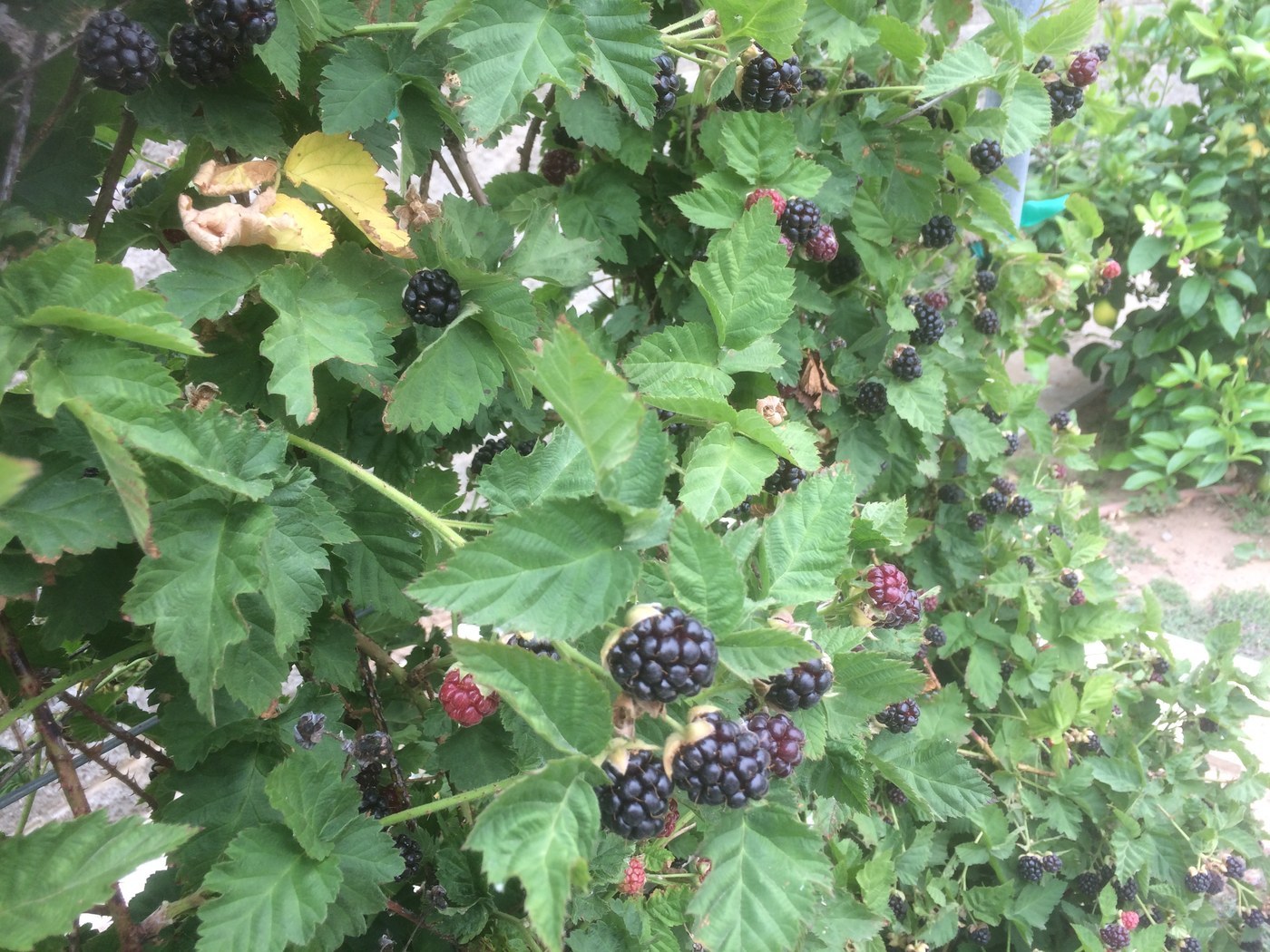
The berries are noticeably long and conical, ripening to a deep wine-red. They are soft and ripen unevenly, which makes the plant better suited to gardens than to large-scale commercial shipping.
Like other brambles, it grows on biennial canes: shoots grow one year and fruit the next. It is a relative of the loganberry and boysenberry within the same group of Rubus hybrids.
How to identify it
- Vigorous, trailing or semi-trailing cane fruit (bramble) that needs support
- Long, often thorny canes (thornless selections exist) reaching several meters
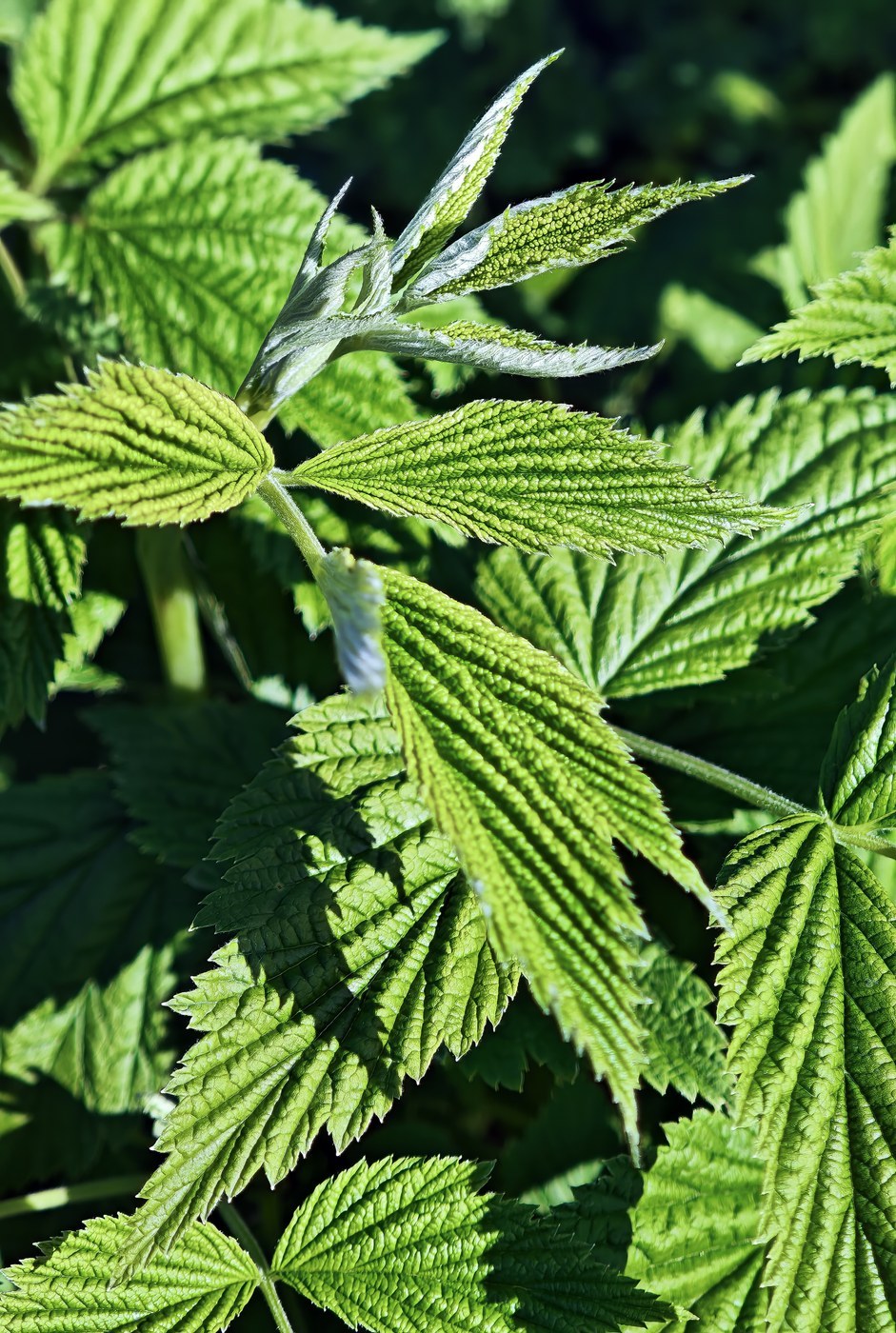
- Compound leaves with toothed leaflets, typical of Rubus
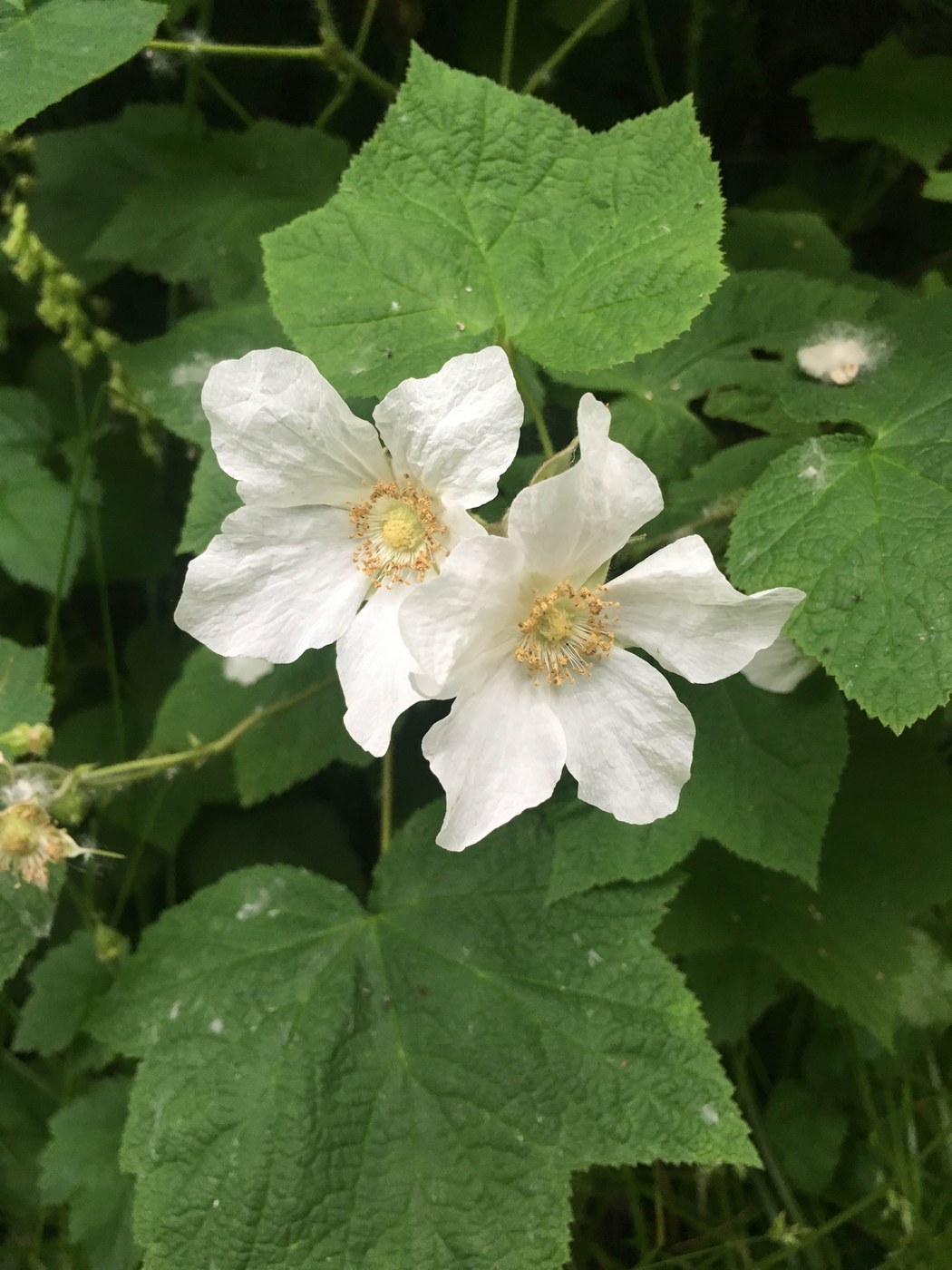
- White to pale pink five-petaled flowers
- Long, conical aggregate berries, larger than a raspberry, ripening from red to deep purplish-red, with soft flesh that stays attached to its core when picked
Care & growing
Light: Full sun for best yields; tolerates partial shade.
Water: Regular watering, especially during flowering and fruiting; mulch to retain moisture.
Soil: Fertile, well-drained, moisture-retentive soil rich in organic matter; slightly acidic to neutral.
Temperature: Hardy in cool temperate climates; canes tolerate frost, though late frosts can damage blossom.
Feeding: Annual mulch of compost or manure plus a balanced fertilizer in spring.
Propagation: Easily by tip layering (burying cane tips to root) in late summer; train canes on wires and remove old fruited canes after the season.
Habitat & origin
A cultivated hybrid with no wild native range; it was developed at the Scottish Horticultural Research Institute near Dundee, Scotland.
It is grown in temperate gardens and small orchards, especially in the British Isles, northern Europe, and other cool temperate regions. It thrives in the same conditions that suit blackberries and raspberries.
Frequently asked questions
What is a tayberry a cross between?
It is a hybrid of a blackberry and a red raspberry, combining the size of the blackberry with the cane form of the raspberry.
How is a tayberry different from a loganberry?
Both are blackberry x raspberry hybrids, but the tayberry produces larger berries and was bred later specifically as an improvement on earlier crosses.
Why are tayberries rarely sold in stores?
The berries are soft and ripen unevenly, so they do not store or ship well, and the plant is mostly grown in gardens and for local pick-your-own use.
Do tayberries fruit on new or old canes?
They fruit on canes produced the previous season. After those canes fruit, you cut them out and tie in the new canes for the following year.
Tayberry guides
In-depth guides for identifying, growing, and caring for Tayberry.
How to Care for Tayberry
Grow vigorous, cane-forming Tayberry with full sun, steady moisture, and yearly cane training for a healthy, productive bramble.
Tayberry Identification Guide
Identify the tayberry (a blackberry × raspberry hybrid) by its long arching thorny canes, three-to-five-leaflet leaves, white-to-pink flowers, and large elongated dark-red fruit that keeps its core when picked.