Witch Hazel
Hamamelis virginiana
Witch hazel is a deciduous shrub or small tree famous for fragrant, spidery yellow flowers that bloom in late fall or winter when little else does.
- Light
- Full sun to part shade
- Water
- Weekly; consistent moisture
- Difficulty
- Easy
Got a plant like this?
Identify any plant from a photo, free.
Overview
Witch hazel (Hamamelis virginiana) is a deciduous large shrub or small tree native to eastern North America, celebrated for blooming in late autumn, often as its yellow leaves drop, with clusters of fragrant, ribbon-petaled yellow flowers. Asian and hybrid species (H. mollis, H. x intermedia) bloom in late winter and offer orange and red forms.
It grows 10-20 ft with a spreading, often multi-stemmed habit and good golden fall color.
How to identify it
- Habit: Multi-stemmed large shrub or small tree, 10-20 ft, with a spreading, layered crown.
- Flowers: Fragrant clusters of yellow (or orange/red in hybrids) flowers with four narrow, crinkled, ribbon-like petals; bloom in late fall (native) or late winter (Asian types).
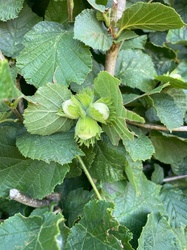
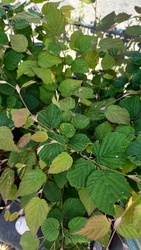
- Leaves: Alternate, oval with wavy-toothed margins and uneven leaf bases; golden-yellow fall color.
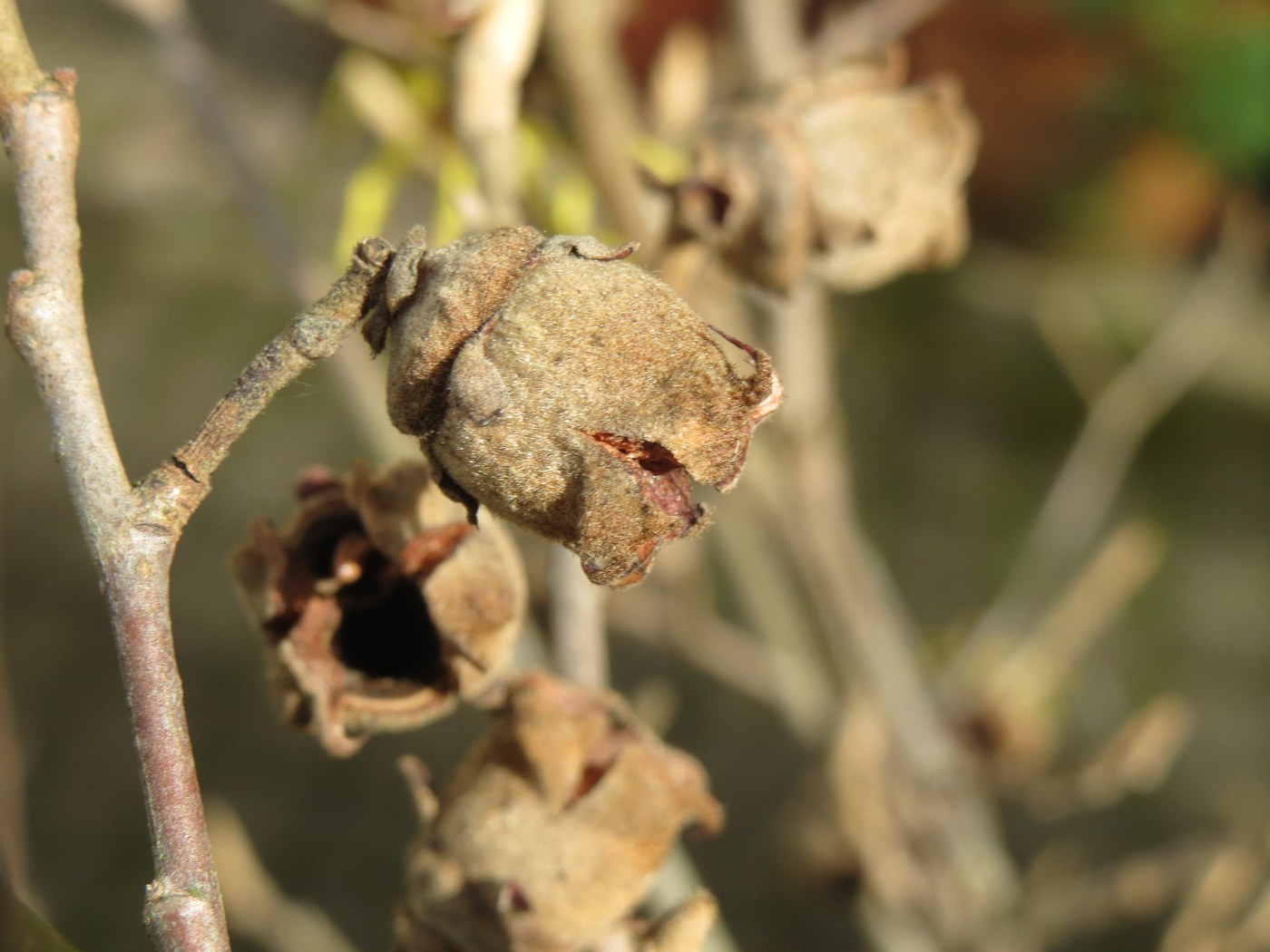
- Fruit: Woody capsules that explosively eject seeds when ripe.
- Bark: Smooth, light brown.
Care & growing
Light: Full sun to partial shade; more sun gives denser form and better bloom.
Water: Keep evenly moist, about weekly; appreciates rich, moisture-retentive soil.
Soil: Moist, well-drained, slightly acidic, organic-rich soil.
Temperature: Hardy USDA zones 3-8 (varies by species).
Feeding: Light spring feeding; mulch to retain moisture.
Pruning/Propagation: Prune after flowering to shape; remove suckers. Species grown from stratified seed; named cultivars are grafted.
Habitat & origin
Common witch hazel is native to the woodlands of eastern North America, from Canada to the southern U.S., where it grows as an understory shrub in moist forests and along stream banks.
Other species are native to Japan, China and the Ozarks/southeastern U.S. (H. vernalis). Witch hazels are grown as ornamentals across temperate gardens in zones 3-8 for their winter bloom.
Frequently asked questions
When does witch hazel bloom?
Common witch hazel blooms in late fall; Asian and hybrid species bloom in late winter to early spring.
Why is it called witch hazel?
From the use of its forked branches as divining or 'wych' (bendable) rods; 'witch' derives from an old word for pliant.
How do I recognize witch hazel?
Look for fragrant yellow (or orange/red in hybrids) flowers with four narrow, crinkled, ribbon-like petals appearing on bare or nearly bare branches in fall or winter, plus oval leaves with wavy-toothed margins.
Where does witch hazel grow naturally?
Common witch hazel is native to eastern North American woodlands, growing as an understory shrub in moist forests and along stream banks.
Witch Hazel guides
In-depth guides for identifying, growing, and caring for Witch Hazel.
How to Care for Witch Hazel
A graceful woodland shrub with fragrant late-season flowers; give witch hazel sun to part shade, moist acidic soil, and steady water.
Witch Hazel Identification Guide
Identify witch hazel (Hamamelis) by its spidery, ribbon-petaled yellow to orange flowers blooming in late fall or winter on bare branches, and its wavy-edged, uneven-based leaves.
Witch Hazel identified by the community
Real specimens identified with Plant Identifier.