Witch Hazel Identification Guide
Identify witch hazel (Hamamelis) by its spidery, ribbon-petaled yellow to orange flowers blooming in late fall or winter on bare branches, and its wavy-edged, uneven-based leaves.
Read the full Witch Hazel encyclopedia entry →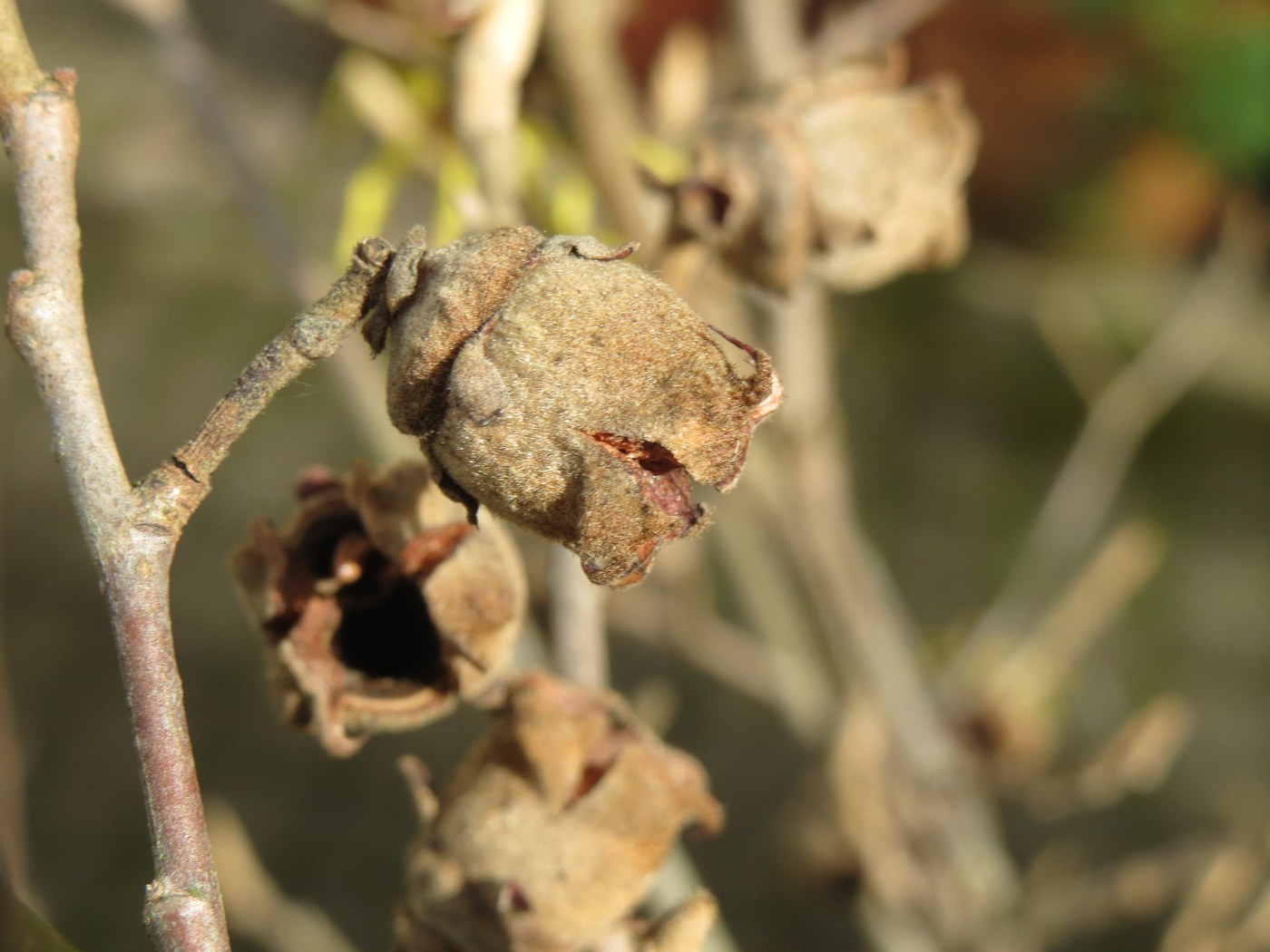
Key Identifying Features
Witch hazel (genus Hamamelis) is a deciduous shrub or small tree famous for flowering when almost nothing else does. Identify it by:
- Spidery flowers with four narrow, crinkled, strap- or ribbon-like petals in yellow, orange, or red
- Bloom timing on bare or nearly bare branches — native species flower in fall to early winter, hybrids and Asian species in late winter to early spring
- Wavy-margined, oval leaves with an uneven (asymmetric) base and a fragrance when crushed
- Explosive seed capsules that fling black seeds several feet
Leaves & Stems
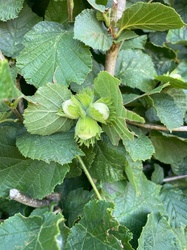
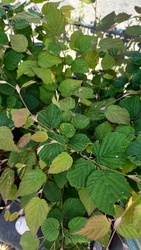
Leaves are alternate, simple, broadly oval to obovate, 3-6 inches long, with wavy, scalloped (crenate) margins and a distinctly lopsided, unequal leaf base — a classic family trait shared with Persian ironwood. The veins are straight and prominent, running to the wavy edge. Foliage is medium green, turning clear yellow to gold (sometimes orange) in fall; on the native fall-bloomer, flowers and yellow leaves often appear together.
Stems are slender, gray-brown, and zigzag, with hairy, naked (scaleless) buds. The plant is usually multi-stemmed and vase-shaped, 10-20 ft, with arching branches.
Flowers & Fruit
The flowers are unmistakable: clusters of small blooms each with four thin, twisted, ribbon-like petals that look like shredded crepe paper, in yellow (most common), coppery orange, or red, often lightly fragrant. Petals can curl up in hard freezes and re-open when it warms.
The fruit is a woody two-beaked capsule that takes nearly a year to ripen, then splits explosively to eject two shiny black seeds up to 20-30 feet — the loud snap gives rise to folklore. Old capsules persist on the twigs.
How to Tell It Apart from Look-Alikes
- Forsythia: also yellow and early but flowers have four flat, broad petals (not thin ribbons) and opposite leaves.
- Persian ironwood (Parrotia): nearly identical leaves but flowers are petal-less red stamen tufts, and it has spectacular flaking bark.
- Spicebush (Lindera): early yellow flowers but tiny clustered and unscented-strappy; leaves smooth-edged.
The four crinkled ribbon petals + off-season bloom on bare twigs + wavy uneven-based leaves + exploding capsules combination is diagnostic for witch hazel.
Where You'll Find It
The native common witch hazel (Hamamelis virginiana) grows wild in moist woods and stream edges across eastern North America (zones 3-8), blooming October-December. Asian species and the popular H. x intermedia hybrids are planted ornamentals blooming January-March in zones 5-8. Look in understory woodland and in gardens prized for winter color.
Quick ID Checklist
- Multi-stemmed vase-shaped shrub/small tree, 10-20 ft
- Spidery flowers with four thin crinkled ribbon petals (yellow/orange/red)
- Blooms on bare branches in fall or late winter (off-season)
- Wavy-edged leaves with an uneven base and straight veins
- Woody two-beaked capsules that fling black seeds
- Hairy naked buds; yellow-gold fall color
A shrub covered in shredded-ribbon yellow-to-orange flowers on bare branches in cold months, with wavy lopsided leaves, is witch hazel.
Frequently asked questions
When does witch hazel bloom?
It depends on the species. The native common witch hazel (Hamamelis virginiana) blooms in fall to early winter, October through December, while Asian species and the H. x intermedia hybrids bloom in late winter to early spring, roughly January to March.
What makes the flowers look spidery?
Each flower has four very narrow, twisted, crinkled petals that resemble thin ribbons or shredded crepe paper, giving the clusters a spidery, fringed appearance unlike any common look-alike.
How do I tell witch hazel from forsythia?
Both can be yellow, but forsythia has four flat, broad petals and opposite leaves and blooms in spring, while witch hazel has four thin ribbon-like petals, alternate wavy leaves with uneven bases, and often blooms in fall or late winter.
Do the seed capsules really explode?
Yes. The woody two-beaked capsule takes nearly a year to ripen, then splits open forcefully and flings its two shiny black seeds up to 20-30 feet, often with an audible snap, which is the origin of some of the plant's folklore.
Witch Hazel identified by the community
Recent Witch Hazel specimens identified with Plant Identifier.