
How to Care for Thimbleberry
Grow spineless native thimbleberry for big maple-like leaves and white spring flowers in moist, part-shade woodland settings.
Read the full Thimbleberry encyclopedia entry →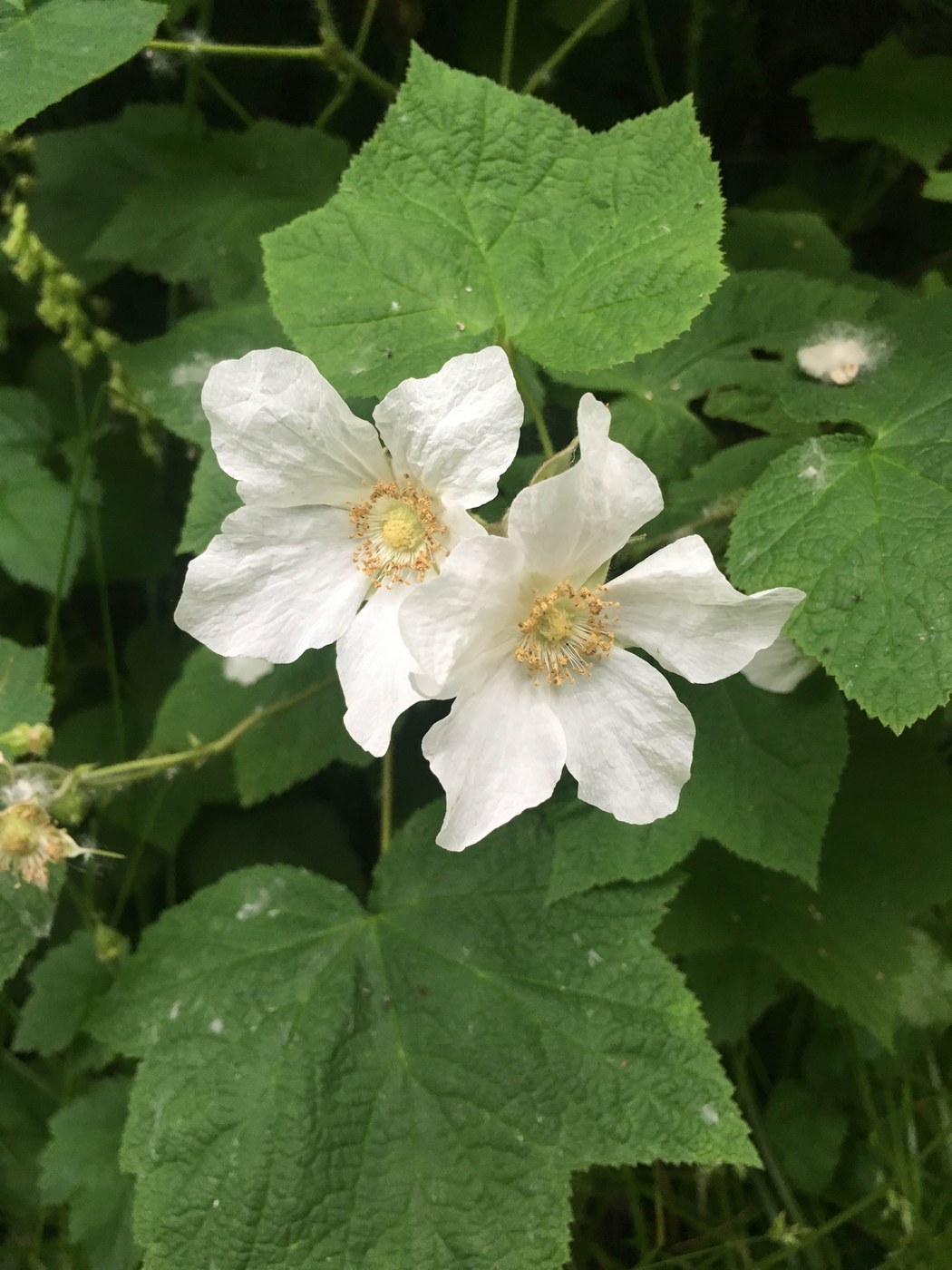
Thimbleberry (Rubus parviflorus) is a spineless, thicket-forming native shrub grown for its large, soft, maple-like leaves and showy white spring flowers. Unlike its bramble relatives it has no thorns, making it an attractive, low-maintenance choice for woodland gardens, naturalized borders, and shady slopes.
Light
Thimbleberry grows well in partial shade to full sun. It is naturally a woodland-edge plant and thrives in dappled light or part shade, where its broad leaves stay lush. It will take full sun in cooler climates and with reliable moisture, but in hot regions or dry sites too much sun scorches the foliage. Light shade generally produces the best-looking plants.
Water
Keep the soil moist. Thimbleberry favors consistently damp ground, particularly when grown in sun, though established plants in shade tolerate some dryness. Water regularly during the first seasons and through dry spells to keep the shallow roots supplied. Avoid letting it bake dry for long, but also avoid stagnant waterlogging, as it prefers moist yet reasonably draining soil.
Soil & Potting
Give thimbleberry rich, moisture-retentive, well-drained soil high in organic matter, ideally slightly acidic. It naturally grows in humus-rich woodland and streamside soils, so amend planting sites with compost or leaf mold. It adapts to a range of soils as long as they don't stay bone dry or permanently soggy. A generous organic mulch keeps roots cool and moist and suits its woodland nature.
Humidity & Temperature
This is a hardy, cold-tolerant shrub native to cool temperate regions, comfortable through cold winters and mild summers. It appreciates cool, humid, woodland-like conditions and can struggle in hot, dry heat. It is deciduous, dropping its leaves in fall and resprouting in spring. No special humidity provision is needed in a suitable climate; a shaded, sheltered site keeps it happiest.
Feeding
Thimbleberry needs only modest feeding. A spring application of compost or a balanced, slow-release fertilizer supports healthy leaf and cane growth. In rich woodland soil it may need nothing beyond an annual mulch of organic matter, which feeds the plant as it breaks down. Avoid heavy fertilizing, which encourages excessive, floppy growth.
Propagation
Thimbleberry spreads naturally by underground rhizomes and is easily propagated by division or by lifting rooted suckers from the edge of a clump. It can also be grown from seed, which benefits from cold, moist stratification to break dormancy, and from softwood cuttings taken in the growing season. Division of the spreading roots is the simplest and most reliable method.
Repotting / Pruning
A spreading, suckering shrub, thimbleberry is best grown in the open ground rather than long-term in pots. Prune out old, spent canes at the base after they finish, and thin crowded stems to keep the thicket open and healthy. Because it spreads by rhizomes, cut back or remove wandering suckers to control its size, or site it where it can naturalize into a colony.
Common Problems & Pests
Thimbleberry is generally robust and low-maintenance. Like other Rubus it can be affected by fungal issues such as leaf spot, rust, and cane diseases, especially in crowded, poorly ventilated plantings—thin canes and ensure airflow to prevent them. Aphids and spider mites may appear on stressed plants, and its vigorous suckering habit can itself become a maintenance concern in small gardens.
Seasonal Care Tips
In spring, fresh canes and large white flowers emerge; refresh mulch and divide or transplant suckers as needed. Through summer, keep the soil moist, especially in sun, and enjoy the lush foliage. In fall the leaves color and drop; cut out spent canes and tidy the clump. In winter the deciduous shrub rests, returning vigorously from its rhizomes the following spring—an easy, self-renewing woodland plant.
Frequently asked questions
Does thimbleberry have thorns?
No—unlike most of its bramble relatives, thimbleberry is spineless, which makes it far more pleasant to grow and handle. Its large, soft, maple-like leaves and thornless canes give it a lush, ornamental look in woodland and shade gardens.
How much sun does thimbleberry need?
It grows in partial shade to full sun. As a woodland-edge plant it does best in dappled light or part shade with moist soil. It tolerates full sun in cooler climates, but in hot regions strong sun can scorch its broad leaves, so some afternoon shade is ideal.
How do I keep thimbleberry from spreading too much?
Thimbleberry spreads by underground rhizomes and forms thickets. To contain it, remove wandering suckers as they appear, install root barriers, or plant it where it can naturalize freely. Regularly thinning the canes also keeps the clump manageable and healthy.
When and how should I prune thimbleberry?
Prune out old, spent canes at the base once they finish, and thin crowded stems to improve airflow and reduce disease. Fall or late winter is a good time for cleanup. Removing dead and excess canes keeps the thicket open, vigorous, and attractive.