
Astragalus Identification Guide
How to identify astragalus (Astragalus membranaceus and relatives) by its pinnate leaves, pale yellow pea flowers, inflated pods, and trailing growth.
Read the full Astragalus encyclopedia entry →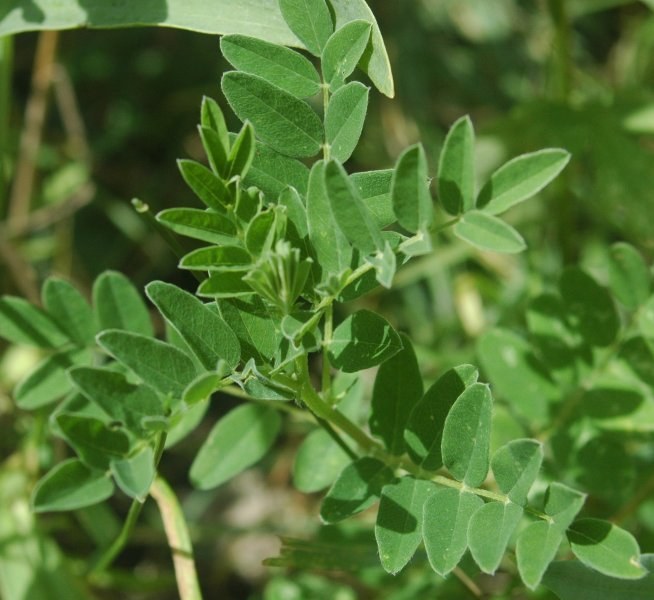
Key Identifying Features
Astragalus is the largest genus of flowering plants, with over 2,000 species of milkvetches and locoweeds. Astragalus membranaceus (now A. mongholicus) is the species usually meant. General identification points for the genus:
- Pinnately compound leaves with many small paired leaflets.
- Pea-family (papilionaceous) flowers in clusters, often pale yellow, cream, white, or purple.
- Inflated or pod-like legume fruits, sometimes papery and bladder-like.
- A low, sprawling-to-upright habit; A. membranaceus reaches 40–80 cm.
Leaves & Stems
Leaves are alternate and odd-pinnate, with numerous small oval leaflets (often 12–18 pairs in A. membranaceus) arranged neatly along the rachis. Leaflets are typically soft, hairy beneath, and pale green. Stems are slender, often finely hairy, and may trail along the ground or stand semi-erect. The root of A. membranaceus is long, fibrous, and yellowish. Many wild Astragalus species are likewise hairy with a tap-rooted base.
Flowers & Fruit
Flowers are classic pea-shaped, with a banner, two wings, and a keel. In A. membranaceus they are pale yellow to cream, borne in loose, elongated clusters (racemes) rising from the leaf axils in summer. Across the genus, color ranges from white and yellow to pink and purple. The fruit is a legume pod, and in many species it is inflated, papery, or bladder-like, sometimes mottled — a useful genus clue. A. membranaceus pods are smaller and somewhat membranous (hence the name).
How to Tell It Apart from Look-Alikes
- Licorice (Glycyrrhiza) and vetches (Vicia): share pinnate leaves and pea flowers; vetches usually have tendrils (Astragalus does not).
- Oxytropis (locoweed): very similar but has a pointed beak on the keel petal and leaves all arising from the base — a key separator from true Astragalus.
- Lupines: have palmate (hand-shaped) leaves, not pinnate.
- Note: precise species ID requires examining pod and flower detail.
Where You'll Find It
Astragalus membranaceus is native to northern China, Mongolia, and Korea, on grassy hillsides and forest margins, and is widely cultivated. The broader genus spans temperate and arid regions worldwide — prairies, deserts, steppes, and mountain slopes, often on dry, well-drained soils.
Quick ID Checklist
- Odd-pinnate leaves with many small paired leaflets
- No tendrils (unlike vetches)
- Pea-shaped flowers, often pale yellow/cream, in racemes
- Inflated or papery legume pods
- Hairy stems and leaflets; yellowish fibrous root in A. membranaceus
Pinnate leaves without tendrils plus inflated pods point to Astragalus.
Frequently asked questions
How do I distinguish Astragalus from vetch?
Vetches (Vicia) climb using tendrils at the leaf tips, while Astragalus has no tendrils and is usually bushier or sprawling. Both have pinnate leaves and pea flowers otherwise.
What color are Astragalus membranaceus flowers?
Pale yellow to cream, borne in loose elongated clusters in summer. Other species in the genus range from white and yellow to pink and purple.
How do I tell Astragalus from locoweed (Oxytropis)?
Oxytropis has a small pointed beak at the tip of the keel petal and leaves arising from the base, while true Astragalus lacks that keel beak.