
Atlas Cedar Identification Guide
Identify the Atlas Cedar (Cedrus atlantica) by its stiff, ascending branches, short needles in spur rosettes, and (in the popular blue form) striking silvery-blue foliage.
Read the full Atlas Cedar encyclopedia entry →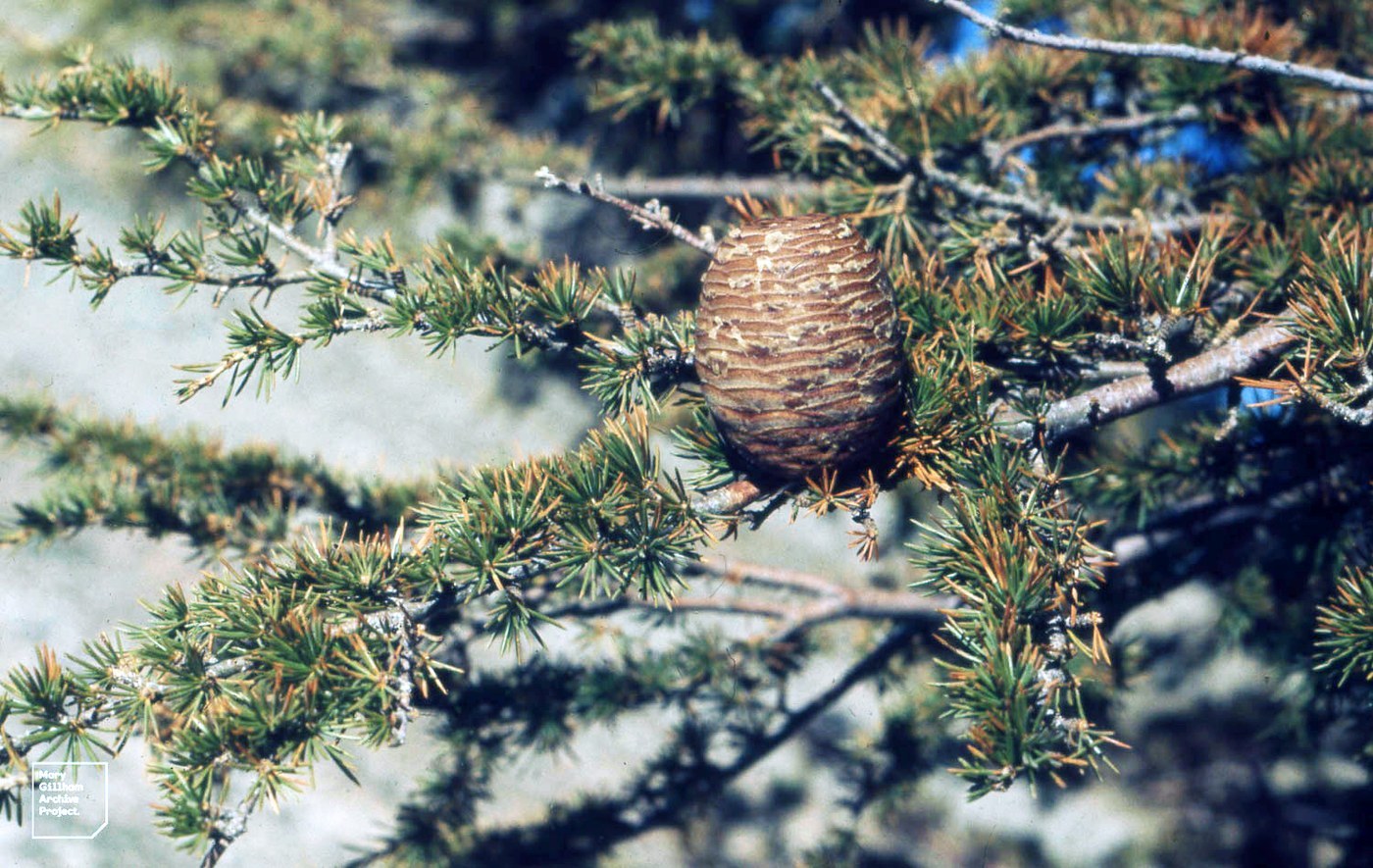
Key Identifying Features
The Atlas Cedar (Cedrus atlantica) is a large true cedar from the Atlas Mountains of North Africa, growing 40-60 ft tall with a stiffly pyramidal form and distinctly ascending (upward-angled) branches and a stiff, upright leader - giving it a more rigid, upswept look than the weeping deodar. The widely planted Blue Atlas cedar ('Glauca') has striking silvery powder-blue foliage, one of the bluest of all conifers.
- Form: stiff, open pyramid; ascending branches
- Leader: upright and stiff (not nodding)
- Color: gray-green to vivid silver-blue ('Glauca')
Leaves & Stems
Like all true cedars, needles occur singly on long new shoots and in dense rosette clusters of 20-45 needles on short woody spurs along older wood. Atlas cedar needles are short, about 1/2 to 1 inch long - noticeably shorter than the deodar's - stiff, and ranging from gray-green to intense silver-blue. The short stiff needles plus the upswept rigid branching are the key separators from deodar. Bark is dark gray, becoming furrowed into plates.
Flowers & Fruit
Seed cones are upright, barrel-shaped, 2 to 3 inches long, sitting atop the branches, green-purple maturing to brown, and disintegrate on the tree leaving a central spike (so whole cones are seldom found on the ground). Erect finger-like male cones release pollen in autumn.
How to Tell It Apart from Look-Alikes
- Deodar cedar (Cedrus deodara): longer, softer needles (1-2 in) and drooping branch tips with a nodding leader - the opposite of atlas's stiff, ascending, upright habit.
- Cedar of Lebanon (Cedrus libani): similar short needles, but matures into a distinctly flat-topped, horizontally tiered crown; foliage usually dark green, not silver-blue.
- Blue spruce: also blue, but has single 4-sided sharp needles on pegs all around the twig, not rosettes on spurs; pendant cones, not upright barrels.
The short stiff needles in spur rosettes + stiff ascending branches + upright leader + upright barrel cones (and often silver-blue color) confirm atlas cedar.
Where You'll Find It
Native to the Atlas Mountains of Morocco and Algeria, it is a popular specimen and accent tree in parks and large gardens in temperate climates, especially the dramatic Blue Atlas cedar and its weeping trained forms ('Glauca Pendula'). It tolerates heat and drought once established.
Quick ID Checklist
- Needles in rosette clusters on short spurs (plus singly on new shoots)
- Short, stiff needles ~1/2-1 in (shorter than deodar)
- Stiff, ascending branches and an upright leader
- Often vivid silver-blue foliage ('Glauca')
- Upright barrel cones 2-3 in that disintegrate on the tree
Frequently asked questions
How do I tell atlas cedar from deodar cedar?
Atlas cedar has short (under 1 in), stiff needles and stiffly ascending branches with an upright leader. Deodar has longer, softer needles and gracefully drooping branch tips with a nodding top.
Is the blue color natural?
Yes. The popular cultivar 'Glauca' (Blue Atlas cedar) has naturally silvery powder-blue needles from a waxy coating, making it one of the bluest conifers. Seedlings range from gray-green to blue.
Why are its cones never found whole on the ground?
True cedar cones sit upright on the branches and break apart in place, releasing winged seeds and leaving a central spike, so intact cones rarely fall.
How are atlas cedar and cedar of Lebanon different?
Both have short needles, but cedar of Lebanon develops a famously flat-topped, tiered crown with age and is usually dark green, while atlas cedar stays more conical and is often silver-blue.