
Australian Willow Identification Guide
How to recognize the Australian Willow (Geijera parviflora), a graceful evergreen that mimics a willow but is actually a member of the citrus family.
Read the full Australian Willow encyclopedia entry →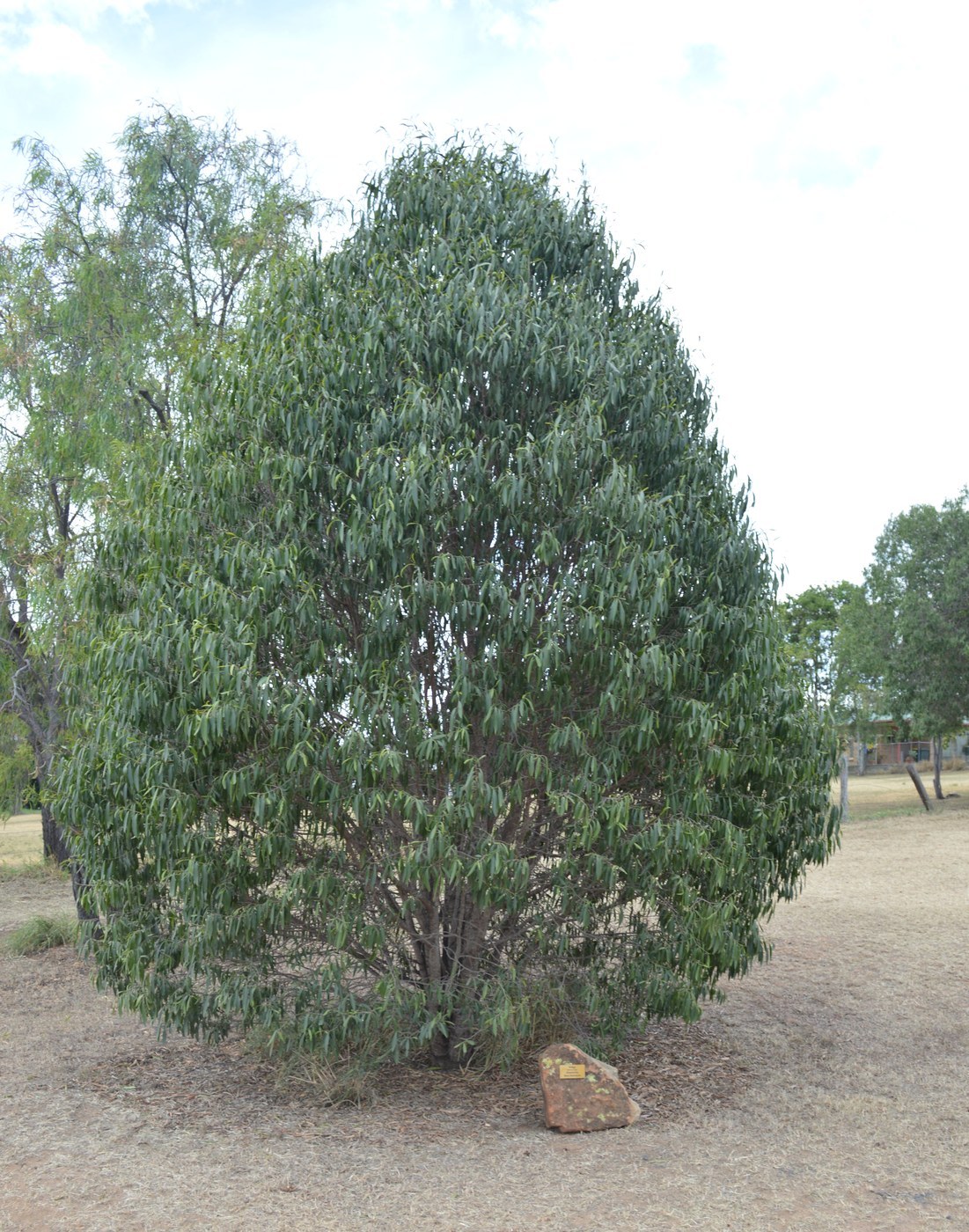
Key Identifying Features
The Australian Willow (Geijera parviflora), also called wilga, is a small to medium evergreen tree, 25-35 ft tall, with a slender trunk and a dense, weeping, rounded crown. Despite the common name it is not a true willow (Salix) and is not related to one - it belongs to the citrus family (Rutaceae). The graceful drooping branches and narrow leaves give it the willow look, but it is far tougher and more drought-tolerant.
- Habit: finely textured, fountain-like canopy with pendulous branch tips
- Evergreen with a soft, airy appearance
- Drought- and heat-hardy, common in dry Southwest U.S. landscapes
Leaves & Stems
Leaves are simple, narrow and lance-shaped (linear), roughly 3-6 inches long and only about a quarter inch wide, tapering to a fine point. They are a dull olive to medium green, leathery, and hang gracefully from the drooping branches. A defining trait: crushed foliage gives off a light resinous or citrus-like aroma, reflecting the plant's Rutaceae heritage and the presence of oil glands (hold a leaf to the light to see tiny translucent dots). Young stems are slender, flexible and greenish, maturing to gray-brown bark that becomes finely furrowed.
Flowers & Fruit
Flowers are small, creamy-white to greenish, about 1/4 inch across, borne in loose terminal clusters (panicles), usually in late winter to spring. They are not showy but are mildly fragrant. The fruit is a small black or dark drupe roughly the size of a peppercorn. Neither flower nor fruit is a strong ornamental feature - the tree is grown chiefly for its weeping form and toughness.
How to Tell It Apart from Look-Alikes
- True weeping willow (Salix babylonica): has wider, finely toothed leaves, prefers wet soil, drops leaves in winter, and has no citrus scent. Australian Willow is evergreen, narrow-leaved, and aromatic.
- Pepper tree (Schinus molle): also weeping and aromatic, but has compound (pinnate) leaves with many leaflets, plus pink berries - very different leaf structure.
- Olive (Olea europaea): silvery, not weeping, with paired leaves and a non-weeping habit.
The combination of evergreen + narrow simple leaves + weeping habit + faint citrus oil scent is essentially unique among common landscape trees.
Where You'll Find It
Native to the dry inland woodlands of eastern Australia, it is widely planted as a street and parking-lot tree in hot, dry climates (California, Arizona, Texas) where it tolerates drought, wind, heat and poor soils. Look for it in low-water Mediterranean-style gardens.
Quick ID Checklist
- Evergreen tree 25-35 ft with weeping, fountain-shaped crown
- Narrow, lance-shaped leaves 3-6 in long, dull green, leathery
- Crushed leaves smell faintly resinous/citrusy (oil-gland dots)
- Small creamy-greenish flower clusters; tiny black drupes
- Thrives in hot, dry, low-water settings
Frequently asked questions
Is the Australian Willow a real willow?
No. Despite the weeping willow-like form, it is *Geijera parviflora* in the citrus family (Rutaceae), unrelated to true willows (*Salix*). The narrow evergreen leaves with a faint citrus scent give it away.
How can I confirm it by smell?
Crush a leaf - it releases a light resinous or citrus-like aroma from oil glands. Held to the light, the leaf shows tiny translucent dots, a citrus-family hallmark true willows lack.
Does it lose its leaves in winter?
No, it is evergreen and keeps its soft, drooping foliage year-round, unlike the deciduous true weeping willow.
Where is it commonly planted?
It is a popular drought-tolerant street and garden tree in hot, dry regions such as California, Arizona and Texas, prized for its graceful form and toughness.