Australian Willow
Geijera parviflora
Australian Willow is a graceful evergreen tree with weeping, willow-like foliage that is not a true willow but a member of the citrus family. Prized as a tough, low-litter street and shade tree for hot, dry climates.
- Light
- Full sun
- Water
- Low once established; drought tolerant
- Difficulty
- Easy
Got a plant like this?
Identify any plant from a photo, free.
Overview
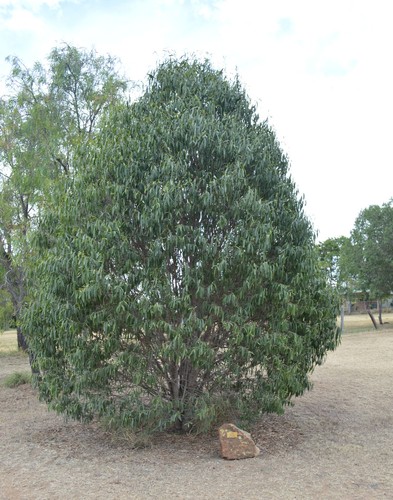
Australian Willow (Geijera parviflora) is an evergreen tree native to the dry inland regions of eastern Australia. Despite the common name, it is unrelated to true willows (Salix) and instead belongs to the Rutaceae, the citrus family.
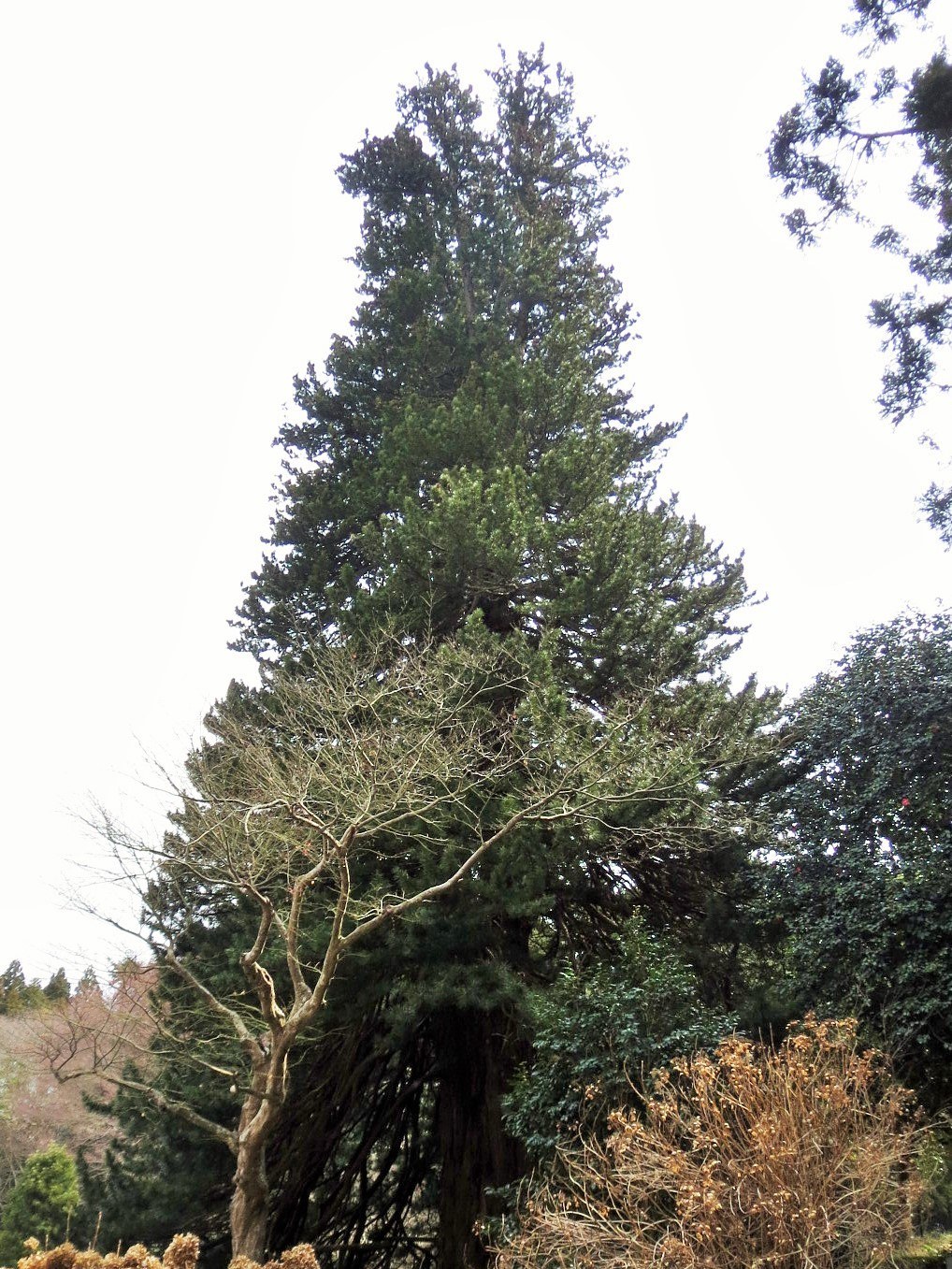
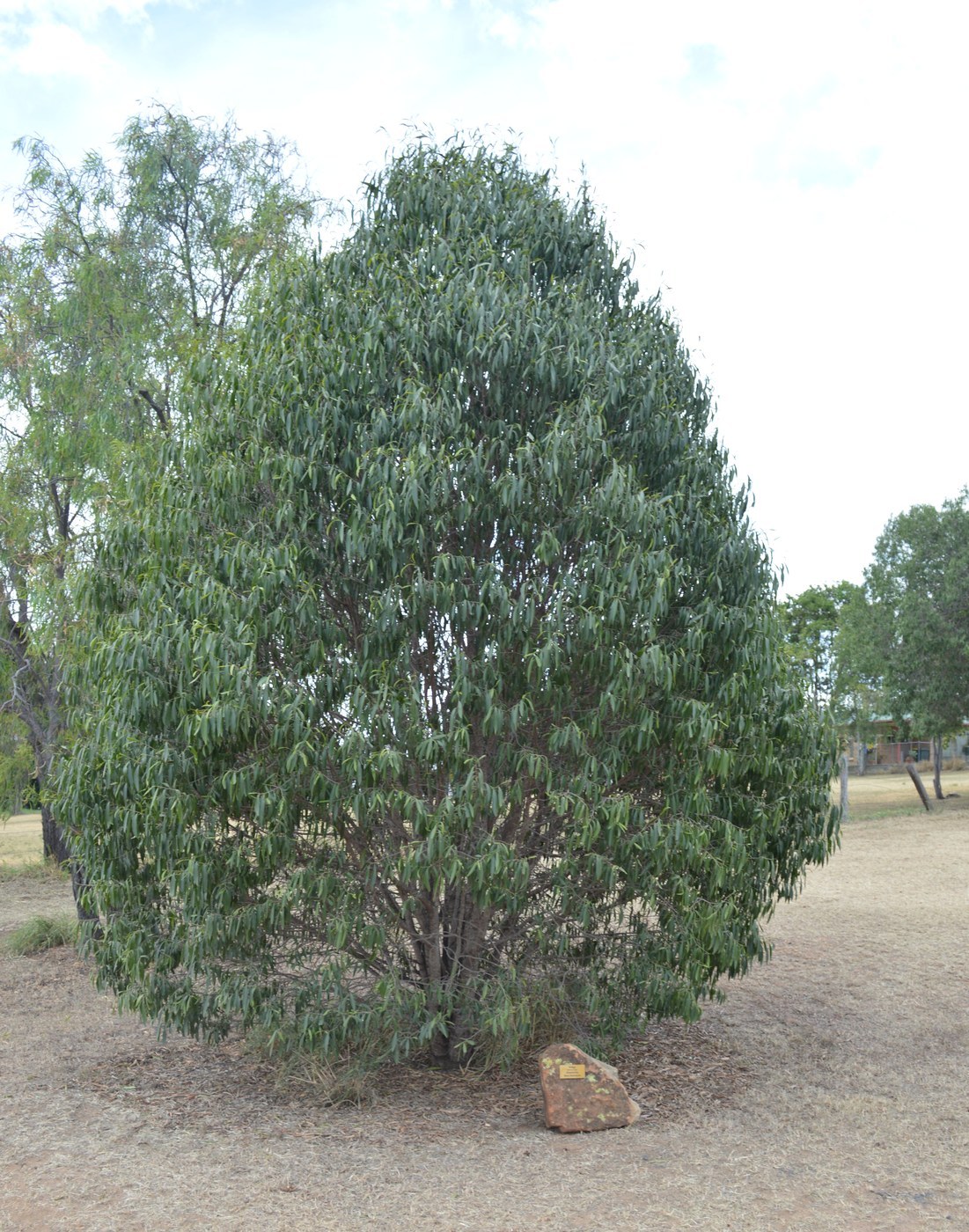
It forms a neat, rounded to weeping crown of slender drooping leaves that flutter in the breeze, giving a soft willow-like appearance without the invasive roots or heavy litter of real willows. Mature trees typically reach 25 to 35 feet tall.
Its toughness, modest size, and tidy habit make it a popular choice for streetscapes, car parks, and waterwise gardens in warm-temperate and Mediterranean climates.
How to identify it
Look for a small to medium evergreen tree with a graceful, pendulous canopy.
- Leaves: Narrow, leathery, drooping leaves 4 to 8 inches long, dull green, aromatic when crushed
- Habit: Rounded crown that becomes weeping with age; reaches about 25 to 35 feet
- Flowers: Small creamy-white flowers in loose clusters, lightly fragrant, appearing mainly in winter to spring
- Fruit: Small rounded greenish drupes
- Bark: Grey-brown, becoming furrowed with age
Care & growing
An exceptionally low-maintenance tree once established.
- Light: Full sun for best form and density
- Water: Regular water in the first year or two to establish; afterward highly drought tolerant
- Soil: Adaptable; tolerates clay, sand, and alkaline soils with good drainage
- Temperature: Suited to warm-temperate, Mediterranean, and subtropical zones; tolerates heat and moderate frost
- Feeding: Light feeding in spring is enough; not a heavy feeder
- Propagation: Usually grown from seed; can be slow to germinate
Habitat & origin
Native to the semi-arid inland plains and woodlands of New South Wales, Queensland, and Victoria in eastern Australia, where it grows on a range of soils.
It is widely planted as an ornamental and street tree in Australia, California, and other Mediterranean-climate regions, valued for tolerating drought, heat, and poor soils.
Frequently asked questions
Is Australian Willow a true willow?
No. It only resembles a willow in its weeping foliage. It is actually a member of the citrus family (Rutaceae) and has none of the invasive root or water-seeking problems of true willows.
How big does it get?
Most specimens reach about 25 to 35 feet tall with a similar or slightly narrower spread, making it a manageable size for streets and gardens.
Is it drought tolerant?
Very. Once established it needs little or no supplemental water and thrives in hot, dry climates.
Does it make a good street tree?
Yes. Its non-aggressive roots, minimal litter, and neat canopy make it one of the most recommended street trees for warm dry regions.
Australian Willow guides
In-depth guides for identifying, growing, and caring for Australian Willow.
How to Care for Australian Willow
Grow Australian Willow (Geijera parviflora), a graceful, drought-tolerant evergreen tree with weeping foliage and low water needs once established.
Australian Willow Identification Guide
How to recognize the Australian Willow (Geijera parviflora), a graceful evergreen that mimics a willow but is actually a member of the citrus family.