Azalea Identification Guide
Identify azaleas by their funnel-shaped clustered spring flowers, small thin leaves, and characteristic five-stamen blooms that set them apart from rhododendrons.
Read the full Azalea encyclopedia entry →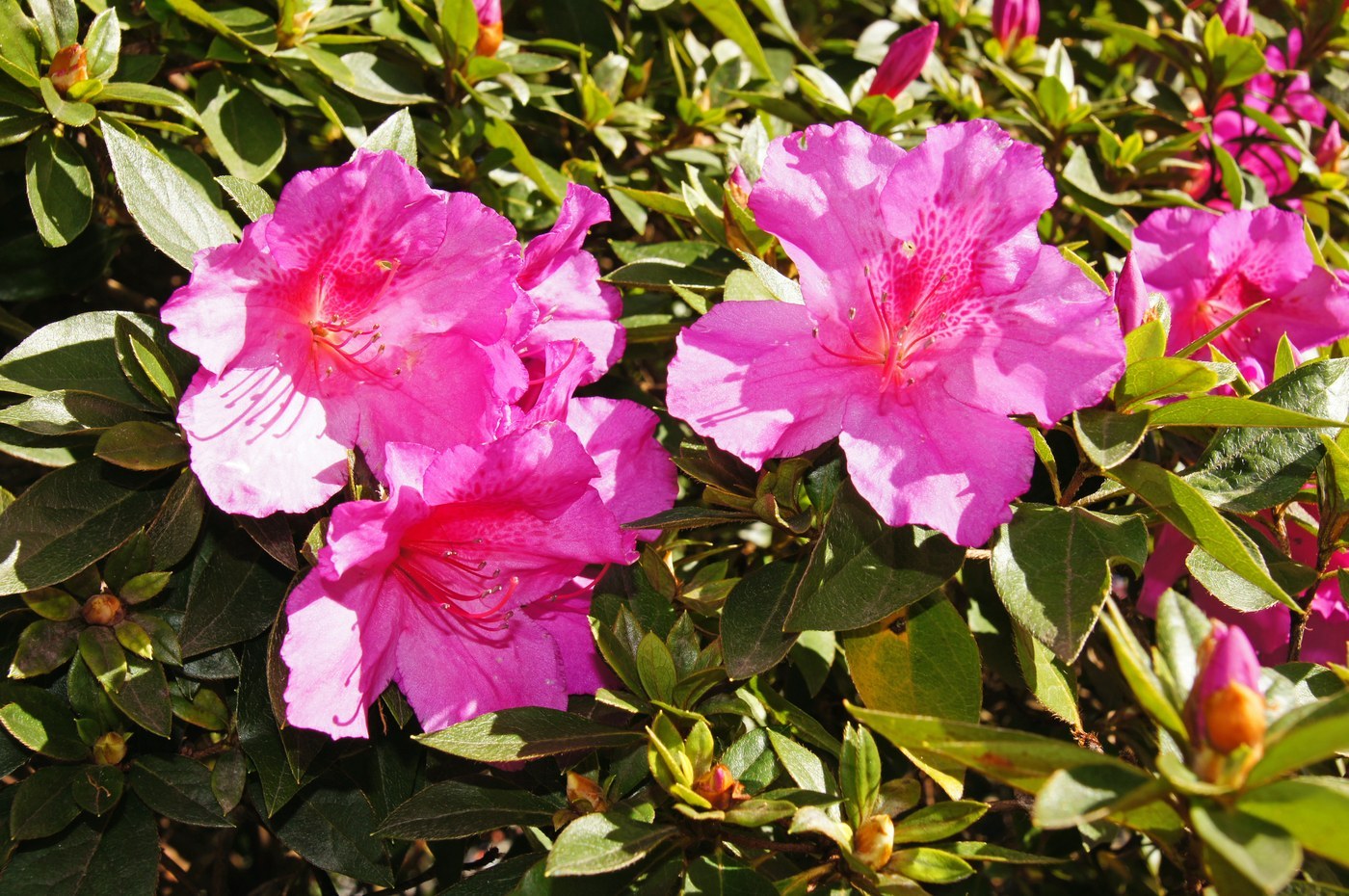
Key Identifying Features
Azaleas are shrubs within the genus Rhododendron (subgenera Tsutsusi and Pentanthera) in the heath family (Ericaceae). They differ from large-leaved rhododendrons in subtle but reliable ways. Look for:
- Masses of funnel-shaped flowers, usually with five stamens each.
- Small, thin, often soft-hairy leaves rather than large leathery ones.
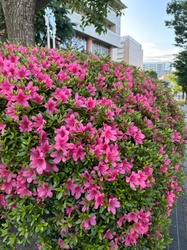
- A dense, twiggy, mounded shrub smothered in bloom in spring.
Leaves & Stems
Azalea leaves are small to medium, elliptic to oblong, 0.5–3 inches long, and comparatively thin and soft, often bearing fine hairs on the surface or margins. Deciduous azaleas drop their leaves in fall (frequently with bright orange-red color); evergreen azaleas keep small leathery leaves through winter. Leaves cluster toward branch tips. Stems are slender, woody, and finely branched, with small hairs on new growth. Plants are typically 2–8 feet tall and broad.
Flowers & Fruit
Flowers open in showy clusters at branch tips in mid to late spring. Each is funnel- or trumpet-shaped with five spreading lobes, and crucially usually has five (sometimes six or ten) protruding stamens — fewer than the ten-plus of typical rhododendrons. Colors include pink, red, white, purple, orange, and yellow, and many deciduous types are fragrant. The upper lobe often shows a darker spotted blotch. After bloom, a small dry woody capsule forms.
How to Tell It Apart from Look-Alikes
- Rhododendron (large-leaved): Has big, thick, leathery evergreen leaves, bell-shaped flowers in rounded trusses, and typically ten or more stamens. Azaleas are smaller-leaved with five stamens.
- Camellia: Glossy thick evergreen leaves and rose-like multi-petaled flowers; blooms fall to spring, very different flower form.
- Mountain laurel (Kalmia): Cup-shaped flowers with spring-loaded stamens tucked into pockets, not funnel-shaped.
The funnel flower with five stamens plus small thin leaves distinguishes azaleas from true rhododendrons.
Where You'll Find It
Azaleas are beloved landscape and foundation shrubs, especially in acidic, moist, well-drained woodland soils and dappled shade. They're common in gardens, parks, and around homes, and native deciduous species grow wild in woodlands and along stream banks. They thrive in mild temperate to warm climates.
Quick ID Checklist
- Funnel-shaped flowers in tip clusters, usually 5 stamens
- Small, thin, often hairy leaves
- Dense twiggy mounded shrub
- Spotted blotch on the upper flower lobe
- Spring bloom in pink/red/white/orange/purple
- Prefers acidic soil and part shade
Frequently asked questions
What's the difference between an azalea and a rhododendron?
Azaleas are a type of rhododendron, but they typically have smaller, thinner, often hairy leaves and funnel-shaped flowers with about five stamens. Large-leaved rhododendrons have thick leathery leaves and bell flowers with ten or more stamens.
How can I count stamens to identify an azalea?
Look into the throat of an open flower and count the thread-like stamens. Most azaleas have five (sometimes six or ten), while typical rhododendrons have ten or more, making this a quick distinguishing check.
Are there deciduous and evergreen azaleas?
Yes. Deciduous azaleas drop their leaves in fall, often with bright color, and many are fragrant. Evergreen azaleas keep small leathery leaves through winter.
Where do azaleas typically grow?
Azaleas favor acidic, moist, well-drained woodland soils in dappled shade. They are common as landscape and foundation shrubs in gardens and parks, and native deciduous species grow wild in woodlands and along stream banks.
Azalea identified by the community
Recent Azalea specimens identified with Plant Identifier.