
How to Care for Baby Toes
Baby Toes are quirky window-leaf succulents that demand grit, bright light, and a very stingy watering hand.
Read the full Baby Toes encyclopedia entry →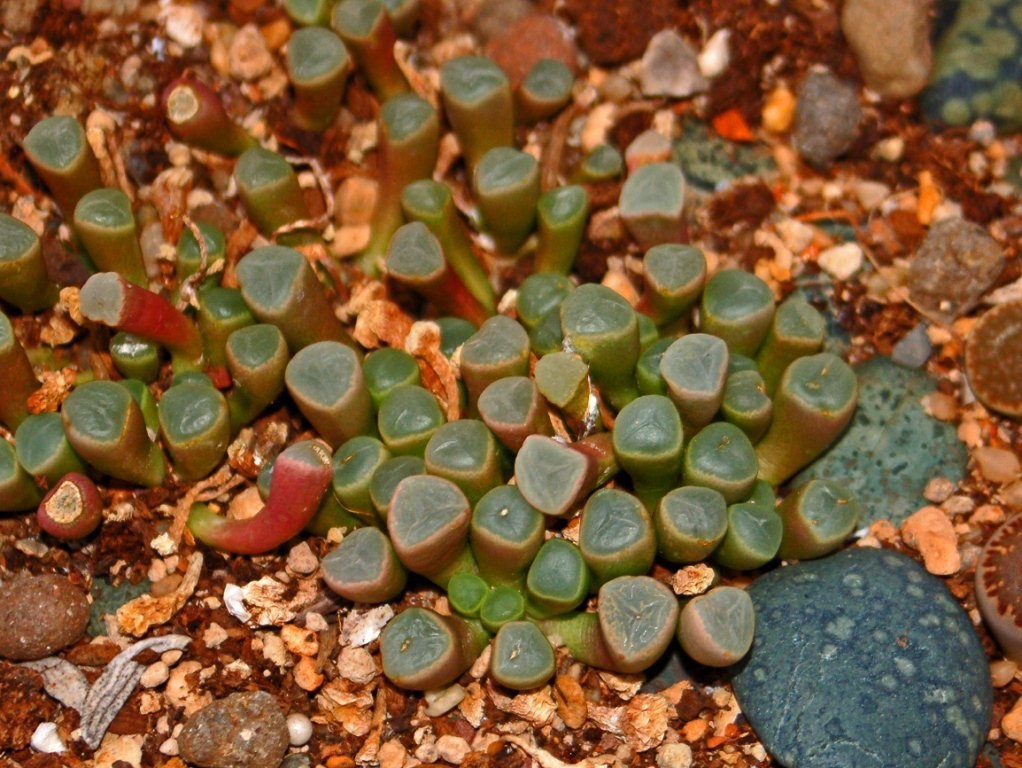
Baby Toes (Fenestraria rhopalophylla) is a fascinating dwarf succulent from arid southern Africa, forming clusters of stubby, club-shaped leaves with translucent 'windows' on their flattened tips. In the wild the plant sits buried with only those windows exposed to filter light. It is a rewarding but demanding succulent that punishes overwatering, which is why it earns a Hard difficulty rating.
Light
Give Baby Toes very bright light, including some direct sun, to keep the plump leaves compact and healthy. A bright south- or west-facing window is ideal, and it appreciates gentle morning sun. Insufficient light causes the leaves to stretch, splay open, and grow soft and elongated. When introducing it to stronger sun, acclimate gradually so the exposed leaf tips do not scorch.
Water
Water very sparingly - this is the single most important part of its care. During its active growing periods in cooler months, water only when the leaves show slight shriveling, giving a thorough drink and then letting the soil dry out completely. In the heat of high summer the plant often rests and needs almost no water. Overwatering causes leaves to swell, split, and rot with alarming speed, so always err on the dry side. Consistently minimal water is exactly right.
Soil & Potting
Use an extremely gritty, fast-draining mineral mix - a cactus-and-succulent soil heavily amended with pumice, coarse sand, or perlite, or even a predominantly mineral gritty mix. The roots must never sit in moisture. Choose a pot with a drainage hole; a slightly deeper pot suits the plant's downward-growing roots. A top dressing of grit helps keep the base of the leaves dry.
Humidity & Temperature
Baby Toes thrives in dry air and warm-to-mild temperatures. Keep it comfortably above freezing; it is a tender succulent that does not tolerate frost and is best kept above roughly 40F (4C). It resents cold, damp conditions above all. Normal room humidity or drier is perfect, and good ventilation reduces rot risk.
Feeding
This is a slow, frugal plant that needs very little feeding. A single dilute application of a low-strength succulent fertilizer during the active growing season is plenty. Avoid rich or frequent feeding, which pushes soft, weak growth that is prone to splitting and rot.
Propagation
Baby Toes is propagated by division of established clumps or from seed. To divide, carefully separate offsets or rooted sections of a mature cluster, let any cut surfaces dry and callus for a day or two, then pot into dry gritty mix and water only lightly once new roots establish. Seed-grown plants are slow but produce robust colonies over time.
Repotting / Pruning
Repot infrequently, only every few years when the clump outgrows its pot or the mix has broken down. Do this when the plant is not in active water uptake, handle the fragile leaves gently, and settle it into fresh dry mix, waiting several days before the first cautious watering. Pruning is essentially just removing any shriveled, dead, or rotted leaves at the base to keep the cluster clean.
Common Problems & Pests
By far the biggest problem is rot from overwatering or poor drainage, showing as mushy, translucent, or collapsing leaves - reduce water immediately and improve airflow. Splitting or bursting leaves also signal too much water. Etiolated, stretched, splayed leaves mean too little light. Pests are less common but can include mealybugs nestled between leaves and fungus gnats in soil that stays too moist; keep the mix lean and dry to avoid both.
Seasonal Care Tips
Baby Toes tends to grow in the cooler parts of the year and rest in peak summer heat. Water cautiously during active growth in fall through spring, watching the leaves for slight shrinkage as your cue. Ease off almost entirely during hot summer dormancy. Ensure the strongest light in the darker months, and always keep it dry and frost-free through winter.
Frequently asked questions
How often should I water Baby Toes?
Very rarely. Water only when the leaves show slight shriveling during active growth in the cooler months, soak thoroughly, then let the soil dry out completely. In hot summer the plant rests and needs almost no water. Overwatering is the most common way to lose it.
Why are my Baby Toes leaves splitting or turning mushy?
Both are classic signs of too much water. Split or bursting leaves mean overwatering, and mushy, translucent leaves mean rot. Cut back watering sharply, improve drainage and airflow, and remove any rotted leaves.
Why are my Baby Toes stretching and splaying open?
That is etiolation from too little light. The plump club leaves elongate and flop when they do not get enough sun. Move the plant to your brightest window with some direct sun, acclimating gradually to avoid scorching.
What soil is best for Baby Toes?
An extremely gritty, fast-draining mineral mix. Use cactus soil heavily amended with pumice, coarse sand, or perlite, in a pot with a drainage hole, and add a grit top dressing to keep the leaf bases dry.