
Bachelor's Button Identification Guide
Identify Bachelor's Button (cornflower) by its intense blue fringed flower heads, slender gray-green leaves, and wiry branching stems.
Read the full Bachelor's Button encyclopedia entry →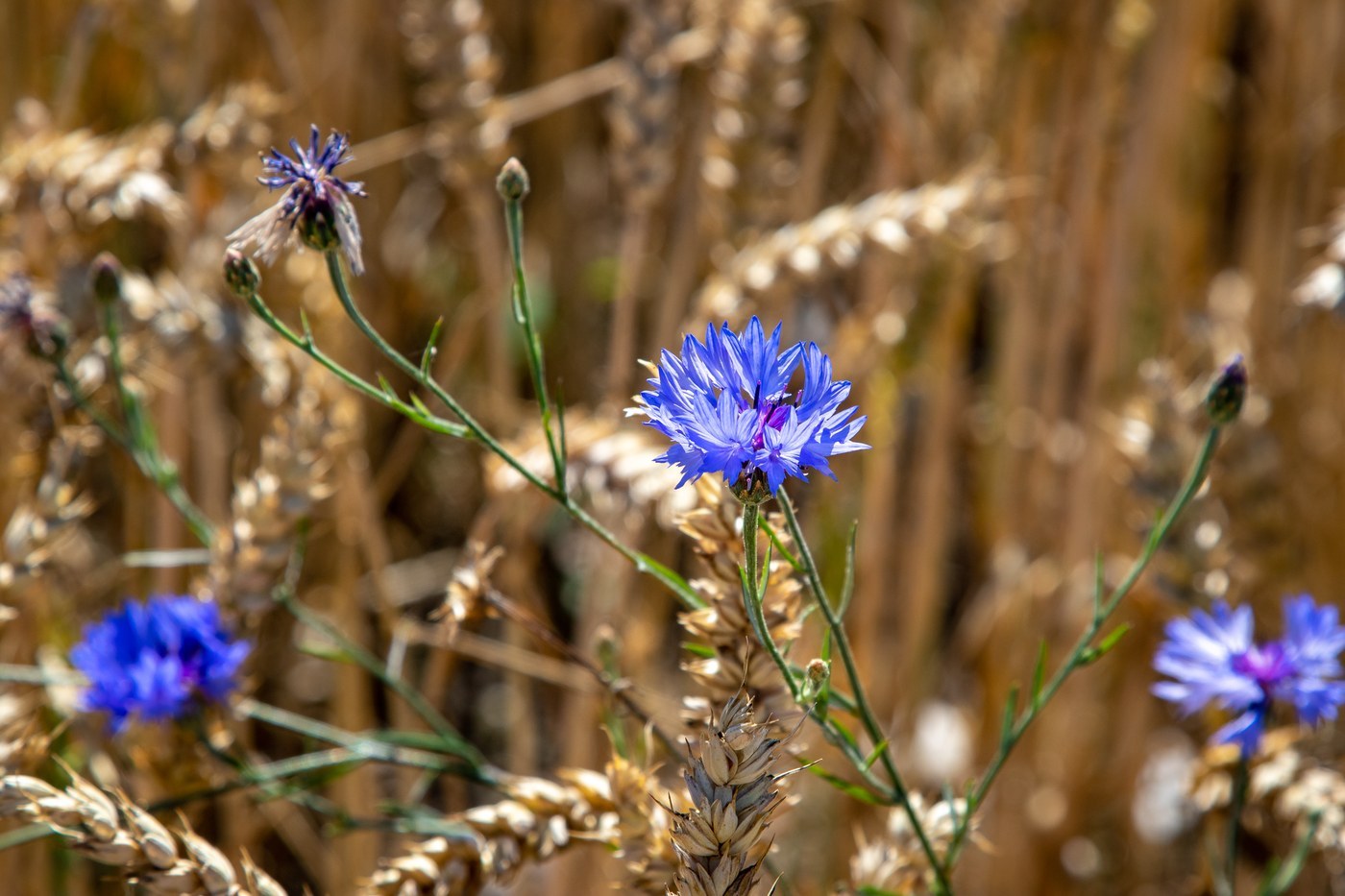
Key Identifying Features
Bachelor's Button (Centaurea cyanus), also called cornflower, is a slender cool-season annual best known for its vivid, true-blue, fringed flower heads. The strong blue color and ragged-edged blooms make it easy to spot.
- Upright, wiry, branching habit, 12-36 in (30-90 cm) tall
- Flower heads 1-1.5 in (2.5-4 cm) across
- Outer florets are flared and deeply notched (fringed), ringing a darker center
- Classic color is intense cornflower blue; also pink, purple, white, and maroon
- Whole plant has a slightly gray-green, slightly cobwebby look
Leaves & Stems
Leaves are narrow, linear to lance-shaped, grayish-green, and covered in fine woolly or cobwebby hairs that give a soft frosted appearance. Lower leaves may have a few small lobes; upper leaves are simple and grass-like. Stems are thin, ridged, wiry, and branching, also gray-green and downy. The airy, narrow foliage contrasts with the showy flower heads.
Flowers & Fruit
Bachelor's button is in the thistle/knapweed group of the aster family. Each head sits on a base of overlapping bracts with neat dark, fringed (ciliate) margins — a key detail for confirming Centaurea. The outer florets are enlarged and trumpet-shaped with toothed, notched tips, creating the fringed look, while inner florets form the central tuft. Seeds are small achenes tipped with a short bristly pappus.
How to Tell It Apart from Look-Alikes
- Chicory (Cichorium intybus): similar sky-blue color, but chicory flowers are flat, ray-only daisies with square-tipped toothed petals held close to tough roadside stems, not fringed tufted heads.
- Knapweeds (other Centaurea): closely related; check the bracts — cornflower's are neatly fringed with dark margins, and its flowers are typically clearer blue.
- Aster / Bachelor's button doubles: cultivated doubles fill in the center but keep the fringed outer florets and gray narrow leaves.
Where You'll Find It
A traditional cottage-garden, meadow, and cutting-garden flower, bachelor's button thrives in full sun and poor, well-drained soil. Once a common weed of grain fields (hence "cornflower"), it readily self-seeds and naturalizes in meadows, roadsides, and wildflower mixes. It is also a favorite for fresh and dried bouquets because the blue holds well.
Quick ID Checklist
- Wiry upright annual with branching stems
- Intense blue (or pink/white/purple) fringed flower heads
- Flared, deeply notched outer florets around a darker center
- Narrow, gray-green, cobwebby-hairy leaves
- Bracts with neat dark fringed margins
- Common in meadows, cottage gardens, and wildflower mixes
Frequently asked questions
Why is bachelor's button also called cornflower?
It was historically a common weed in European grain ('corn') fields, growing among wheat and barley. The name cornflower stuck even though it's now grown ornamentally.
How do I tell cornflower from chicory along a roadside?
Both are blue, but chicory has flat daisy-like flowers with square, toothed-tip petals pressed against tough stems, while cornflower has rounded, fringed tufted heads on wiry gray-green stems.
What makes the flower heads look fringed?
The enlarged outer florets are trumpet-shaped with deeply notched, toothed tips. This ragged fringe around a denser center is a signature feature of Centaurea cyanus.
Are bachelor's buttons good for drying?
Yes. The blue pigment holds color well when dried, which is one reason the flower is popular in dried arrangements and a clue that you've found a true cornflower.