
Bald Cypress Identification Guide
How to identify bald cypress (Taxodium distichum) by its feathery deciduous needles, swollen fluted base, and woody 'knees' in swamps.
Read the full Bald Cypress encyclopedia entry →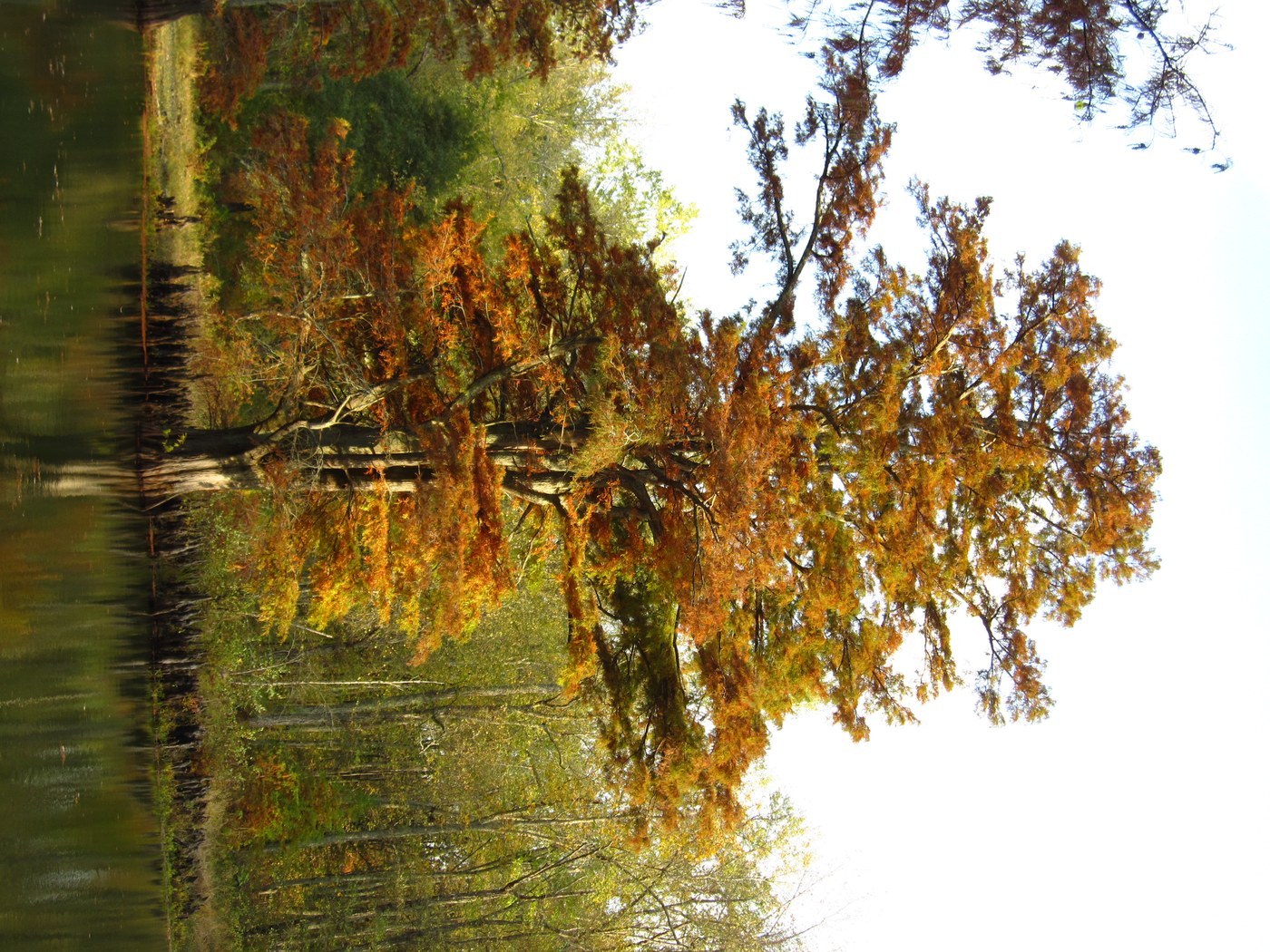
Key Identifying Features
Bald cypress (Taxodium distichum) is a large deciduous conifer of southern wetlands, unusual for shedding its needles each fall (hence "bald"). It grows 60–100 feet tall with a swollen, fluted, buttressed base and often produces woody "knees" projecting from the water around it.
- Soft, feathery needles arranged in flat, featherlike sprays — and dropped in winter
- Buttressed, fluted trunk base widening at the waterline
- "Cypress knees" — woody, knobby root projections rising from wet ground
- Small, round, wrinkled cones about an inch across
Leaves & Stems
The foliage is the first clue: short, flat, linear needles (about ½ inch) arranged feather-like in two rows along slender green shoots, giving the branchlets a soft, fern-like texture. The needles are bright green in spring and summer, turning rusty orange-brown in fall before dropping along with the small twigs — uncommon among conifers. The bark is thin, fibrous, and reddish-brown to gray, peeling in long shreddy strips. The trunk flares dramatically into a fluted, buttressed base in flooded sites.
Flowers & Fruit
Bald cypress is monoecious. Pollen is shed from drooping purplish male catkins in late winter/early spring. The fruit is a round, hard, green-to-brown cone about 1 inch across, made of wrinkled, tightly fitted scales that break apart at maturity to release resinous seeds. The cones are quite different from the elongated cones of pines and spruces.
How to Tell It Apart from Look-Alikes
The deciduous, feathery needles plus swamp habitat and knees make it distinctive. Dawn redwood (Metasequoia) looks similar but has opposite needles and branchlets (bald cypress is alternate/spirally arranged) and lacks knees. Pond cypress (Taxodium ascendens, sometimes treated as a variety) has needles pressed against erect shoots rather than spreading flat. True pines, spruces, and firs are evergreen with stiff needles and do not grow knees or shed their foliage.
Where You'll Find It
Native to the southeastern United States, bald cypress dominates swamps, river floodplains, bayous, and lake margins, tolerating prolonged flooding better than almost any other tree. It also grows well on drier upland soils when planted and is used as a landscape and street tree, where it usually does not form knees.
Quick ID Checklist
- Needles: soft, feathery, in flat two-row sprays; deciduous (rusty in fall)
- Base: swollen, fluted, buttressed trunk in wet sites
- Knees: woody root projections rising from water/mud
- Cones: round, wrinkled, ~1 inch
- Habitat: southern swamps, floodplains, and river margins
A swamp tree with feathery deciduous needles, a flared base, and knobby knees is bald cypress.
Frequently asked questions
Is bald cypress a conifer if it loses its needles?
Yes. It is a true conifer that produces cones, but unlike most conifers it is deciduous, dropping its soft needles each autumn, which is why it is called bald cypress.
What are cypress knees?
Knees are woody, knobby projections that grow upward from the roots, often poking out of the water or wet soil around the tree. Their exact function is debated, but they are a classic identification feature.
How do I tell bald cypress from dawn redwood?
Bald cypress has needles and small branchlets arranged alternately, while dawn redwood has them in opposite pairs. Dawn redwood also lacks the buttressed base and knees typical of swamp-grown bald cypress.
Will a planted bald cypress in my yard grow knees?
Often not. Knees develop most reliably in flooded or very wet sites; trees planted on well-drained upland soils frequently grow without producing knees.