
Baobab Tree Identification Guide
Identify the baobab (Adansonia) by its massively swollen barrel trunk, sparse root-like branches, palmate leaves, and large white night-blooming flowers.
Read the full Baobab Tree encyclopedia entry →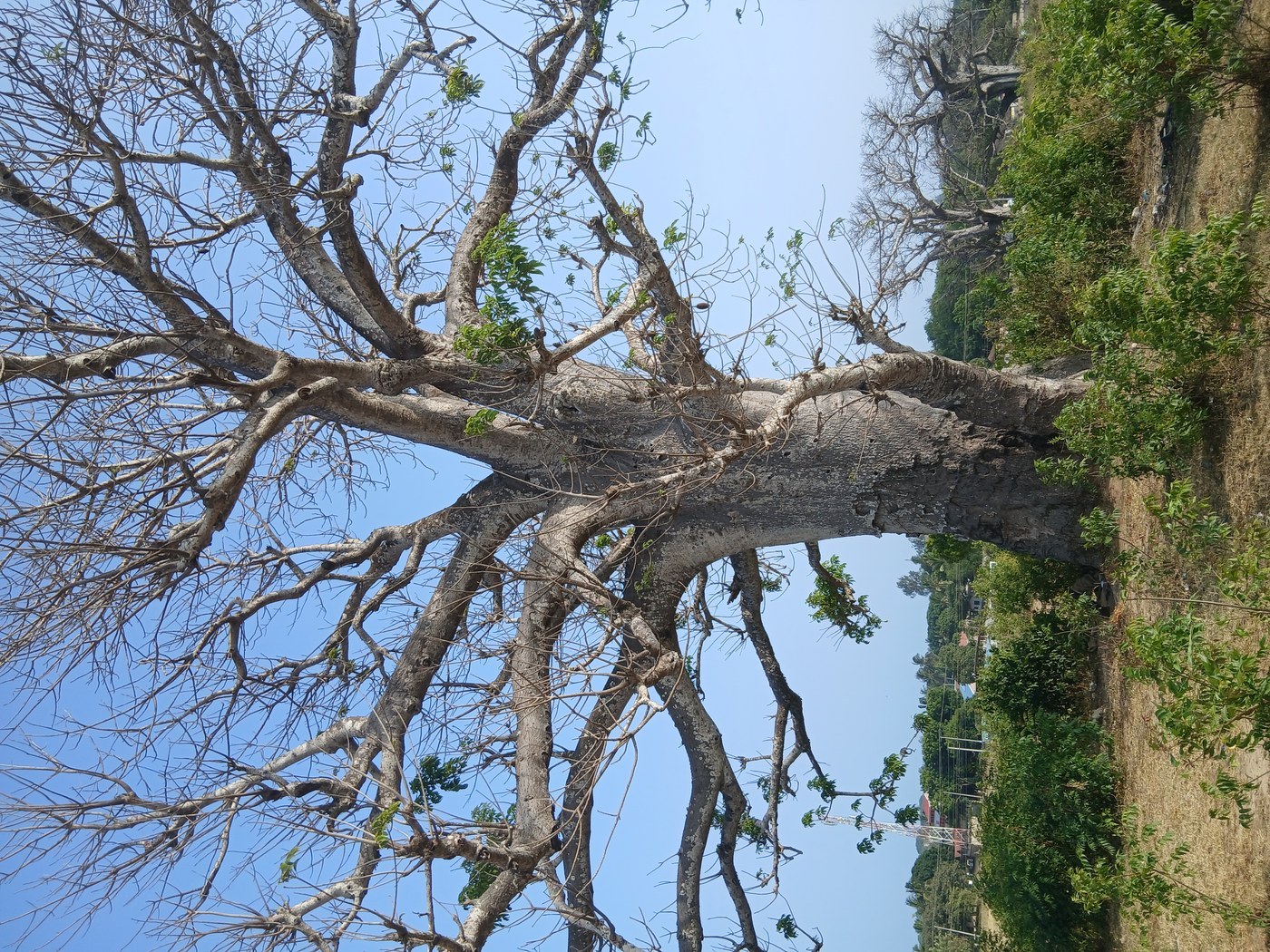
Key Identifying Features
The baobab (Adansonia species, most famously Adansonia digitata, the African baobab) is one of the most recognizable trees on Earth thanks to its enormously swollen, barrel-like trunk topped by a sparse crown of stout branches that look like roots clawing the sky - earning it the name "upside-down tree."
- Massive, bottle- or barrel-shaped water-storing trunk, often 20-30+ ft in diameter
- Sparse, thick, twisted branches giving a root-like silhouette
- Palmately compound leaves (digitate) on mature trees
- Large, pendulous white flowers that open at night
Leaves & Stems
Mature trees bear alternate, palmately compound leaves with 5-7 (sometimes up to 9) leaflets radiating from a single point like fingers of a hand (digitata). Young saplings often have simple, undivided leaves. Leaflets are oval, pointed, and 2-5 in long. The tree is deciduous, standing leafless for much of the dry season - so for many months it is identified by trunk and branch form alone. Bark is smooth, gray, often shiny, and fibrous; the trunk stores enormous amounts of water and can be hollow in old specimens.
Flowers & Fruit
Flowers are large and dramatic: 5-7 in wide, with five waxy white crumpled petals and a dense ball of stamens, hanging on long stalks. They open at dusk, last about 24 hours, and are pollinated by bats and bush-babies, emitting a slightly carrion-like scent. The fruit is a large, hard, woody, egg- or gourd-shaped capsule covered in velvety greenish-brown hair, hanging on a long stalk; inside is a dry, chalky pulp and many seeds.
How to Tell It Apart from Look-Alikes
- Bottle tree (Brachychiton rupestris): also swollen-trunked, but has narrow simple leaves and small bell flowers, and is much smaller.
- Ceiba / kapok: has a buttressed spiny trunk and palmate leaves, but the trunk is not the smooth water-barrel of a baobab and it bears silky-cottony seed pods.
- Sausage tree: African with a normal trunk and hanging sausage fruits - quite different.
- Other Adansonia species (Madagascar baobabs): taller, more cylindrical or tapering trunks, but the same swollen-trunk, palmate-leaf, night-flower formula.
The gigantic water-storing trunk + palmate digitate leaves + large white night flowers + woody gourd fruit confirm a baobab.
Where You'll Find It
Native to mainland Africa (A. digitata), Madagascar (six species), and Australia (one species), baobabs grow in hot, seasonally dry savanna and scrubland. They are iconic landscape and heritage trees, sometimes thousands of years old, and are occasionally planted in tropical parks and botanical gardens (USDA zones 10-12).
Quick ID Checklist
- Huge, swollen barrel/bottle trunk with smooth gray bark
- Sparse, thick, root-like branches ("upside-down tree")
- Palmate compound leaves with 5-7 leaflets (mature trees)
- Large white night-blooming flowers with a ball of stamens
- Woody, velvety gourd-like fruit on a long stalk
- Hot, seasonally dry tropical climate; long leafless dry season
Frequently asked questions
Why is the baobab trunk so huge?
The swollen, barrel-like trunk stores water to survive long dry seasons in the savanna. Its fibrous, spongy wood can hold thousands of liters, which is why the tree can appear so massively fat compared to its sparse crown.
Why is it called the upside-down tree?
When leafless for much of the dry season, the stout, twisted bare branches look like a root system sticking up into the air, giving the impression that the tree has been planted upside down.
Do baobab flowers really bloom at night?
Yes. The large white flowers open at dusk, last about a day, and are pollinated mainly by bats (and in some species bush-babies), giving off a faint carrion-like scent to attract them.