Barberry Identification Guide
How to identify barberry by its sharp single or three-pronged spines, small clustered leaves, yellow flowers, and red berries.
Read the full Barberry encyclopedia entry →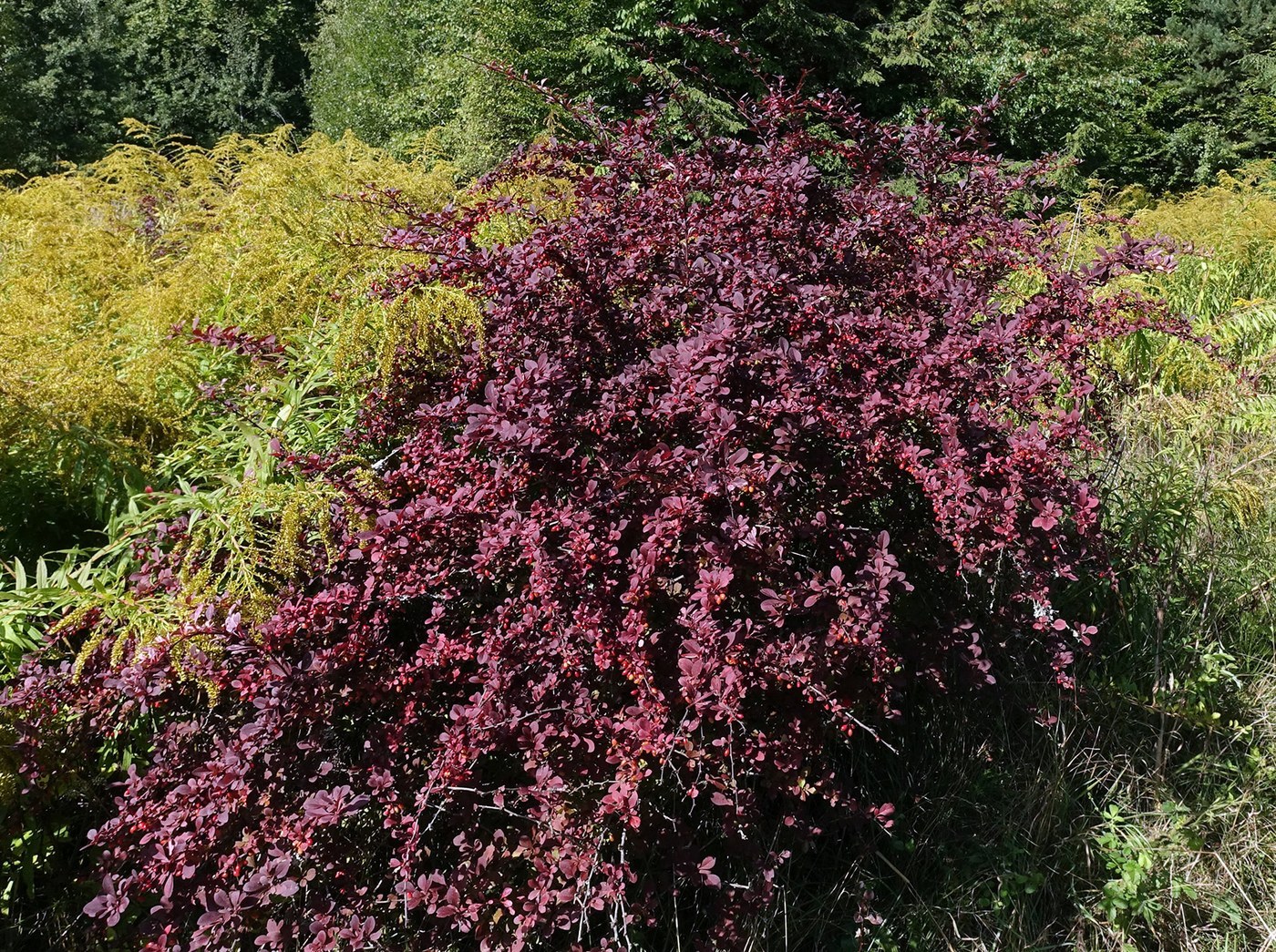
Key Identifying Features
Barberries (Berberis spp., including Japanese barberry B. thunbergii) are dense, thorny shrubs identified by their sharp spines, clusters of small leaves, yellow flowers, and oblong red berries. A near-foolproof clue is the bright yellow inner wood and roots—scratch a stem and the underbark is vividly yellow. They grow as low mounds to upright shrubs 2-6 feet tall and often form impenetrable thickets.
- Sharp spines (single in Japanese barberry; often three-pronged in common barberry)
- Small spoon- to oval-shaped leaves in tight rosette-like clusters on short spur shoots
- Yellow flowers and oblong red berries
- Yellow inner bark/wood
Leaves & Stems
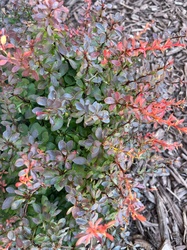
Leaves are small (1/2-1.5 inches), simple, and spatula- or oval-shaped, with smooth or finely spiny-toothed margins depending on species. They emerge in tight clusters from short spurs along the stems, just above a spine. Japanese barberry leaves are smooth-edged and come in green, burgundy ('Atropurpurea'/'Crimson Pygmy'), or gold cultivars; common barberry (B. vulgaris) has finely toothed leaves. The grooved, often reddish-brown stems carry spines at each node; slicing a stem reveals yellow inner tissue, a reliable confirmation.
Flowers & Fruit
In spring, barberries produce small yellow, six-petaled flowers, either single, in small clusters, or in hanging racemes (common barberry). These ripen to bright red, oblong (egg-shaped) berries about 1/3 inch long, often persisting through winter on bare stems. The combination of glossy red oblong berries lined along arching, spiny twigs is highly distinctive.
How to Tell It Apart from Look-Alikes
- Holly: spiny leaf margins but leaves are larger, leathery, and not in spur clusters; no spines on stems, no yellow wood.
- Hawthorn: has stem thorns and red fruit but is a tree/large shrub with lobed/toothed larger leaves and white flowers.
- Nandina (heavenly bamboo): red berries but no spines and compound leaves.
- Cotoneaster: red berries but no spines and no yellow wood.
The stem spines + clustered small leaves + yellow inner wood + red oblong berries combination is diagnostic.
Where You'll Find It
Barberries are common in gardens as low hedges and foundation plants, and Japanese and common barberry have escaped into woodlands, fields, and roadsides in much of North America, where they are invasive and form dense thorny stands. They tolerate sun to shade and poor soils.
Quick ID Checklist
- Dense thorny shrub with spines on the stems
- Small leaves in tight clusters above each spine
- Bright yellow inner bark/wood when scratched
- Yellow spring flowers
- Oblong red berries, often lasting into winter
Frequently asked questions
What's the most reliable way to confirm barberry?
Scratch or cut a stem: barberry has vividly yellow inner bark and wood. Combined with stem spines, small leaves clustered on short spurs, and red oblong berries, this confirms the genus Berberis.
How do I tell barberry from holly?
Holly's prickles are on the leaf edges and the leaves are large and leathery, while barberry's spines are on the stems and its leaves are small and clustered. Barberry also has yellow wood and yellow flowers; holly does not.
Is barberry invasive?
Japanese and common barberry are invasive in many parts of North America, forming dense thorny thickets in woodlands and reducing native plant diversity. Several states restrict their sale.
Barberry identified by the community
Recent Barberry specimens identified with Plant Identifier.