
Barrenwort Identification Guide
How to identify Barrenwort (Epimedium) by its delicate heart-shaped leaflets on wiry stems and dainty spurred flowers, a tough groundcover for dry shade.
Read the full Barrenwort encyclopedia entry →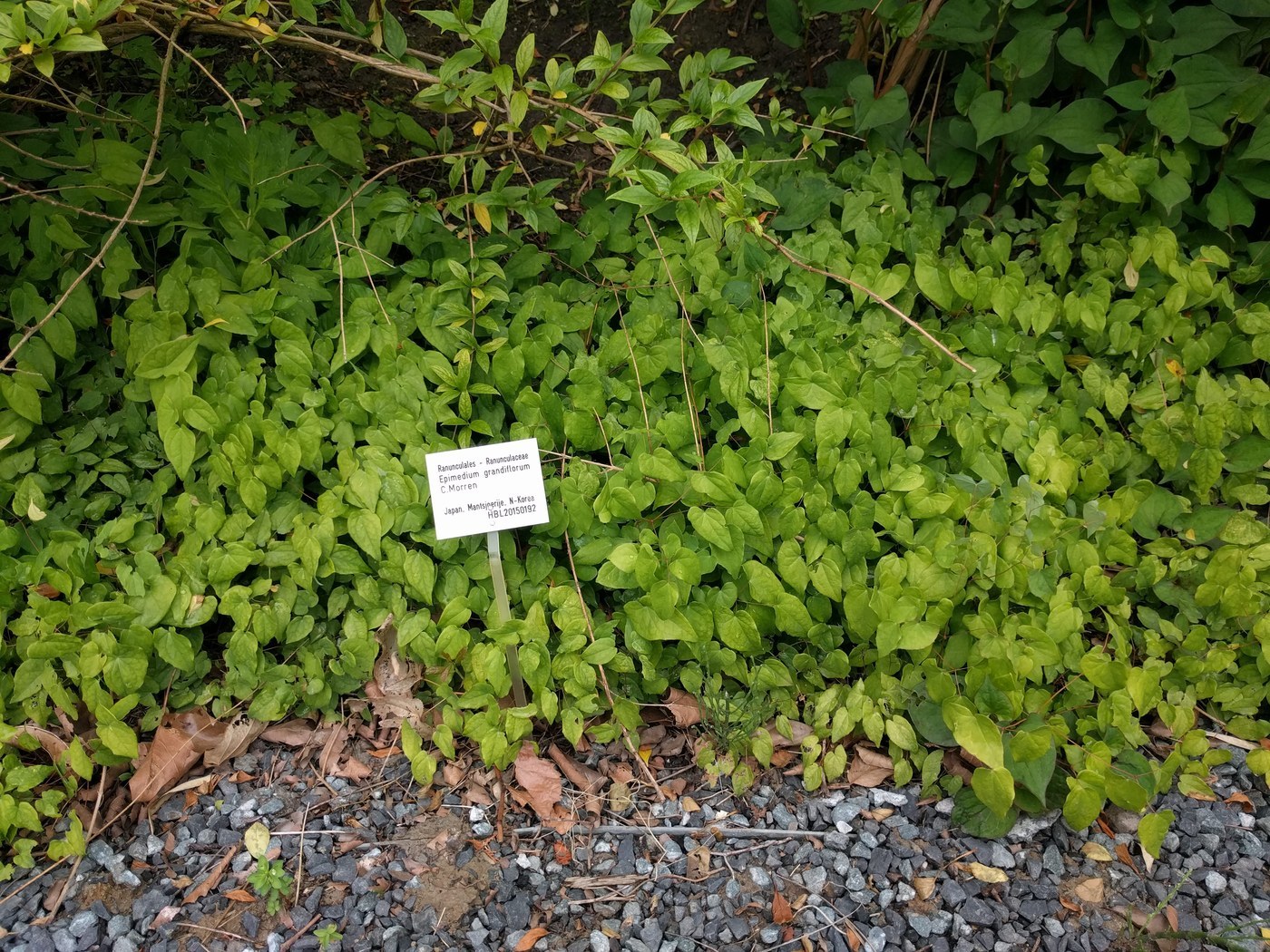
Key Identifying Features
Barrenwort (Epimedium), also called bishop's hat or fairy wings, is a low, clump-forming perennial grown as a groundcover for dry shade. It's recognized by its delicate, heart-shaped leaflets edged with fine bristly teeth on thin wiry stems, and its airy sprays of small, often spurred flowers in spring.
- Heart-shaped leaflets with bristle-toothed edges on wiry stems
- New and fall foliage often flushed bronze-red
- Dainty spurred ("bishop's hat") flowers in spring
- Low groundcover, 8-16 inches tall, for dry shade
Leaves & Stems
The foliage is the most constant feature. Leaves are compound, divided into several heart- to arrowhead-shaped leaflets, each leaflet with a pointed tip, an indented (heart-shaped) base, and finely spiny/bristly toothed margins. They are held on thin, wiry, dark stems that give the plant a delicate, layered look. New spring growth and autumn leaves frequently take on reddish-bronze or coppery tints, while summer foliage is green. Many types are semi-evergreen. The plant spreads slowly by short rhizomes into dense mats.
Flowers & Fruit
In spring, wiry flower stalks carry loose sprays of small, nodding flowers. Each flower has four petals and four petal-like sepals, and in many species the petals are drawn out into distinctive spurs, giving a shape likened to a bishop's hat or a tiny columbine/jester's cap. Colors include yellow, white, pink, rose, red, and lilac, often bicolored. The flowers are small but charming and held above or among the emerging leaves. Fruit is a small pod.
How to Tell It Apart from Look-Alikes
- Columbine (Aquilegia): also has spurred flowers and lobed leaflets, but columbine leaves are rounded and scalloped (not heart-shaped with bristle teeth) and its flowers are larger with five spurs.
- Foamflower or coral bells: shade groundcovers too, but they have single lobed, maple-like leaves, not compound heart-shaped leaflets on wiry stems.
- Wild ginger: solid heart-shaped single leaves, not divided into toothed leaflets.
The compound, bristle-edged, heart-shaped leaflets on wiry stems plus small spurred spring flowers are diagnostic for Barrenwort.
Where You'll Find It
Barrenwort is valued precisely for thriving in dry shade under trees and shrubs, where many plants struggle. It grows in part to full shade in well-drained, humus-rich soil, forming weed-suppressing carpets. Look for it in woodland gardens, shady borders, and beneath established trees, flowering in early to mid spring.
Quick ID Checklist
- Compound leaves of heart-shaped leaflets with bristly-toothed edges
- Thin, wiry stems; foliage bronze-tinted in spring/fall
- Spring sprays of small spurred ("bishop's hat") flowers
- Low groundcover for dry shade
- Spreads slowly into dense mats
Delicate heart-shaped, fine-toothed leaflets on wiry stems with dainty spurred spring flowers in dry shade point to Barrenwort.
Frequently asked questions
Why is barrenwort good for dry shade?
Epimedium is one of the few perennials that tolerates the dry, root-filled shade under trees and shrubs, where it forms a tough, weed-suppressing groundcover once established.
What do barrenwort flowers look like?
They are small, nodding flowers with four petals and four petal-like sepals, often drawn into spurs that give a bishop's-hat or jester's-cap shape, in yellow, white, pink, red, or lilac.
How do I tell barrenwort from columbine?
Both have spurred flowers, but barrenwort has compound, heart-shaped, bristle-toothed leaflets on wiry stems and smaller flowers, while columbine has rounded scalloped leaflets and larger five-spurred blooms.
Why does the foliage change color?
New spring growth and fall leaves are often flushed with bronze, copper, or red tints before settling to green in summer, and many varieties are semi-evergreen.