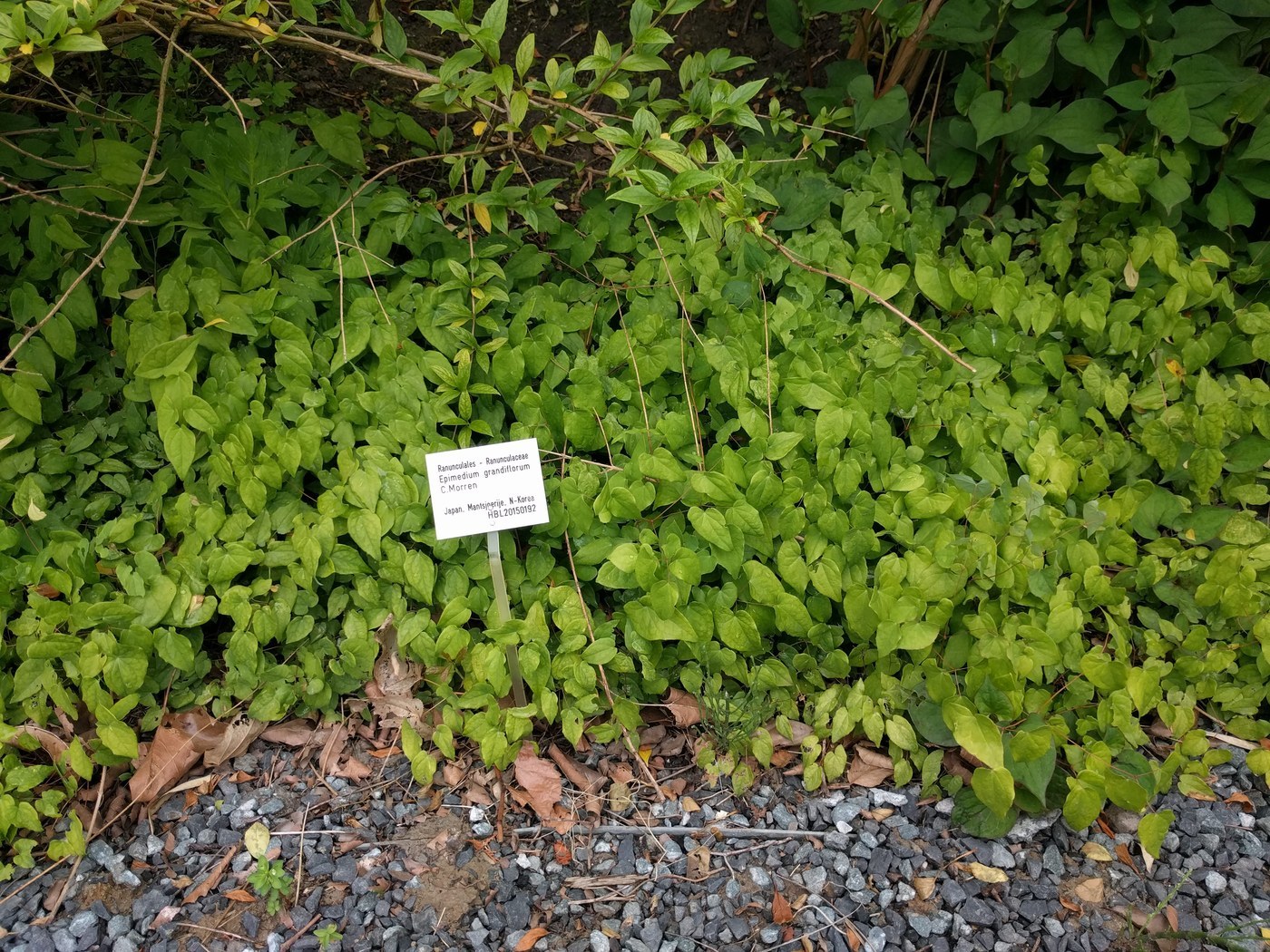
Barrenwort
Epimedium grandiflorum
Barrenwort is a tough, low groundcover for dry shade, with delicate spring flowers and heart-shaped leaves that often emerge and finish the season tinted red. It thrives where little else will.
- Light
- Part to full shade
- Water
- Moderate; evenly moist
- Difficulty
- Easy
Got a plant like this?
Identify any plant from a photo, free.
Overview
Barrenwort (Epimedium) is a clump-forming perennial grown for its dainty, spurred spring flowers and its attractive heart-shaped foliage. The flowers, in yellow, white, pink, lilac, or red, hover on wiry stems and have given rise to nicknames like fairy wings and bishop's hat.
It is one of the best plants for dry shade, including the difficult ground beneath trees, where its tough roots compete well. Many types are semi-evergreen, and new leaves often emerge bronze or red-tinted, coloring again in fall.
Long-lived and low-maintenance, barrenwort forms a refined, weed-suppressing carpet in the woodland garden.
How to identify it
- Flowers: Small, delicate, often spurred flowers in yellow, white, pink, rose, or lilac on thin wiry stems in spring
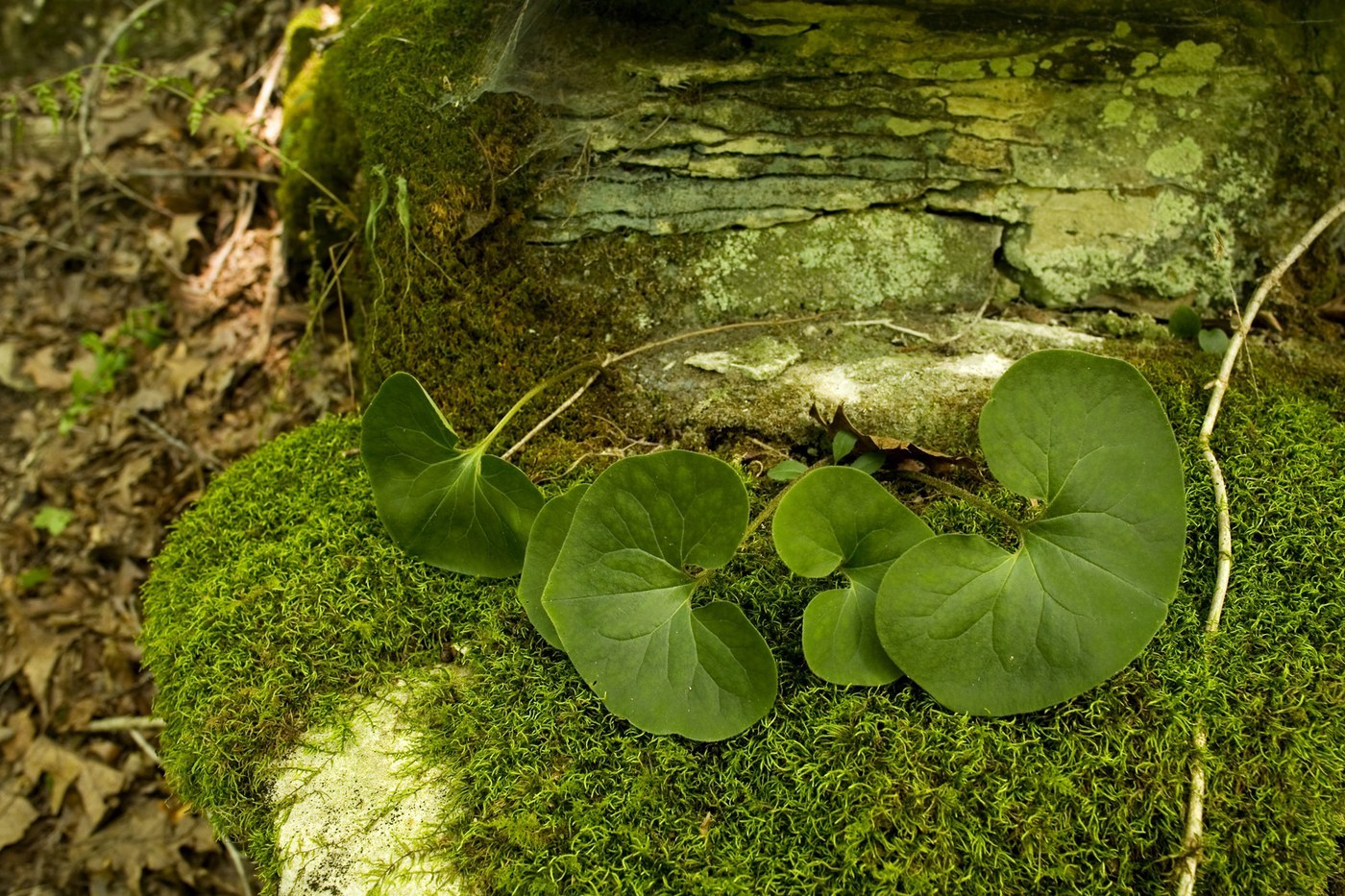
- Leaves: Heart-shaped to arrow-shaped leaflets, often with spiny-toothed edges; new and autumn foliage frequently flushed red or bronze
- Height: Low mounds 8-12 in tall, spreading slowly by rhizomes
- Habit: Semi-evergreen to evergreen clumping groundcover
Care & growing
- Light: Part to full shade; ideal beneath trees and shrubs
- Water: Prefers evenly moist soil but, once established, is notably tolerant of dry shade
- Soil: Humus-rich, well-drained soil is best, though it adapts to poorer ground
- Temperature: Hardy roughly USDA zones 4-8 depending on species
- Feeding: Light; topdress with leaf mold or compost
- Propagation: By division in early spring or after flowering; cut back old foliage in late winter so the new flowers and leaves show clearly
Habitat & origin
Barrenwort species are native to woodlands of East Asia (especially China, Japan, and Korea) and parts of the Mediterranean and Caucasus, growing in shaded forests and on rocky slopes.
In gardens it is valued as a groundcover for shade and woodland borders, dry shade under trees, and as elegant edging along shaded paths.
Frequently asked questions
Will barrenwort grow in dry shade under trees?
Yes. Once established it is one of the most reliable groundcovers for dry shade, including the challenging soil beneath trees and large shrubs.
Should I cut back barrenwort foliage?
For deciduous and semi-evergreen types, shear off the old leaves in late winter before new growth begins so the spring flowers are not hidden by tatty foliage.
How fast does barrenwort spread?
Most form slowly expanding clumps rather than running aggressively, making them well-behaved, long-lived groundcovers. Divide them to propagate or speed up coverage.
Barrenwort guides
In-depth guides for identifying, growing, and caring for Barrenwort.
How to Care for Barrenwort
Barrenwort is a tough, elegant shade groundcover prized for dainty spring flowers and heart-shaped foliage that carpets dry shade.
Barrenwort Identification Guide
How to identify Barrenwort (Epimedium) by its delicate heart-shaped leaflets on wiry stems and dainty spurred flowers, a tough groundcover for dry shade.