Turtlehead
Chelone glabra
Turtlehead is a moisture-loving native perennial whose hooded, two-lipped flowers resemble a turtle's head. It blooms in late summer and thrives in wet, partly shaded gardens.
- Light
- Part shade to full sun
- Water
- High; keep moist
- Difficulty
- Easy
Got a plant like this?
Identify any plant from a photo, free.
Overview
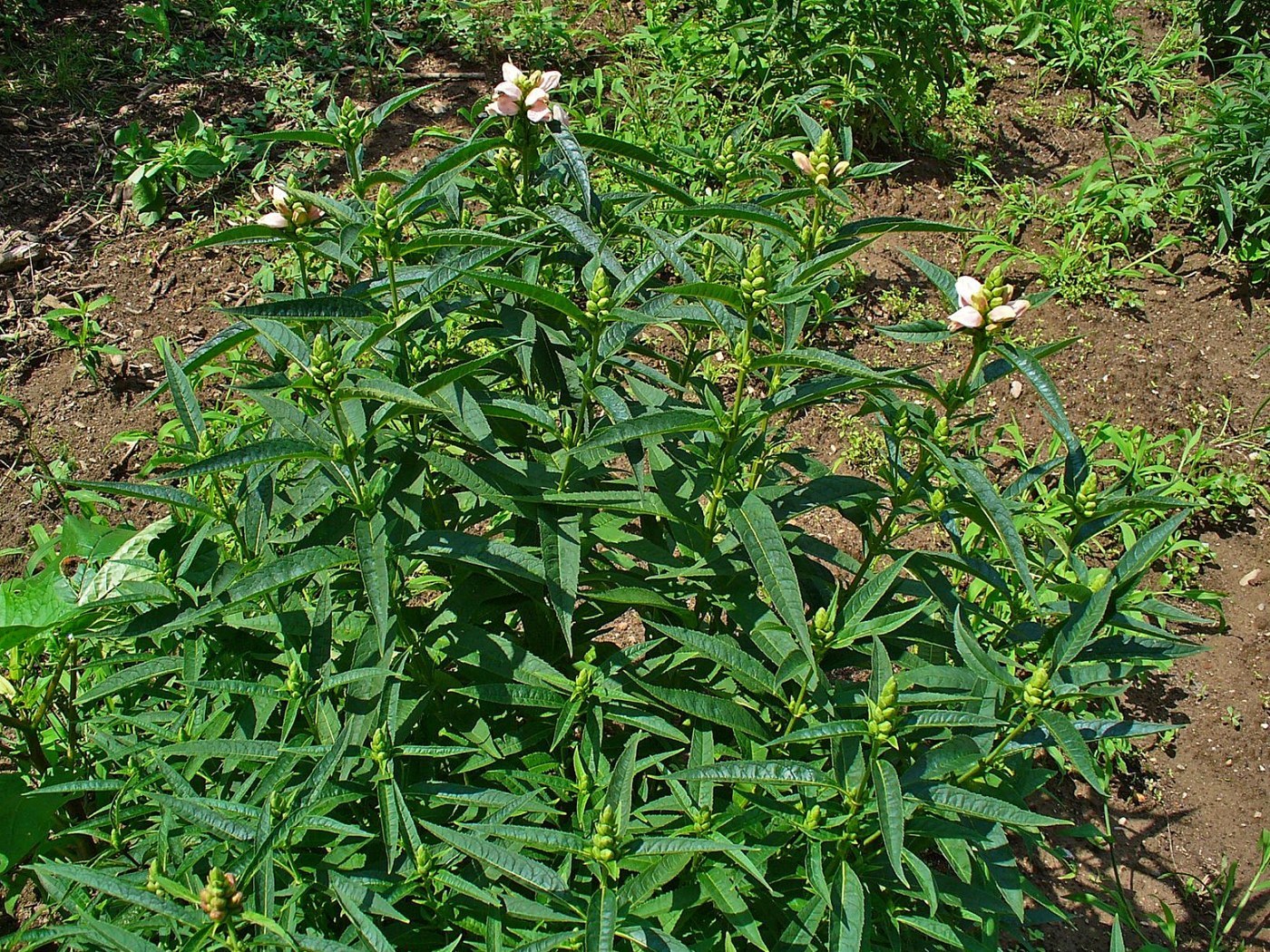
Turtlehead (Chelone species) is a North American perennial named for its curious flowers, whose puffy, two-lipped shape looks like the head of a turtle with its mouth slightly open. Chelone glabra bears white to pale pink flowers, while Chelone lyonii is rosy pink.
It is a wetland native that thrives in consistently moist to wet soil and partial shade, blooming in late summer when many perennials are done. The upright, leafy stems give good vertical structure.
Low-maintenance and deer-resistant, turtlehead is prized for rain gardens, pond edges, and shady borders with reliable moisture.
How to identify it
- Flowers: Inflated, hooded, two-lipped tubular flowers clustered at the stem tips, resembling a turtle's head; white, pale pink, or rose; late summer to fall
- Foliage: Lance-shaped, toothed, glossy dark green leaves, opposite on the stem
- Height: Upright stems 2-3 ft tall
- Habit: Clumping; spreads slowly by rhizomes in moist ground
Care & growing
- Light: Part shade is ideal; tolerates full sun if soil stays reliably moist
- Water: High; keep consistently moist to wet and never let it dry out
- Soil: Rich, humusy, moisture-retentive soil; thrives in damp, even boggy ground
- Temperature: Hardy roughly USDA zones 3-8
- Feeding: Topdress with compost; little other feeding needed
- Propagation: By division in spring, stem cuttings, or seed; pinch stems early for bushier plants
Habitat & origin
Turtlehead is native to eastern North America, growing in wet meadows, swamps, marshes, streambanks, and damp woodland edges.
In cultivation it is used in rain gardens, pond and stream margins, bog gardens, and moist shady borders, where it supports native wildlife.
Frequently asked questions
Why are my turtlehead leaves browning at the edges?
Usually a sign of soil drying out. Turtlehead needs consistently moist soil, so increase watering or move it to a damper, shadier spot.
Does turtlehead need full sun?
No. It prefers part shade and will grow in full sun only if the soil stays reliably moist to wet.
How did turtlehead get its name?
The inflated, hooded flowers look strikingly like the head of a turtle with its beak slightly open.
Is turtlehead good for pollinators?
Yes. Bumblebees are its main pollinators, and it is an important host plant for the Baltimore checkerspot butterfly.
Turtlehead guides
In-depth guides for identifying, growing, and caring for Turtlehead.
How to Care for Turtlehead
Grow Chelone glabra, the white turtlehead, in moist, rich soil and part shade for late-summer clusters of curious turtle-shaped flowers.
Turtlehead Identification Guide
How to identify Turtlehead (Chelone) by its distinctive inflated two-lipped flowers shaped like a turtle's head, opposite toothed leaves, and wetland habitat.