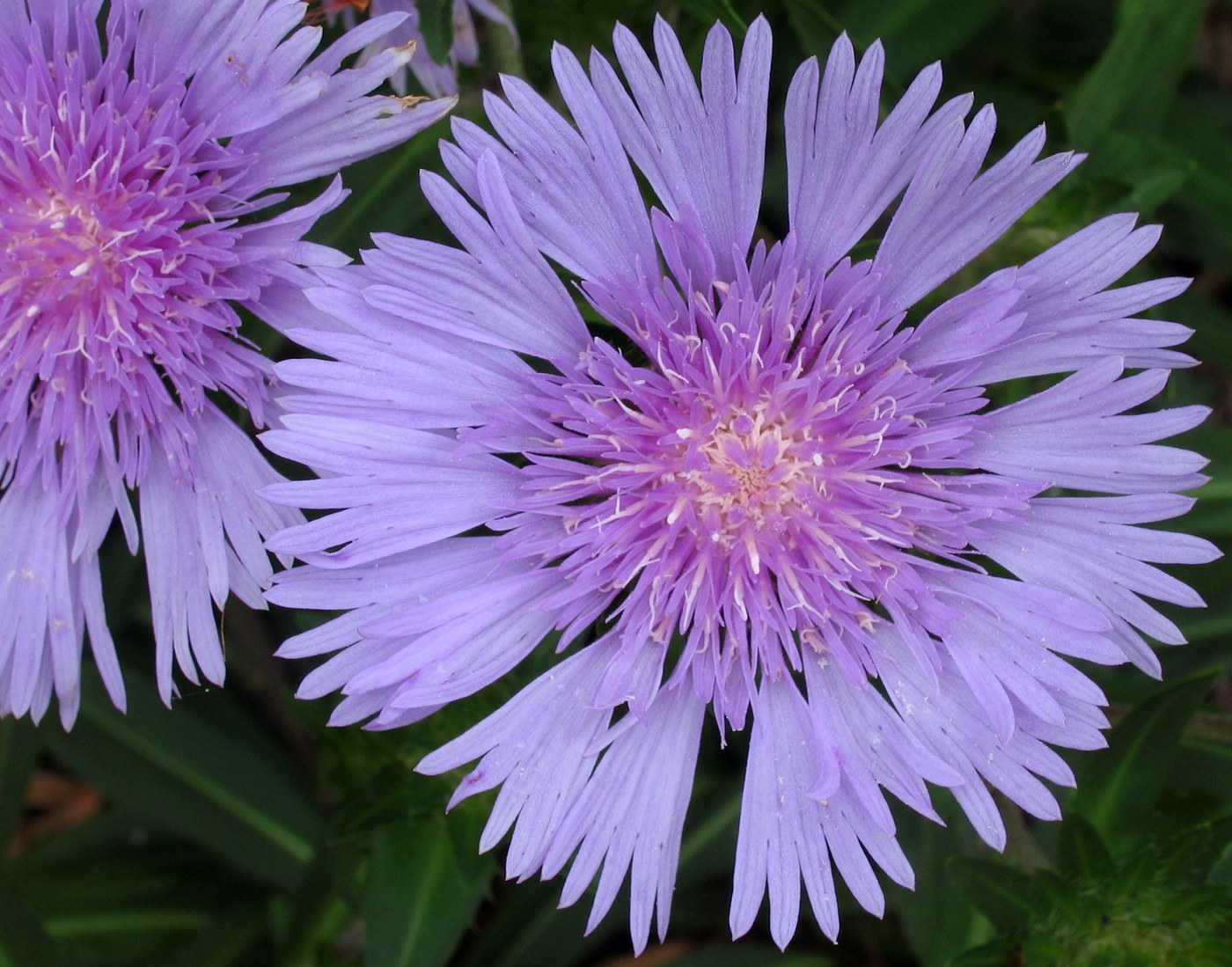
Stokes' Aster
Stokesia laevis
Stokes' aster is a clump-forming perennial bearing large, frilly, cornflower-like blooms in blue, purple, white, or pink atop neat evergreen foliage. It is a long-blooming, heat-tolerant native of the southeastern US.
- Light
- Full sun
- Water
- Moderate; well-drained
- Difficulty
- Easy
Got a plant like this?
Identify any plant from a photo, free.
Overview
Stokes' aster (Stokesia laevis) is a perennial in the daisy family (Asteraceae) and the only species in its genus. Despite the name, its large, fringed flowers more closely resemble cornflowers or china asters than typical asters.
Native to the southeastern United States, it blooms over a long summer season with showy 2- to 4-inch flowers in shades of blue-lavender, purple, white, pink, or yellow. The foliage forms tidy, evergreen basal rosettes.
Heat-tolerant, easy, and great for cutting, it is a dependable choice for sunny borders.
How to identify it
Recognize Stokes' aster by its large, fringed, cornflower-like blooms.
- Flowers: Showy heads 2 to 4 inches across with frilly, fringed outer rays, in blue, lavender, purple, white, pink, or yellow
- Leaves: Smooth, lance-shaped, dark green, with a pale midrib, forming an evergreen basal rosette
- Size: 1 to 2 feet tall, in compact clumps
- Habit: Tidy, mounding perennial with sturdy flower stems
- Bloom time: Early to late summer with deadheading
Care & growing
An easy, heat- and humidity-tolerant perennial.
- Light: Full sun for best bloom; tolerates light afternoon shade
- Water: Moderate; needs well-drained soil and tolerates some drought once established
- Soil: Average, well-drained soil; intolerant of wet, soggy winter soil
- Temperature: Hardy in USDA zones 5 to 9
- Feeding: Light feeding in spring
- Propagation: Division in spring, root cuttings, or seed; deadhead to extend bloom
Habitat & origin
Native to moist pine flatwoods, savannas, and bogs of the southeastern United States, from South Carolina to Louisiana and Florida.
Despite its wetland origins, in cultivation it needs good drainage, especially in winter. It grows well in sunny borders, cottage gardens, and naturalistic plantings, and is widely grown across temperate gardens.
Frequently asked questions
Is Stokes' aster a true aster?
It is in the same family but a different genus. Its large, fringed flowers look more like cornflowers than typical asters.
When does Stokes' aster bloom?
It flowers through much of the summer, and deadheading spent blooms encourages an extended season.
Does Stokes' aster need good drainage?
Yes, especially in winter. Soggy cold soil is the most common cause of plant loss.
Is Stokes' aster evergreen?
Yes, the basal foliage stays green through winter in mild climates, providing year-round structure.
Stokes' Aster guides
In-depth guides for identifying, growing, and caring for Stokes' Aster.
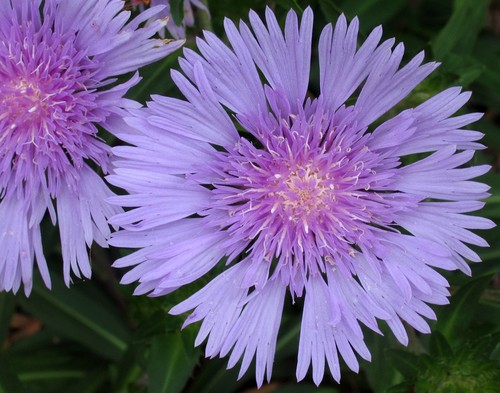
How to Care for Stokes' Aster
Grow Stokesia laevis, Stokes' aster, with our care guide: full sun, good drainage, deadheading, and dividing this long-blooming pollinator perennial.
Stokes' Aster Identification Guide
Recognize Stokesia laevis by its large, fringed, cornflower-like blue-lavender flowers and smooth lance-shaped leaves.