
Stokes' Aster Identification Guide
Recognize Stokesia laevis by its large, fringed, cornflower-like blue-lavender flowers and smooth lance-shaped leaves.
Read the full Stokes' Aster encyclopedia entry →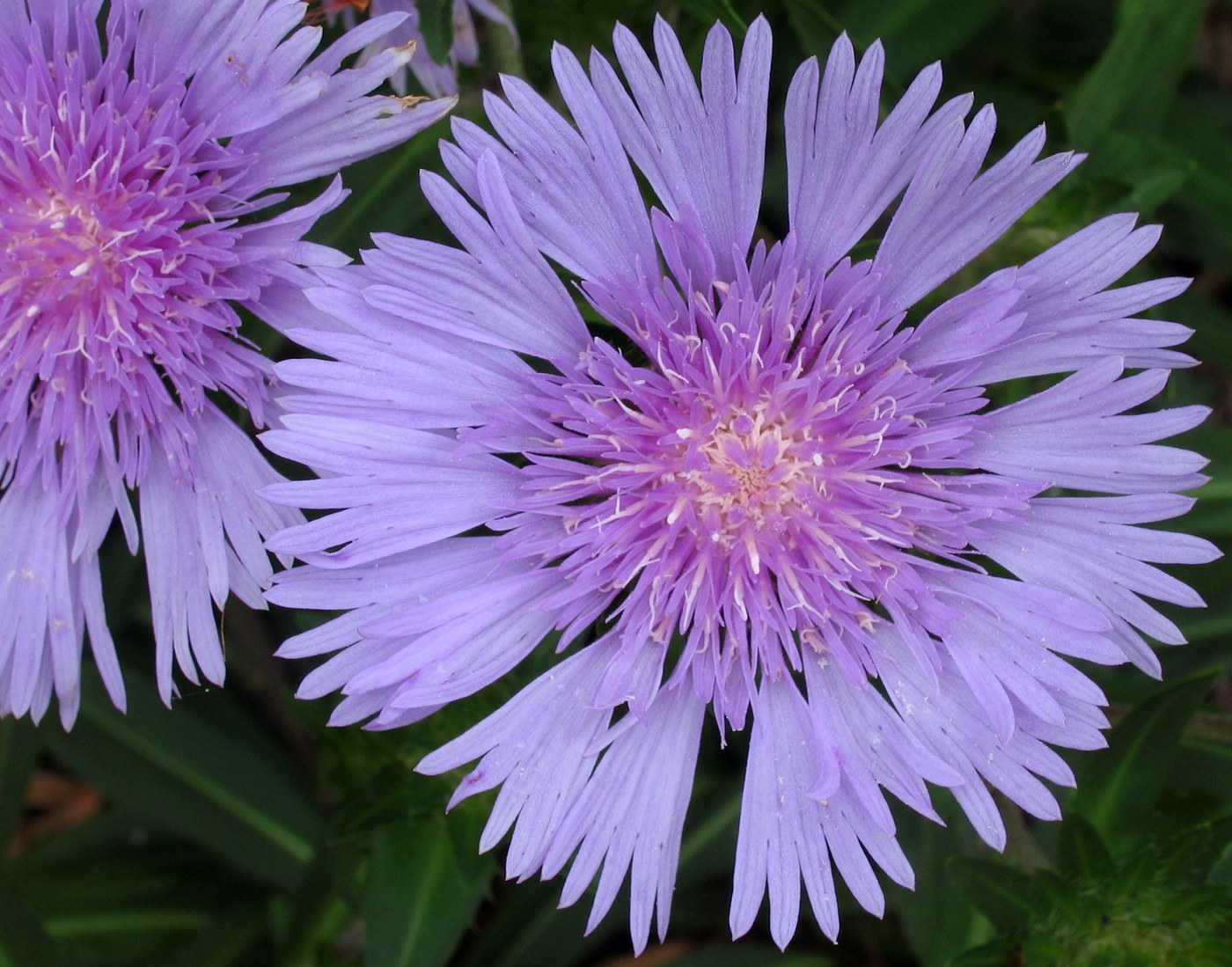
Key Identifying Features
Stokes' aster (Stokesia laevis) is a clump-forming native perennial of the southeastern US, valued for its showy flowers. Look for:
- Large, fringed flower heads (2-4 in across) resembling a cornflower or shaggy aster, in blue-lavender (also white, pink, yellow)
- Smooth, lance-shaped leaves with a pale midrib
- A low basal rosette sending up branching flower stems 1-2 ft tall
- A frilly, deeply notched outer ray giving a lacy look
Leaves & Stems
Leaves form an evergreen-to-semi-evergreen basal rosette. They are lance-shaped (lanceolate), smooth (hairless), 2-8 in long, with a distinctive whitish midrib; lower leaves may have a few spiny teeth near the base, while upper stem leaves are smaller and clasping. Stems are erect, branching, and somewhat woolly near the flower heads, rising above the rosette.
Flowers & Fruit
Blooming early to midsummer (often reblooming into fall), the flower heads are large and showy, 2-4 in wide. The outer ray florets are long and deeply 5-lobed/fringed at the tips, giving a shaggy, frilled appearance, surrounding a fluffier center. The classic color is soft blue to lavender-blue, but cultivars include white ('Alba'), pink ('Rosea'), and yellow ('Mary Gregory'). Beneath each head is a collar of leafy, fringed bracts. Seeds are dry achenes.
How to Tell It Apart from Look-Alikes
- Cornflower / bachelor's button (Centaurea cyanus) — similar fringed blue flowers, but cornflower is an annual with narrow grayish leaves and smaller heads on wiry stems.
- True asters (Symphyotrichum) — much smaller, simpler daisy flowers in dense sprays, blooming mostly in fall.
- China aster (Callistephus) — larger doubled flowers, but an annual with toothed leaves.
- Knapweed (Centaurea) — fringed tufts, but typically smaller and weedier.
The big, frilly, fringed cornflower-like blooms over a smooth-leaved basal rosette is the Stokes' aster signature.
Where You'll Find It
Native to moist pine flatwoods, bogs, and low ground of the southeastern United States, it grows in full sun to part shade on moist but well-drained acidic soil. It's a popular border and cut-flower perennial. Look for its large lavender-blue blooms in summer gardens and southern wetland margins.
Quick ID Checklist
- Large (2-4 in) fringed, cornflower-like flower heads
- Blue-lavender (or white/pink/yellow) color
- Deeply notched, frilly outer ray florets
- Smooth lance-shaped leaves with a pale midrib
- Low basal rosette with branching flower stems
A southern perennial with big shaggy lavender-blue cornflower-like blooms over smooth strappy leaves is Stokes' aster.
Frequently asked questions
Is Stokes' aster a true aster?
It's in the daisy family (Asteraceae) but in its own genus Stokesia, not the true aster genera. Its large fringed flowers look more like a cornflower than a classic aster.
What colors does Stokes' aster come in?
The wild form is blue to lavender-blue, with cultivars in white, pink, and yellow.
How do I tell it from a cornflower?
Stokes' aster is a perennial with a smooth-leaved basal rosette and large 2-4 in heads, while cornflower is an annual with narrow gray leaves and smaller flowers on wiry stems.
Where is Stokes' aster native?
To the moist pine flatwoods and low ground of the southeastern United States, growing in sun to part shade on acidic soils.