
How to Care for Stokes' Aster
Grow Stokesia laevis, Stokes' aster, with our care guide: full sun, good drainage, deadheading, and dividing this long-blooming pollinator perennial.
Read the full Stokes' Aster encyclopedia entry →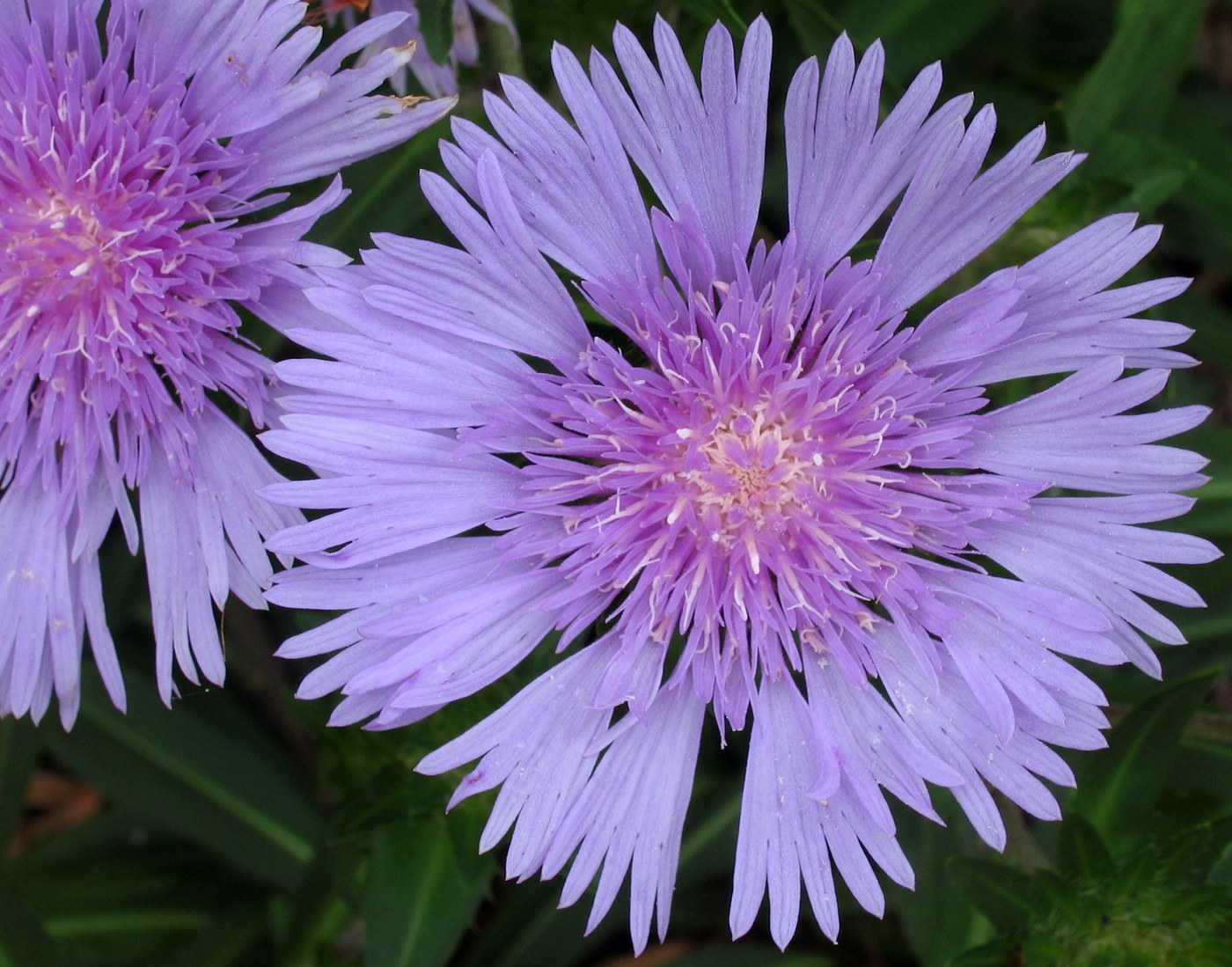
Stokes' aster (Stokesia laevis) is a clump-forming Southeastern U.S. native perennial that produces large, fringed cornflower-like blooms in shades of blue, lavender, white, and pink over a long summer season. Easygoing and low-maintenance, it is a reliable performer in sunny borders and a magnet for pollinators.
Light
Grow Stokes' aster in full sun for the most compact growth and profuse flowering. It tolerates a little afternoon shade, especially in hot climates, but too much shade causes floppy stems and fewer blooms. Aim for at least six hours of direct sun daily.
Water
Provide moderate, even moisture during establishment and the flowering season. Once established the plant is fairly drought-tolerant, but it flowers best with consistent watering during dry spells. The key requirement is well-drained soil; it strongly resents soggy conditions, particularly in winter.
Soil & Potting
Stokes' aster needs light, well-drained soil and is intolerant of wet, heavy ground, especially over winter, when poor drainage leads to crown rot. Sandy or loamy soils are ideal. If your soil is clay-heavy, amend generously with organic matter and grit or plant on a slight mound. In containers, use a free-draining mix and ensure drainage holes.
Humidity & Temperature
Hardy in roughly USDA zones 5 through 9, Stokes' aster handles heat and humidity gracefully, being native to the warm Southeast. In colder zones a winter mulch helps protect the crown, but avoid mulch that traps excess moisture around the base.
Feeding
Feeding needs are light. Work compost into the soil at planting and apply a balanced fertilizer once in spring. Overfeeding, especially with high nitrogen, promotes weak, floppy growth, so keep it modest.
Propagation
Propagate by division in early spring or fall, by root cuttings in late fall or winter, or by seed. Division is the easiest method and also rejuvenates aging clumps. Seed-grown plants may vary in flower color and typically bloom in their second year.
Repotting / Pruning
Divide clumps every 3 to 4 years to maintain vigor and prevent the center from dying out. Deadhead spent flowers regularly to prolong the bloom season, which can stretch for many weeks. Leave the basal evergreen foliage over winter in mild climates and tidy it in spring.
Common Problems & Pests
Stokes' aster is largely pest- and disease-free. The main threat is root and crown rot caused by wet, poorly drained soil, particularly in winter, so drainage is the single most important factor. Caterpillars or slugs may occasionally nibble foliage but rarely cause serious harm.
Seasonal Care Tips
In spring, tidy old foliage, feed lightly, and divide if needed. Through summer, deadhead diligently to keep the long bloom show going. In fall, ensure the crown will not sit in waterlogged soil over winter and apply a light, airy mulch in colder zones for protection.
Frequently asked questions
Why did my Stokes' aster die over winter?
The most common cause is wet, poorly drained soil that rots the crown during cold, dormant months. Plant Stokes' aster in light, well-drained soil, avoid heavy mulch against the base, and consider raising the planting on a mound in clay soils.
How do I keep Stokes' aster blooming longer?
Deadhead spent flowers regularly to encourage continued bud production, grow it in full sun, and keep it evenly watered during dry spells. With consistent deadheading it can bloom for many weeks.
When should I divide Stokes' aster?
Divide clumps every 3 to 4 years in early spring or fall, especially when the center begins to thin out. Dividing rejuvenates the plant and yields new plants for elsewhere in the garden.
Does Stokes' aster tolerate drought?
Once established it is fairly drought-tolerant, though it flowers most freely with moderate, consistent moisture. Good drainage matters far more than frequent watering.