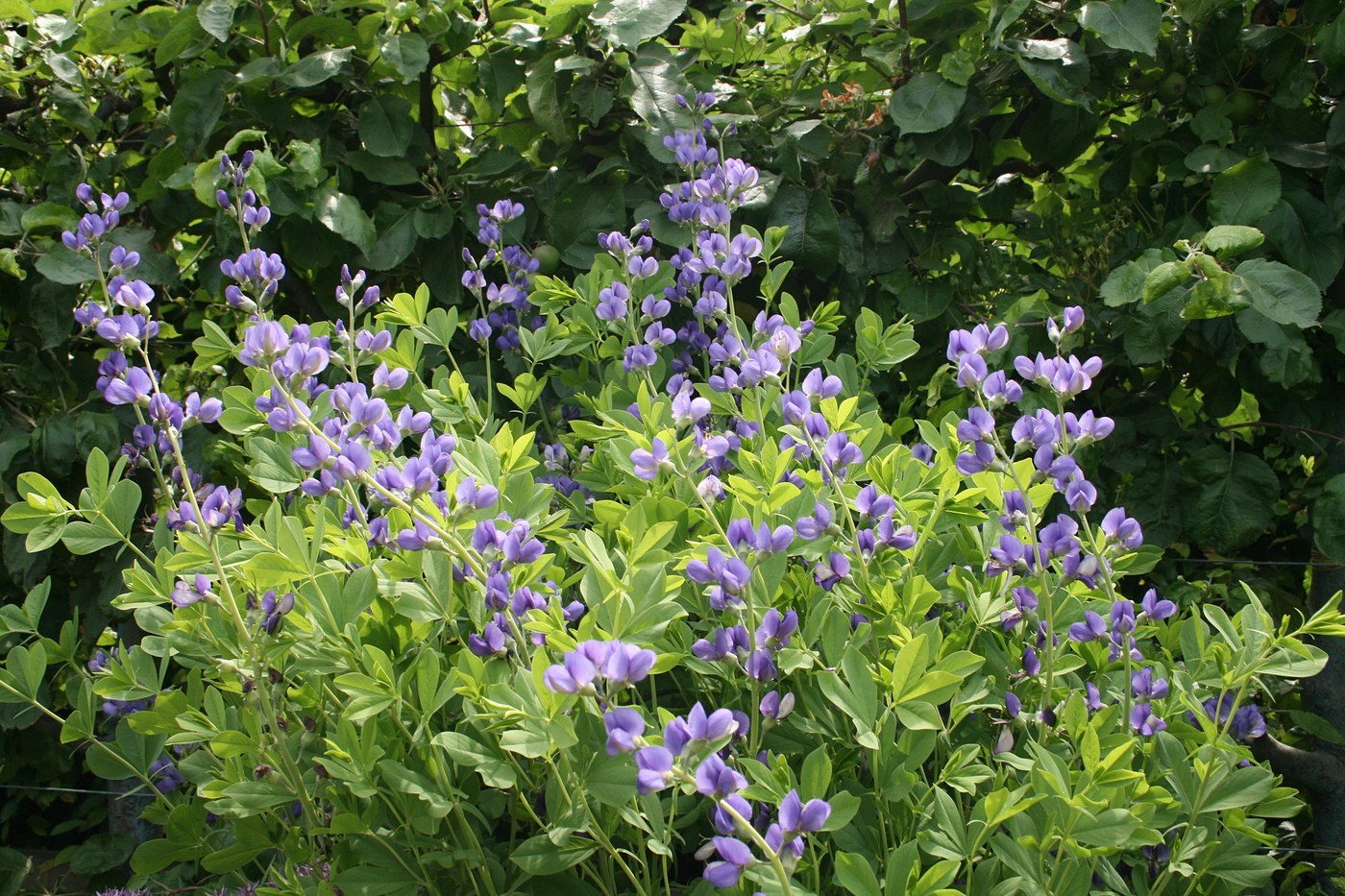
Wild Indigo
Baptisia australis
A long-lived native prairie perennial that forms a shrub-like mound of blue-green foliage topped by spikes of indigo-blue, pea-like flowers. Its deep taproot makes it exceptionally drought tolerant and nearly permanent in the garden.
- Light
- Full sun
- Water
- Low; drought tolerant once established
- Difficulty
- Easy
Got a plant like this?
Identify any plant from a photo, free.
Overview
Wild indigo (Baptisia australis), often called blue false indigo, is a robust, long-lived native perennial of central and eastern North America. It belongs to the legume family and forms a rounded, shrub-like clump that can persist for decades in the same spot.
In late spring, it sends up showy spikes of indigo-blue, pea-shaped flowers, followed by inflated seed pods that turn charcoal-black and rattle when dry. The name 'false indigo' reflects its historical use as a substitute for true indigo dye (Indigofera).
With a deep taproot, it is extremely drought tolerant once established but resents transplanting, so it is best sited permanently.
How to identify it
Look for a bushy, blue-green clump with upright spikes of blue pea flowers in late spring.
- Flowers: Pea-like, indigo-blue, in upright spikes 12 to 24 inches tall
- Leaves: Divided into three rounded, blue-green leaflets (trifoliate), like a clover or pea
- Seed pods: Inflated, turning blue-black to charcoal, rattling with loose seeds when dry
- Size: 3 to 4 feet (1 to 1.2 m) tall and wide, shrub-like
- Bloom time: Late spring to early summer
Care & growing
Wild indigo is tough, easy, and effectively permanent once placed.
- Light: Full sun for the sturdiest, most upright growth
- Water: Drought tolerant once established thanks to a deep taproot
- Soil: Tolerates poor, sandy, or rocky soils; needs good drainage
- Temperature: Very cold-hardy perennial
- Propagation: By seed (scarify and stratify); division is difficult due to the taproot, so site it permanently
- Note: Slow to establish but extremely long-lived; needs no staking in full sun
Habitat & origin
Blue false indigo is native to central and eastern North America, from the Great Plains east through the Midwest and into the eastern states.
It grows naturally in prairies, open woodlands, glades, and along stream banks, favoring open, sunny sites with well-drained soil.
It is a popular, low-maintenance perennial in borders, prairie plantings, and pollinator gardens, and was named the Perennial Plant Association's Plant of the Year in 2010.
Frequently asked questions
Why is it called false indigo?
It was historically used as a substitute for true indigo dye, which comes from plants in the genus Indigofera, hence 'false' indigo.
Is wild indigo hard to grow?
No, it is very easy and drought tolerant once established, though it is slow to mature and dislikes being moved because of its deep taproot.
Why won't my newly planted baptisia bloom much?
Baptisia is slow to establish and may take a few years to reach full size and flowering, but it then thrives for decades.
Is wild indigo good for pollinators?
Yes. It attracts bumblebees and other bees, serves as a larval host for several butterflies, and fixes nitrogen as a legume.
Wild Indigo guides
In-depth guides for identifying, growing, and caring for Wild Indigo.
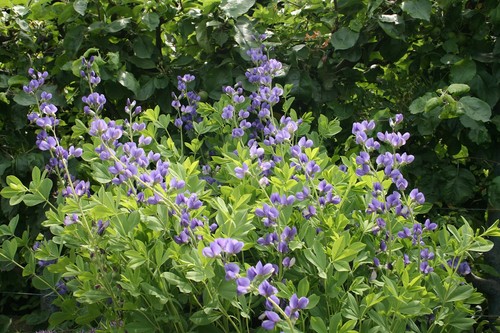
How to Care for Wild Indigo
A long-lived, drought-tolerant native perennial with blue-green foliage and tall spikes of indigo, pea-like flowers.
Wild Indigo Identification Guide
Identify Wild Indigo (Baptisia) by its pea-like flower spikes, clover-like three-part leaves, and inflated seed pods. This guide covers color forms and its shrubby prairie habit.