
How to Care for Wild Indigo
A long-lived, drought-tolerant native perennial with blue-green foliage and tall spikes of indigo, pea-like flowers.
Read the full Wild Indigo encyclopedia entry →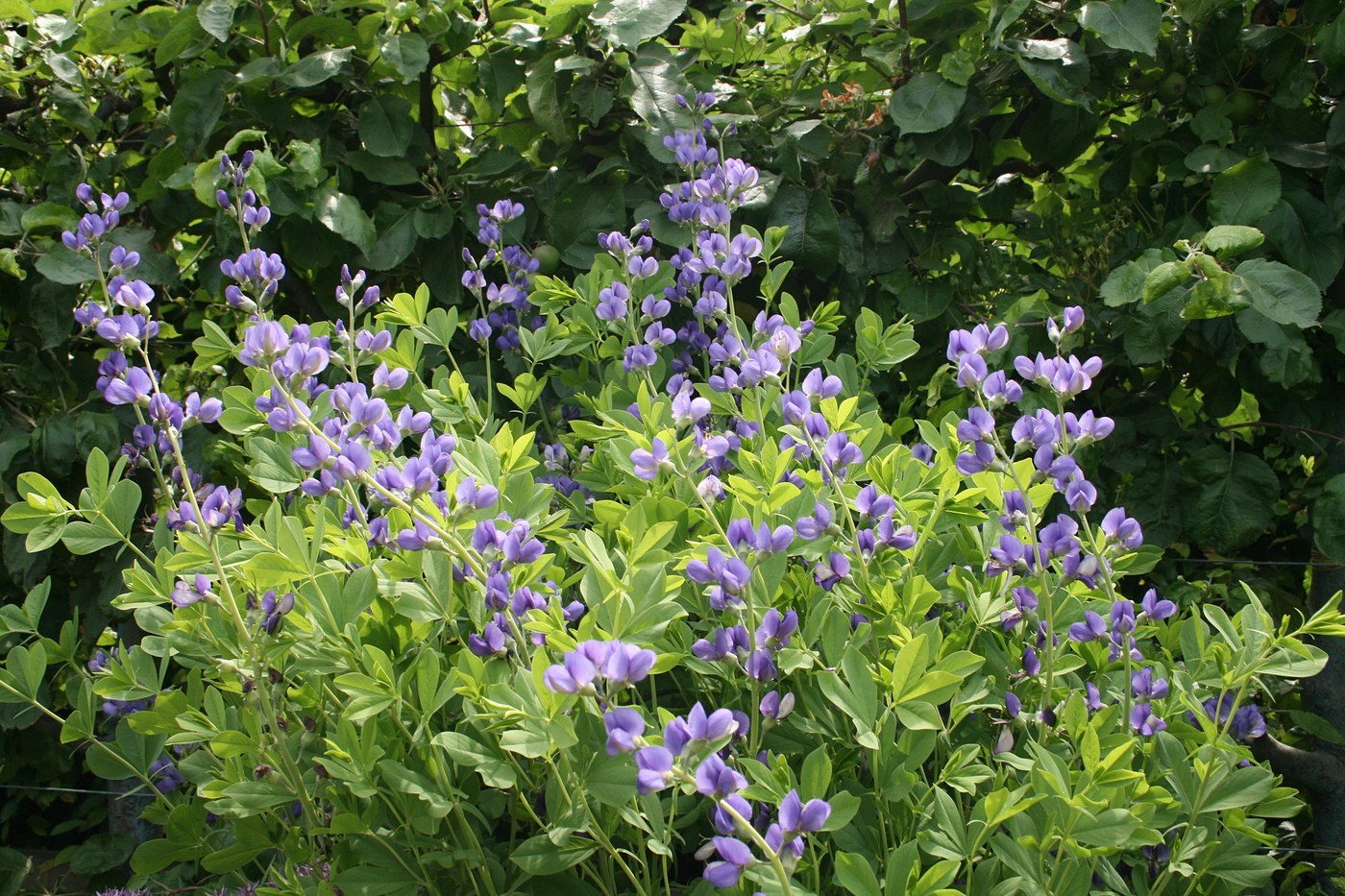
Wild Indigo (Baptisia australis), also called blue false indigo, is a tough, long-lived prairie perennial that forms a shrubby mound of blue-green foliage topped in late spring with tall spikes of indigo-blue, pea-like flowers. Once established it is exceptionally drought-tolerant and virtually carefree, making it an easy anchor plant for sunny borders.
Light
Grow in full sun for the best form and flowering. In too much shade, plants grow lanky, flower sparsely, and may flop and need staking. Baptisia is a sun-lover that rewards an open, bright position with dense, self-supporting growth and abundant bloom.
Water
Water regularly the first season to help the deep taproot establish. After that, Wild Indigo is highly drought-tolerant and rarely needs supplemental water. Its deep root system reaches moisture far below the surface, so keep watering low and avoid soggy soil, which this dryland native dislikes.
Soil & Potting
Baptisia adapts to a wide range of soils, from sandy to loamy, as long as drainage is good. It tolerates poor, lean soils and even performs beautifully without rich amendments. A near-neutral to slightly acidic pH works well. As a legume, it fixes its own nitrogen, so it thrives where other plants might struggle.
Humidity & Temperature
Hardy across roughly USDA zones 3-9, Wild Indigo shrugs off both cold winters and hot, humid summers. It needs no humidity management and handles temperature swings with ease. A winter dormancy period is normal and beneficial, with the plant dying back to the ground and resprouting in spring.
Feeding
This is one of the lowest-maintenance perennials for feeding. Because it fixes nitrogen from the air, Baptisia needs little to no fertilizer. Overly rich soil actually encourages floppy growth. An occasional light top-dressing of compost is more than sufficient.
Propagation
Propagate primarily from seed, which benefits from scarification and cold stratification to break dormancy. Sow in fall or start indoors after chilling. Division is difficult and often resented because of the deep, woody taproot, so it is generally avoided. Seed-grown plants take a few years to reach full flowering size but are very long-lived once mature.
Repotting / Pruning
Baptisia dislikes being moved once established, so choose its permanent spot carefully. Pruning is minimal: after flowering, you can leave the attractive inflated seed pods for ornamental interest, or shear the plant lightly to maintain a tidy shrub-like mound. Cut the whole plant back to the ground in late fall or early spring as it dies down.
Common Problems & Pests
Wild Indigo is remarkably pest- and disease-resistant. The most common issue is flopping, caused by too much shade or overly fertile soil; correct by giving it more sun and leaner conditions, or add a grow-through support early in the season. Occasional weevils may feed on developing seed pods but rarely harm the plant. Its deep taproot makes it slow to establish but extremely resilient once settled.
Seasonal Care Tips
In spring, watch for the striking asparagus-like shoots emerging and provide support early if your site is less than full sun. Enjoy the flower spikes in late spring to early summer. Through summer, the blue-green foliage forms a handsome backdrop and the seed pods develop and blacken. In fall, leave the pods for winter interest or cut back the dying foliage; the plant needs no winter protection.
Frequently asked questions
Why is my Wild Indigo flopping over?
Flopping usually means too little sun or soil that is too rich. Baptisia wants full sun and lean, well-drained soil to grow dense and self-supporting. Move it to a brighter spot or add an early-season grow-through support.
How long does Wild Indigo take to establish?
Be patient. Baptisia develops a deep taproot and can take two to three years to reach full flowering size. Once established, it is extremely long-lived, drought-tolerant, and can thrive for decades in the same spot.
Can I divide or move Wild Indigo?
It is best not to. The deep, woody taproot makes division difficult and transplanting risky. Choose a permanent full-sun location at planting, and propagate new plants from seed instead.
Does Wild Indigo need fertilizer?
Very little. As a nitrogen-fixing legume it feeds itself, and rich soil only encourages floppy growth. An occasional light top-dressing of compost is all it needs.