
Wild Indigo Identification Guide
Identify Wild Indigo (Baptisia) by its pea-like flower spikes, clover-like three-part leaves, and inflated seed pods. This guide covers color forms and its shrubby prairie habit.
Read the full Wild Indigo encyclopedia entry →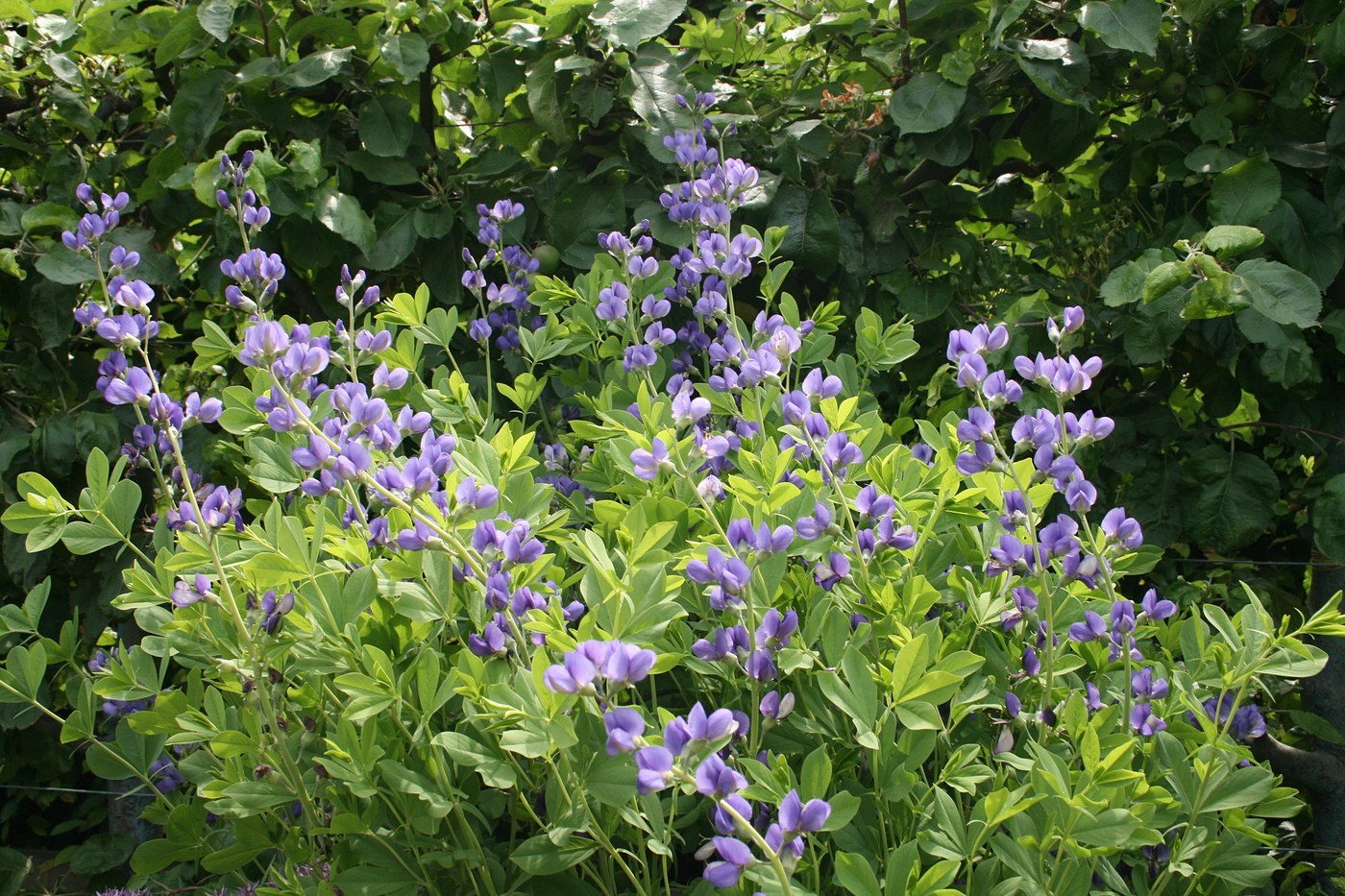
Key Identifying Features
Wild Indigo (genus Baptisia) is a bushy, long-lived perennial legume known for its upright spikes of pea-like flowers and blue-green, clover-like foliage. Plants form rounded, shrub-like clumps 2 to 4 feet (60 to 120 cm) tall and bloom in late spring to early summer.
- Spikes of pea-shaped flowers (yellow, white, blue, or cream)
- Three-part (trifoliate) clover-like leaves
- Inflated, blackening seed pods that rattle when dry
- Bushy, shrub-like mounded habit
Leaves & Stems
Stems are smooth, often bluish-green, and branch into a rounded bush. Leaves are divided into three leaflets (trifoliate), resembling clover or pea foliage, and are usually a distinctive blue-green to gray-green. The whole plant has a substantial, almost shrubby presence and emerges as dark, asparagus-like shoots in spring.
Flowers & Fruit
Flowers are typical pea-family blooms (a banner, two wings, and a keel) borne in erect terminal spikes (racemes). Color depends on species: blue/violet (Baptisia australis), bright yellow (B. tinctoria, B. sphaerocarpa), or white/cream (B. alba). Blooming runs May to July. The fruit is a distinctive inflated, rounded-to-oblong pod that turns charcoal-black when mature; the loose seeds rattle inside, a fun confirming clue.
How to Tell It Apart from Look-Alikes
- Lupines (Lupinus): also pea spikes, but leaves are palmately compound with many leaflets, not three.
- False indigo bush (Amorpha): a true shrub with many tiny leaflets and dark flower spikes.
- Clovers / vetches: smaller, sprawling, not shrub-forming with inflated pods.
The combination of trifoliate blue-green leaves, pea-flower spikes, and inflated blackening rattling pods identifies Baptisia.
Where You'll Find It
Wild Indigo grows in prairies, open woodlands, savannas, meadows, and roadsides across eastern and central North America. It prefers full sun and well-drained soil and is deep-rooted and drought-tolerant. The dried black pods persist into fall and winter, helping identification long after the flowers fade.
Quick ID Checklist
- Pea-like flowers in upright spikes
- Flowers blue, yellow, white, or cream by species
- Trifoliate, blue-green clover-like leaves
- Inflated pods turning black and rattling
- Bushy, shrub-like mound
- Sunny prairies and open ground
Frequently asked questions
Why is it called wild indigo?
Because some species, especially Baptisia tinctoria, were historically used as a substitute for true indigo dye. The plants yield a blue dye, though weaker than that from the tropical indigo plant.
What do the seed pods look like?
They are inflated, rounded to oblong pods that turn charcoal-black as they mature and dry. The loose seeds rattle inside, which is a distinctive and fun way to confirm the plant in late summer and fall.
How do I tell wild indigo from lupine?
Both have upright spikes of pea-like flowers, but wild indigo has leaves divided into three leaflets, while lupines have palmately compound leaves with many leaflets radiating from a central point.
What colors do wild indigo flowers come in?
Depending on the species, the pea-like flowers can be blue-violet, bright yellow, or white to cream. The plant always has the same clover-like trifoliate leaves and inflated pods regardless of flower color.