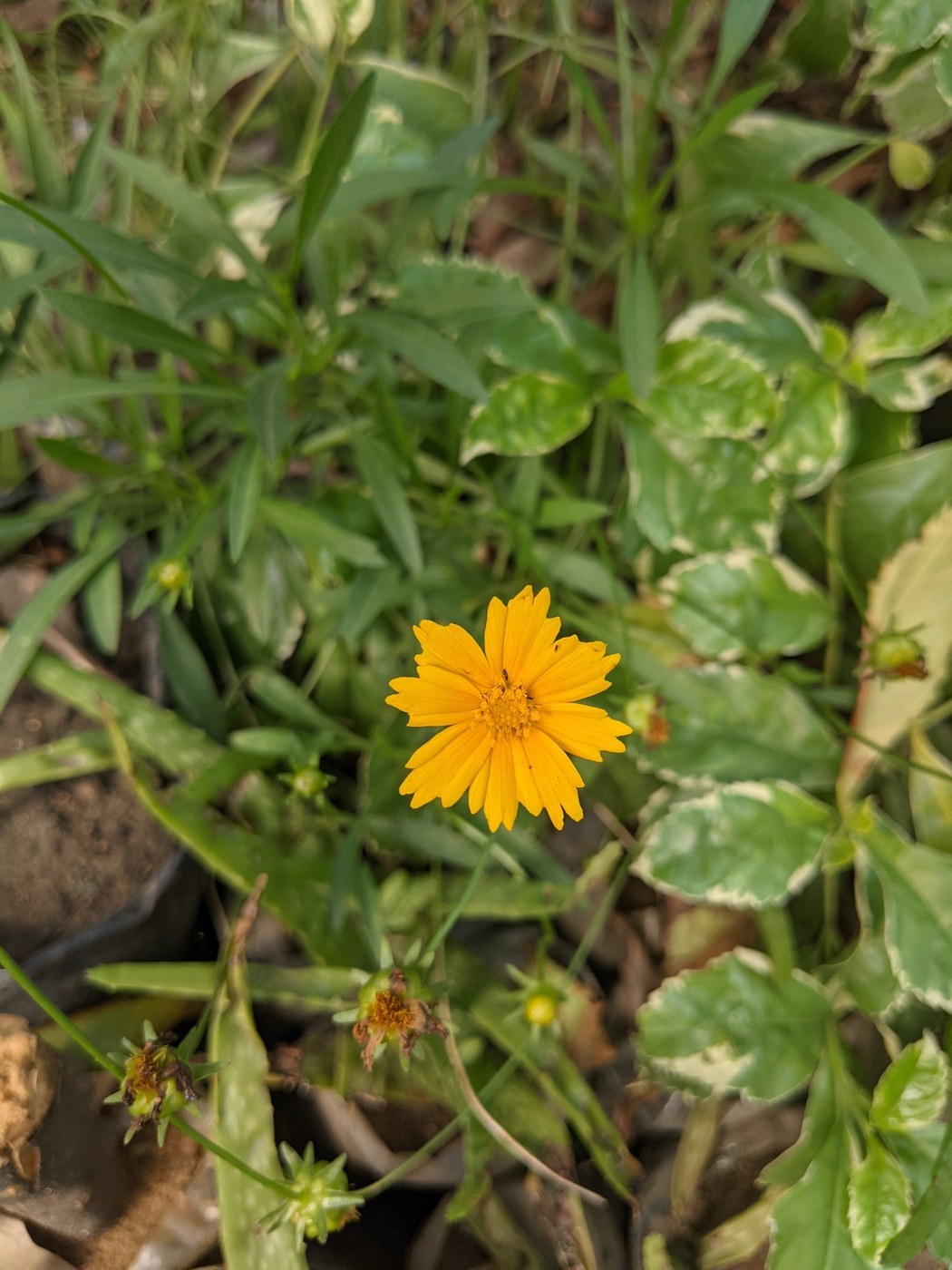
Tickseed
Coreopsis lanceolata
A cheerful, sun-loving daisy-family wildflower bearing masses of golden-yellow blooms over a long summer season, beloved for its toughness and pollinator appeal.
- Light
- Full sun
- Water
- Low to moderate; drought-tolerant
- Difficulty
- Easy
Got a plant like this?
Identify any plant from a photo, free.
Overview
Tickseed is a genus (Coreopsis) of easy-care, daisy-like perennials and annuals, with the lance-leaved tickseed (Coreopsis lanceolata) among the most widely grown. It produces a long-lasting display of bright golden-yellow flowers from late spring through summer, especially if deadheaded.
The common name "tickseed" comes from the small, flattened seeds that resemble ticks. Tough, drought-tolerant, and adaptable, Coreopsis is a mainstay of low-maintenance and pollinator gardens, with many cultivars in shades of gold, red, pink, and bicolor.
How to identify it
- Flowers: Daisy-like heads, typically golden-yellow, with notched (toothed) ray petals around a yellow central disk; 4-6 cm across.
- Leaves: Mostly lance-shaped and clustered toward the base; narrow and sometimes lobed.
- Height: Usually 30-60 cm tall.
- Habit: Clump-forming, with flowers held on slender stalks above the foliage.
- Seeds: Small, flat, dark, resembling ticks — the source of the name.
Care & growing
Light: Full sun for the best, most abundant flowering.
Water: Drought-tolerant once established; avoid overwatering.
Soil: Well-drained, even poor or sandy soil; dislikes wet feet.
Temperature: Hardy across a broad range; many species are short-lived perennials.
Feeding: Little to none required.
Propagation: Sow seed, divide clumps in spring, or take basal cuttings. Deadhead regularly to extend bloom and limit self-seeding.
Habitat & origin
Lance-leaved tickseed is native to central and eastern North America, growing in prairies, open fields, roadsides, and dry, disturbed ground. The wider genus ranges across the Americas.
It is cultivated worldwide in sunny borders, wildflower meadows, and water-wise gardens, and is often included in native seed mixes for its reliability.
Frequently asked questions
Why is it called tickseed?
The small, flattened, dark seeds resemble ticks, which gave the plant its common name. It has nothing to do with attracting actual ticks.
How do I keep it blooming all summer?
Deadhead spent flowers regularly and give it full sun. Removing old blooms encourages a long, continuous flush of new ones.
Is tickseed a perennial?
Many tickseeds are short-lived perennials, while some types are annuals. They often self-seed, so colonies persist even as individual plants fade.
Does it need rich soil?
No. Tickseed thrives in lean, well-drained soil and full sun, and actually flowers better when not over-fertilized.
Tickseed guides
In-depth guides for identifying, growing, and caring for Tickseed.
How to Care for Tickseed
Grow cheerful, drought-tolerant Tickseed (Coreopsis): full sun, lean well-drained soil, and easy deadheading for a long summer of golden blooms.
Tickseed Identification Guide
Identify Tickseed (Coreopsis) by its cheerful yellow daisy flowers with toothed ray tips and the flat, tick-like seeds that give it its name.