
Turtlehead Identification Guide
How to identify Turtlehead (Chelone) by its distinctive inflated two-lipped flowers shaped like a turtle's head, opposite toothed leaves, and wetland habitat.
Read the full Turtlehead encyclopedia entry →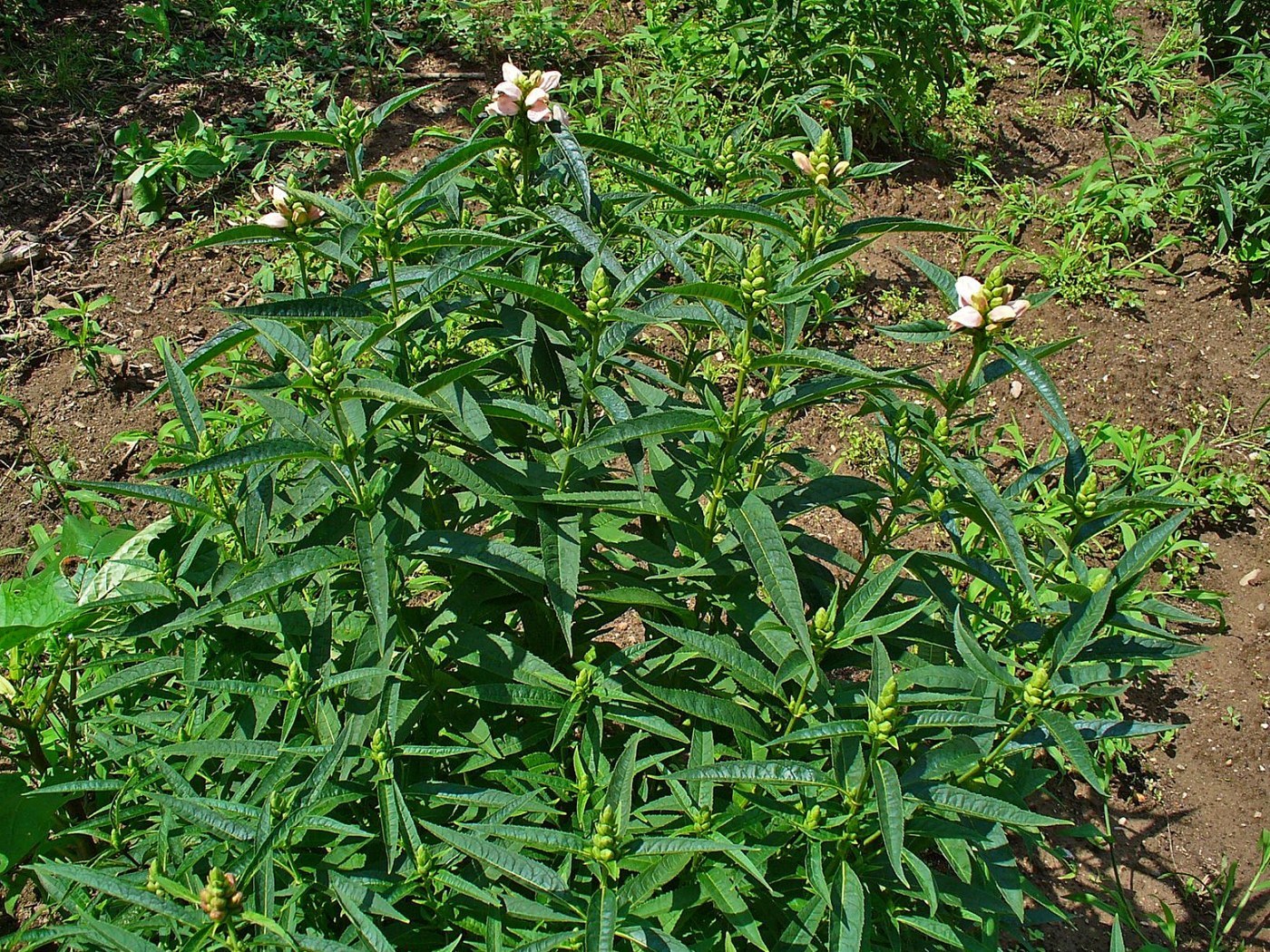
Key Identifying Features
Turtlehead (Chelone) gets its name from its remarkable flowers: each bloom is a swollen, two-lipped tube that looks just like a turtle's head with its mouth slightly open. It's an upright perennial of wet places, blooming in late summer and fall.
- Flowers shaped like a turtle's head, white to pink or rose
- Erect stems 2-4 feet tall
- Opposite, sharply toothed, lance-shaped leaves
- Found in wet, shady to part-sun habitats
Leaves & Stems
Stems are upright, smooth, and often square-ish to four-angled. Leaves are arranged in opposite pairs, are lance-shaped to narrowly oval, 3-6 inches long, dark green and glossy, with sharply toothed (serrated) edges and a pointed tip. The leaves have short stalks or clasp the stem directly depending on the species.
Flowers & Fruit
Flowers crowd into dense spikes at the stem tips, opening a few at a time. Each flower is a 1-inch inflated tube with a hooded upper lip and a fringed, bearded lower lip that together resemble a gaping turtle's mouth. Colors range from white (Chelone glabra) to pink and rosy-purple (C. lyonii, C. obliqua). Bumblebees are strong enough to force their way inside to pollinate. Fruit is an oval capsule holding winged seeds. Turtlehead is the main larval host for the Baltimore checkerspot butterfly.
How to Tell It Apart from Look-Alikes
- Snapdragon and Penstemon: also two-lipped tubular flowers, but neither has the strongly inflated, closed, turtle-head shape; penstemon flowers flare open and snapdragons grow in different habitats.
- Obedient plant (Physostegia): pink spikes in similar wet ground, but its flowers are open, snapdragon-like tubes in four rows and not inflated or turtle-shaped.
- Closed bottle gentian (Gentiana): also nearly closed flowers, but they are clustered blue cups with no two-lipped turtle mouth.
The inflated, closed, turtle-head-shaped flower with a bearded lower lip is unmistakable and matched by nothing else.
Where You'll Find It
Turtlehead grows in moist to wet soil: stream banks, wet meadows, swamps, low woodlands, and pond edges, mostly in part shade but tolerating sun where soil stays damp. It's also planted in rain gardens and shady moist borders. Bloom comes late summer into fall, when little else is flowering in wet shade.
Quick ID Checklist
- Flowers like an inflated turtle's head, mouth slightly open
- Hooded upper lip + bearded lower lip
- White, pink, or rose; in dense terminal spikes
- Opposite, sharply toothed lance leaves
- Wet, shady habitat; blooms late summer-fall
If the flowers look like little turtle heads peeking out of a spike in wet shade, it's Turtlehead.
Frequently asked questions
Why is it called turtlehead?
Each flower is an inflated, two-lipped tube with a hooded top and a slightly open lower lip, giving it a striking resemblance to a turtle's head with its mouth ajar.
What pollinates turtlehead?
Mainly bumblebees, which are strong enough to pry open the nearly closed flowers and crawl inside to reach the nectar and transfer pollen.
How do I tell turtlehead from obedient plant?
Both have pink flowers in wet ground, but turtlehead's blooms are inflated and closed like a turtle's head, while obedient plant's flowers are open, snapdragon-like tubes arranged in four neat rows.
Where does turtlehead grow?
It grows in consistently moist to wet, partly shaded places such as stream banks, wet meadows, swamps, and low woodlands, and is popular in rain gardens.