Basil Identification Guide
Identify basil by its glossy aromatic leaves, square stems and spikes of small white flowers. This guide covers its sweet clove-like scent and how to tell it from mint.
Read the full Basil encyclopedia entry →
Key Identifying Features
Basil (Ocimum basilicum) is a tender annual herb in the mint family, instantly recognizable by its sweet, spicy, clove-and-anise aroma.
- Aroma: crush a leaf for a strong sweet, clove-like scent (the single best ID trait)
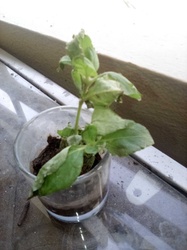
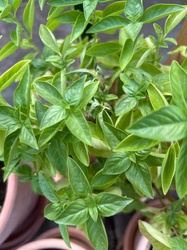
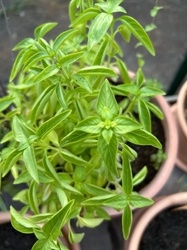
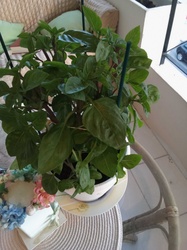
- Leaves: opposite, oval, glossy bright green, often slightly cupped or puckered
- Stems: square (four-angled), typical of the mint family
- Flowers: small white (sometimes pale purple) two-lipped flowers in whorled terminal spikes
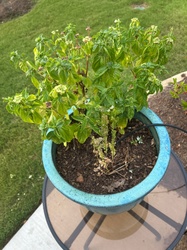
- Habit: bushy, upright, 30-60 cm
Leaves & Stems
Leaves are opposite (in pairs at right angles to the pair below), 3-10 cm long, oval with a pointed tip, and usually smooth-edged or faintly toothed. The surface is often glossy and somewhat blistered/cupped, especially in sweet basil. Many cultivars vary: purple basil has deep maroon leaves, Thai basil has narrower leaves with purple stems and an anise scent, and lettuce-leaf basil has very large crinkled leaves. The square stems confirm the mint family.
Flowers & Fruit
Flowers appear in interrupted whorls stacked into a spike at the stem tips. Each is small and two-lipped, white or tinged purple, sitting in a small green calyx. Pinching off these flower spikes keeps the plant leafy. After flowering, the calyx holds four tiny nutlets (seeds), which become mucilaginous when wet (as in sabja/tukmaria seeds). Flowering occurs in summer and signals the plant is maturing.
How to Tell It Apart from Look-Alikes
- Mint (Mentha): also square-stemmed and opposite-leaved, but smells of menthol/peppermint, spreads by runners, and has more toothed leaves
- Lemon balm (Melissa): lemon-scented, wrinkled heart-shaped leaves
- Coleus / perilla: related, but perilla (shiso) has strongly toothed, often frilled leaves and a distinct cinnamon/cumin scent
- Stinging nettle (a common careless mismatch): square stems but stinging hairs and no sweet aroma
The sweet clove-anise aroma + glossy opposite oval leaves + square stems + white flower spikes confirm basil.
Where You'll Find It
Native to tropical Asia and Africa, basil is grown worldwide as a culinary herb in gardens, pots and windowsills. It needs warmth and full sun, is killed by frost, and is grown as a summer annual in temperate regions. You'll find it in vegetable gardens, herb beds and kitchen containers.
Quick ID Checklist
- Strong sweet, clove-and-anise scent when crushed
- Opposite, glossy, oval, often cupped leaves
- Square (four-angled) stems
- Small white/purple two-lipped flowers in whorled spikes
- Bushy upright tender annual habit
- Frost-sensitive, grown in warm sun
Frequently asked questions
How can I tell basil from mint?
Both have square stems and opposite leaves, but basil smells sweet and clove-like with glossy untoothed oval leaves, while mint smells of menthol, spreads by runners and has more toothed leaves.
What is the most reliable way to identify basil?
Crush a leaf and smell it; basil's distinctive sweet, clove-and-anise aroma combined with square stems and glossy opposite leaves is conclusive.
Why do basil leaves look different on some plants?
Basil has many cultivars: purple basil has maroon leaves, Thai basil has narrow leaves and purple stems with an anise scent, and lettuce-leaf types have large crinkled leaves, but all share the family traits.
What do basil flowers look like?
Small white or pale purple two-lipped flowers arranged in whorled spikes at the stem tips; pinching them off keeps the plant producing leaves.
Basil identified by the community
Recent Basil specimens identified with Plant Identifier.