
Basswood Identification Guide
Identify American basswood (linden) by its large lopsided heart-shaped leaves, fragrant flowers hanging from a leafy bract, and round nutlets. Includes how to tell it from mulberry, catalpa, and other heart-leaved trees.
Read the full Basswood encyclopedia entry →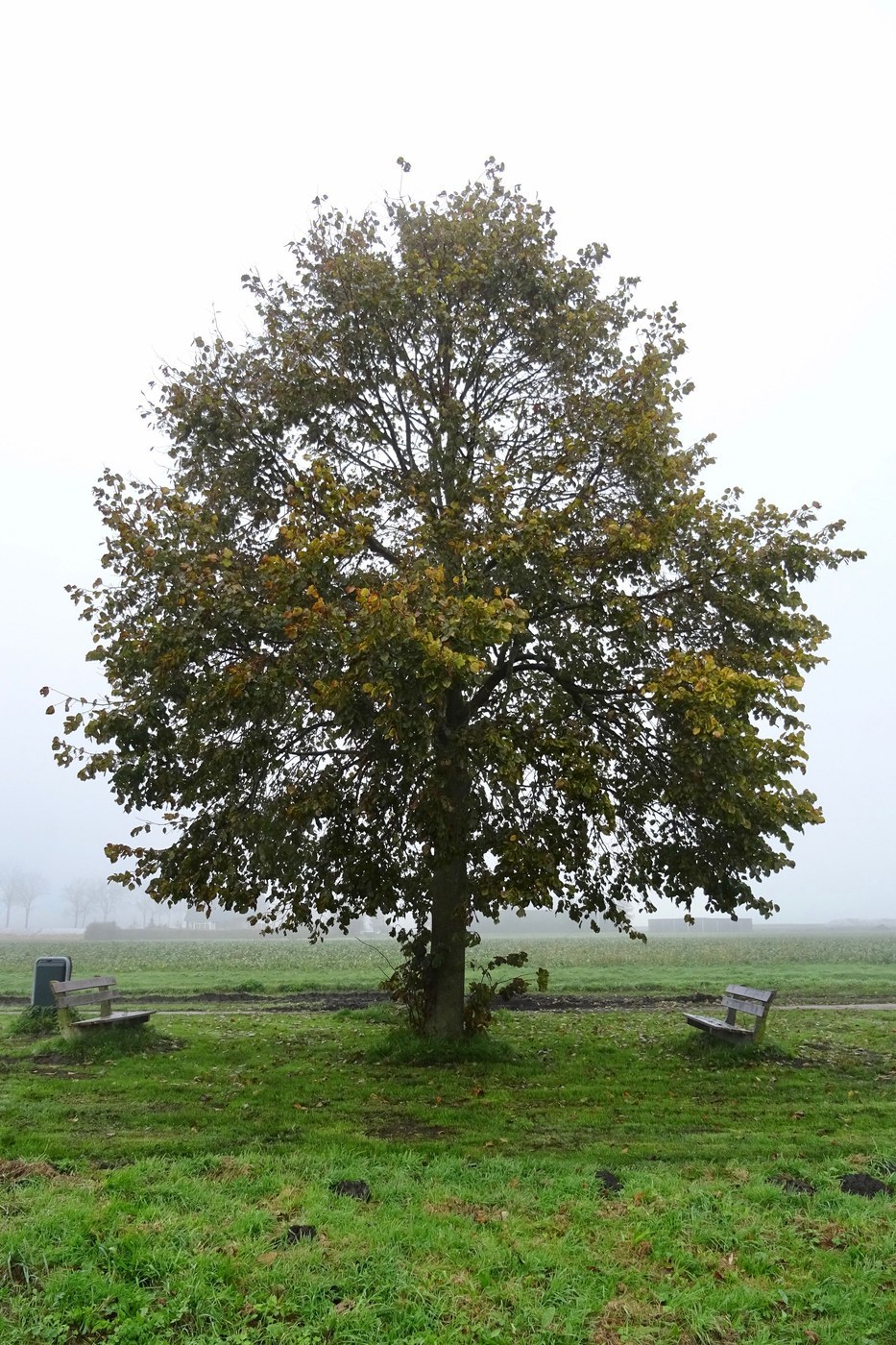
Key Identifying Features
Basswood (Tilia americana), also called American linden, is a large deciduous shade tree. Its standout features are large, heart-shaped leaves with an asymmetrical (lopsided) base, and its distinctive flower-and-fruit structure where clusters hang from a strap-like, papery leafy bract. Together these make basswood easy to confirm.
- Heart-shaped leaves with a markedly uneven base and coarse teeth
- Flowers and nutlets dangling from a narrow leafy bract
- Smooth grey bark becoming shallowly furrowed with age
- Fragrant, pale-yellow flowers in early summer
Leaves & Stems
Basswood leaves are alternate, broad, and heart-shaped (cordate), 10 to 20 cm long, with sharp, coarse marginal teeth and a long pointed tip. The defining detail is the asymmetrical base: one side of the leaf meets the stalk lower than the other, giving a lopsided look. Leaves are dark green above, paler beneath. Twigs are often reddish and zigzag, with plump, lopsided reddish buds. Bark is smooth grey on young trees, becoming grey-brown with shallow flat-topped ridges on old trunks. Basswood frequently sprouts multiple trunks from the base.
Flowers & Fruit
In early summer, basswood bears clusters of small, fragrant, pale-yellow to cream flowers, intensely attractive to bees (it is a major honey source). The flower stalk is fused to a distinctive narrow, pale, leaf-like bract (a wing) for part of its length. After flowering, the cluster develops into small, round, hard, pea-sized nutlets that hang beneath the same papery bract, which acts as a wing to help the seeds spin away on the wind. This bract-borne flower/fruit cluster is unique among common trees.
How to Tell It Apart from Look-Alikes
- Mulberry (Morus): also has heart-shaped, sometimes lobed leaves with toothed edges, but has milky sap and blackberry-like fruit, and no leafy flower bract.
- Catalpa: large heart-shaped leaves but they are whorled or opposite, untoothed, and the tree bears long bean-like pods.
- Redbud (Cercis): heart-shaped leaves but smooth-edged, untoothed, with pink spring flowers and flat pods.
The toothed, lopsided heart-shaped leaf plus the flowers/nutlets hanging from a papery bract distinguish basswood instantly from all of these.
Where You'll Find It
American basswood grows in moist, rich woods, river valleys, and slopes across eastern and central North America. It is also widely planted (along with its European linden relatives) as a street and shade tree. It prefers deep, fertile, well-drained soil and partial to full sun, and is often found in mixed hardwood forests.
Quick ID Checklist
- Large heart-shaped leaves with coarse teeth
- Leaf base markedly lopsided (asymmetrical)
- Flowers/nutlets hang from a narrow papery bract
- Fragrant pale-yellow flowers in early summer
- Round pea-sized woody nutlets
- Smooth grey bark; often multi-trunked sprouts
Frequently asked questions
What is the papery 'wing' attached to basswood flowers?
It is a leaf-like bract fused to the flower stalk. Both the flowers and the round nutlets hang beneath it, and the bract acts as a wing to spin the seeds away on the wind. It is unique among common trees.
Why is one side of the basswood leaf bigger than the other?
Basswood leaves have a characteristically asymmetrical (lopsided) heart-shaped base, where one side joins the stalk lower than the other. This unevenness is a key identifying feature.
Is basswood the same as linden?
Yes. American basswood (Tilia americana) is the North American linden. European species like Tilia cordata are also called lindens or limes, and share the same bract-borne flower clusters.
Why are bees always around a basswood tree?
Basswood produces abundant fragrant nectar-rich flowers in early summer, making it a prized honey tree. Hearing a tree humming with bees in June is a strong clue you have found a basswood.