
How to Care for Bear's Paw
Grow Cotyledon tomentosa, the fuzzy Bear's Paw succulent, with bright light, gritty soil, and careful, sparing watering.
Read the full Bear's Paw encyclopedia entry →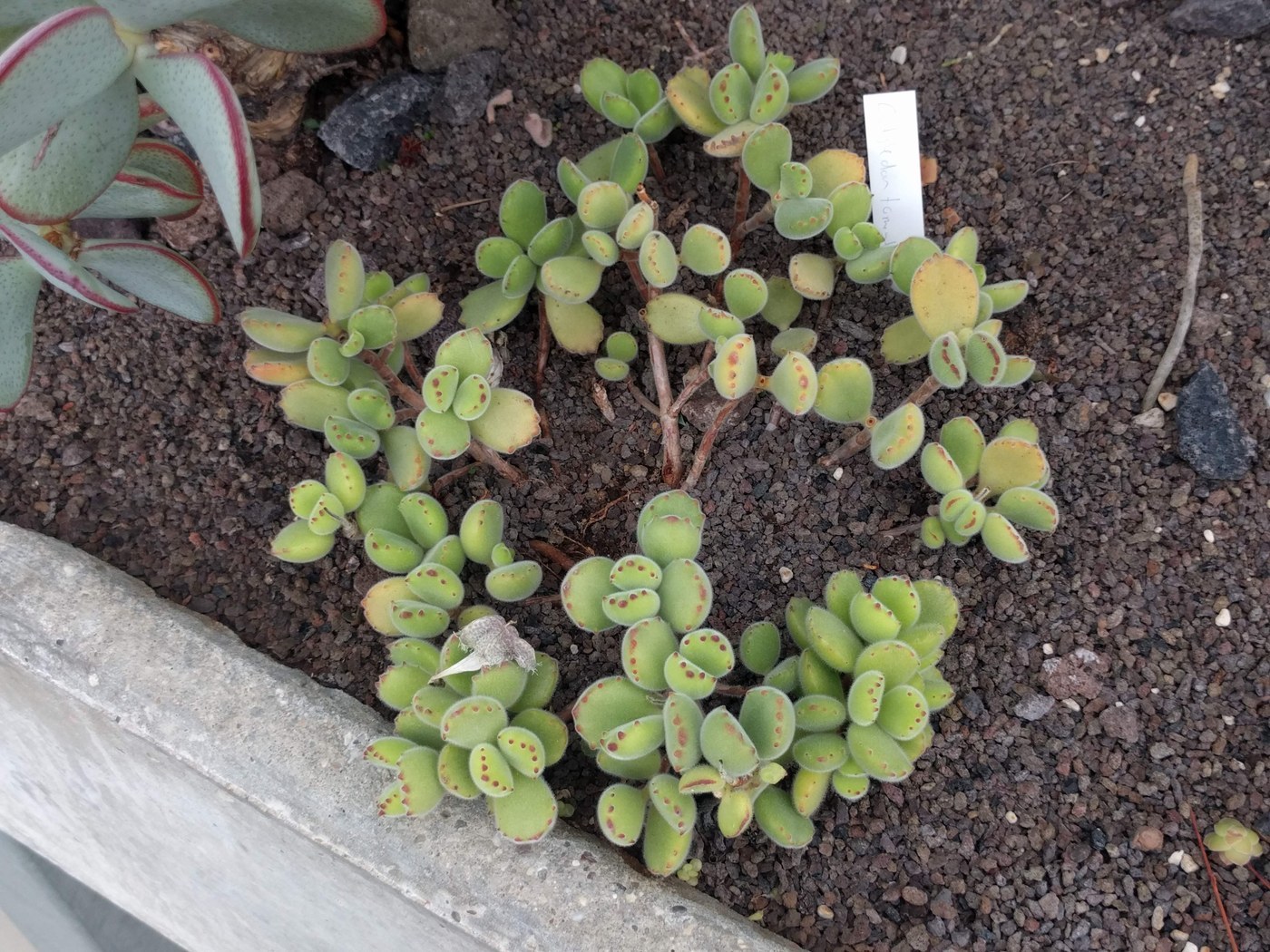
Bear's Paw (Cotyledon tomentosa) is a charming shrubby succulent prized for its plump, fuzzy leaves tipped with reddish 'claws.' It rewards steady bright light and a lean, fast-draining root run.
Light
Give Bear's Paw bright light with a few hours of gentle direct sun, ideally at a south- or east-facing window. Strong light keeps the leaves compact and encourages the deep tooth coloring at the leaf tips. Insufficient light causes stretched, floppy stems and pale, widely spaced leaves. Acclimate gradually to intense midday sun outdoors to avoid scorching the felted surface.
Water
Water sparingly and only after the soil has dried out completely. Use the soak-and-dry method: drench thoroughly, let excess drain, then wait until the mix is bone dry before watering again. The fuzzy leaves hold moisture, so this plant is far more tolerant of drought than of excess. In the cool, low-light months reduce watering dramatically. Avoid letting water sit in the leaf fuzz for long periods, which can invite rot; water at the soil line when possible.
Soil & Potting
Use a gritty, fast-draining cactus and succulent mix amended with extra perlite, pumice, or coarse sand so roughly half the volume is mineral grit. Always plant in a container with a drainage hole; terracotta is ideal because it wicks moisture from the soil. Shallow-to-medium depth pots suit the modest root system.
Humidity & Temperature
Bear's Paw prefers average-to-dry household humidity and dislikes damp, stagnant air. Warm room temperatures suit it best during active growth, while it appreciates cooler nights in winter. Protect it from frost and from cold drafts. Good airflow keeps the felted foliage healthy.
Feeding
Feed lightly, no more than once every four to six weeks during spring and summer, using a diluted low-nitrogen succulent fertilizer. Overfeeding produces weak, soft growth. Do not fertilize during winter dormancy.
Propagation
Propagate most reliably from stem cuttings. Snip a healthy stem tip, let the cut end callus over for a couple of days, then insert it into barely moist gritty mix. Roots typically form within a few weeks. Leaf propagation is less dependable for this species, so stem cuttings are the preferred route.
Repotting / Pruning
Repot only every couple of years or when the plant becomes crowded, doing so in spring. Let the soil dry before repotting and handle the fuzzy leaves gently to avoid bruising. Prune leggy stems to encourage a bushier habit; the trimmings can be used as cuttings.
Common Problems & Pests
Overwatering and poor drainage are the leading causes of trouble, showing up as mushy stems and translucent leaves. Watch for mealybugs nestled in leaf joints and the occasional aphid; treat with insecticidal soap or a dab of alcohol on a cotton swab. Etiolation (stretching) signals too little light.
Seasonal Care Tips
Growth is strongest in spring and fall. Water more generously (but still let the soil dry) during these active periods. In winter keep the plant cool, bright, and nearly dry, resuming normal care as light levels rise in spring.
Frequently asked questions
Why are the leaves on my Bear's Paw shriveling?
Slightly wrinkled leaves usually mean the plant is thirsty; a thorough watering should plump them back up. If leaves are mushy and translucent instead, that points to overwatering, so let the soil dry fully.
Why is my Bear's Paw stretching and getting leggy?
Stretched stems with widely spaced leaves indicate too little light. Move it to a brighter spot with some gentle direct sun and prune the leggy growth to encourage a compact shape.
How often should I water Bear's Paw?
Only when the soil has dried out completely, roughly every couple of weeks in warm months and much less in winter. This succulent tolerates drought far better than soggy soil.
Can I grow Bear's Paw outdoors?
Yes, in warm frost-free climates it thrives outside in bright light. Acclimate it gradually to direct sun and bring it in or protect it before any frost.