Bear's Paw
Cotyledon tomentosa
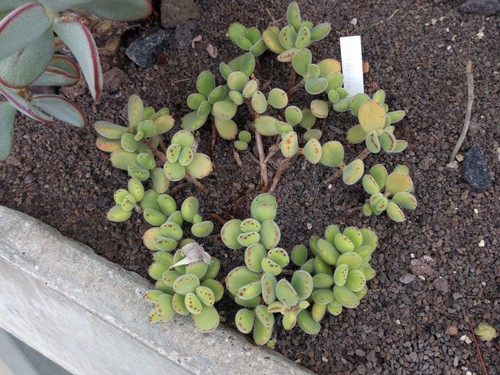
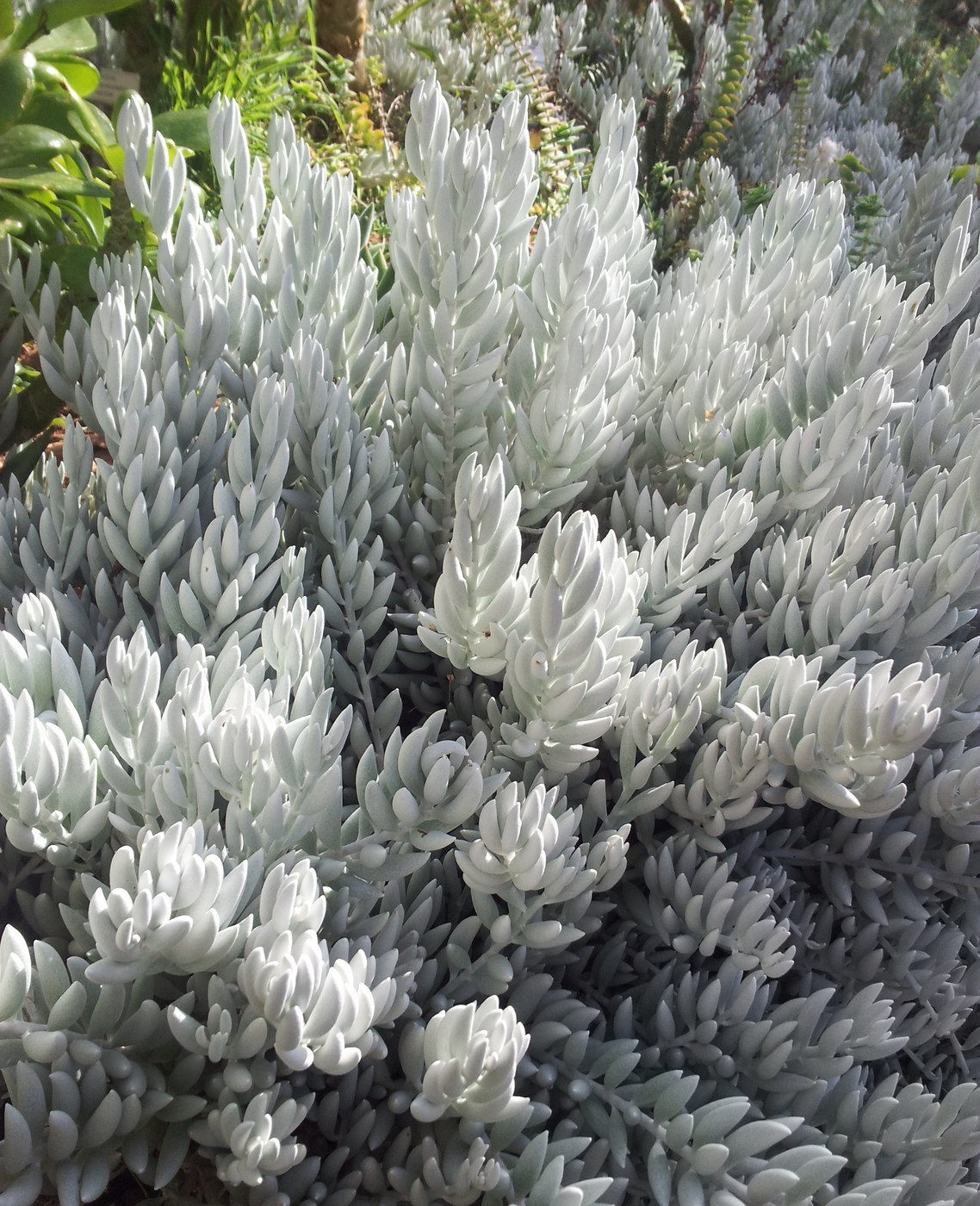
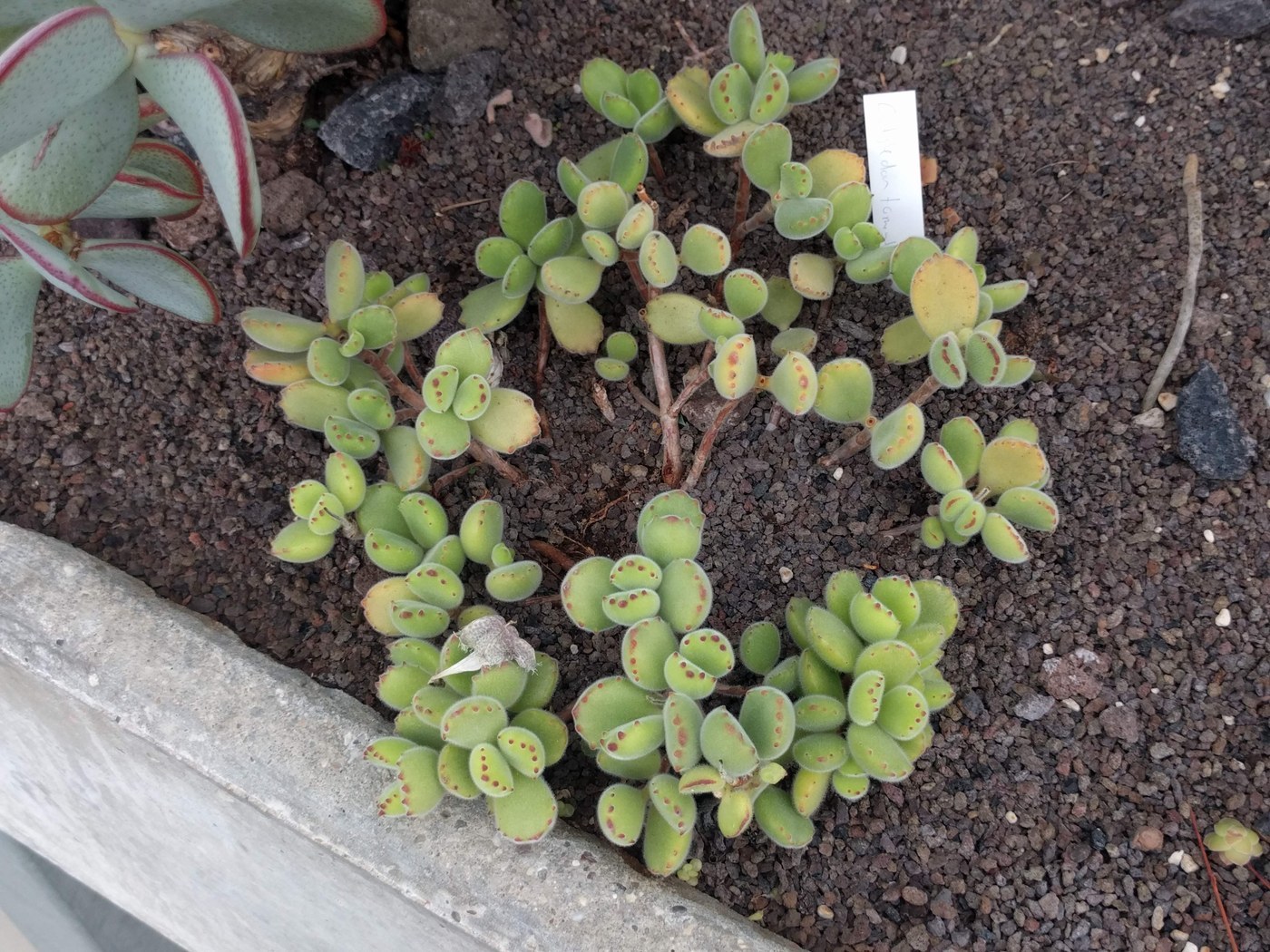
Bear's paw is a fuzzy succulent named for its plump, fleshy leaves tipped with tooth-like 'claws.' The chubby, hairy leaves and reddish tips give it a paw-like, animal appearance.
- Light
- Bright light with some direct sun
- Water
- Sparingly; let soil dry fully
- Difficulty
- Moderate
Got a plant like this?
Identify any plant from a photo, free.
Overview
Bear's paw (Cotyledon tomentosa) is a charming small shrub-like succulent whose thick, hairy leaves end in a row of pointed, reddish 'teeth,' resembling a bear's clawed paw. The soft fuzz covering the leaves adds to its appeal.
It forms a compact, branching plant, ideal for small pots and succulent collections. In good light the leaf tips deepen to a rich red, intensifying the paw-like look.
With bright conditions and careful watering it can produce clusters of orange, bell-shaped flowers in spring.
How to identify it
- Plump, fleshy, fuzzy leaves covered in fine hairs
- Each leaf tipped with several pointed, tooth-like 'claws,' often reddish-tipped
- Compact, branching, shrubby growth habit
- Reaches roughly 12 inches tall in a pot
- Orange to red, bell-shaped, hanging flowers in spring on mature plants
Care & growing
- Light: Bright light with several hours of direct sun to keep it compact and intensify the red tips
- Water: Water sparingly when the soil is fully dry; very sensitive to overwatering
- Soil: Gritty, fast-draining succulent mix
- Temperature: Warm; protect from frost, keep above about 45 F
- Feeding: Light feeding during the growing season
- Propagation: From stem cuttings; leaf propagation is unreliable
Habitat & origin
Native to South Africa, where it grows in rocky, arid scrubland in the Eastern Cape region.
It is widely grown as an indoor and outdoor ornamental succulent in mild climates, popular in dish gardens and on bright windowsills.
Frequently asked questions
Why are the leaves losing their red tips?
The red coloring fades with insufficient light. Give it more direct sun to keep the claw-like tips vivid.
Can I propagate from a single leaf?
Bear's paw is difficult to propagate from leaves. Stem cuttings are far more reliable.
Why are leaves dropping?
Leaf drop is commonly caused by overwatering or sudden environmental stress. Let the soil dry fully between waterings.
Bear's Paw guides
In-depth guides for identifying, growing, and caring for Bear's Paw.