Star Cactus
Astrophytum asterias
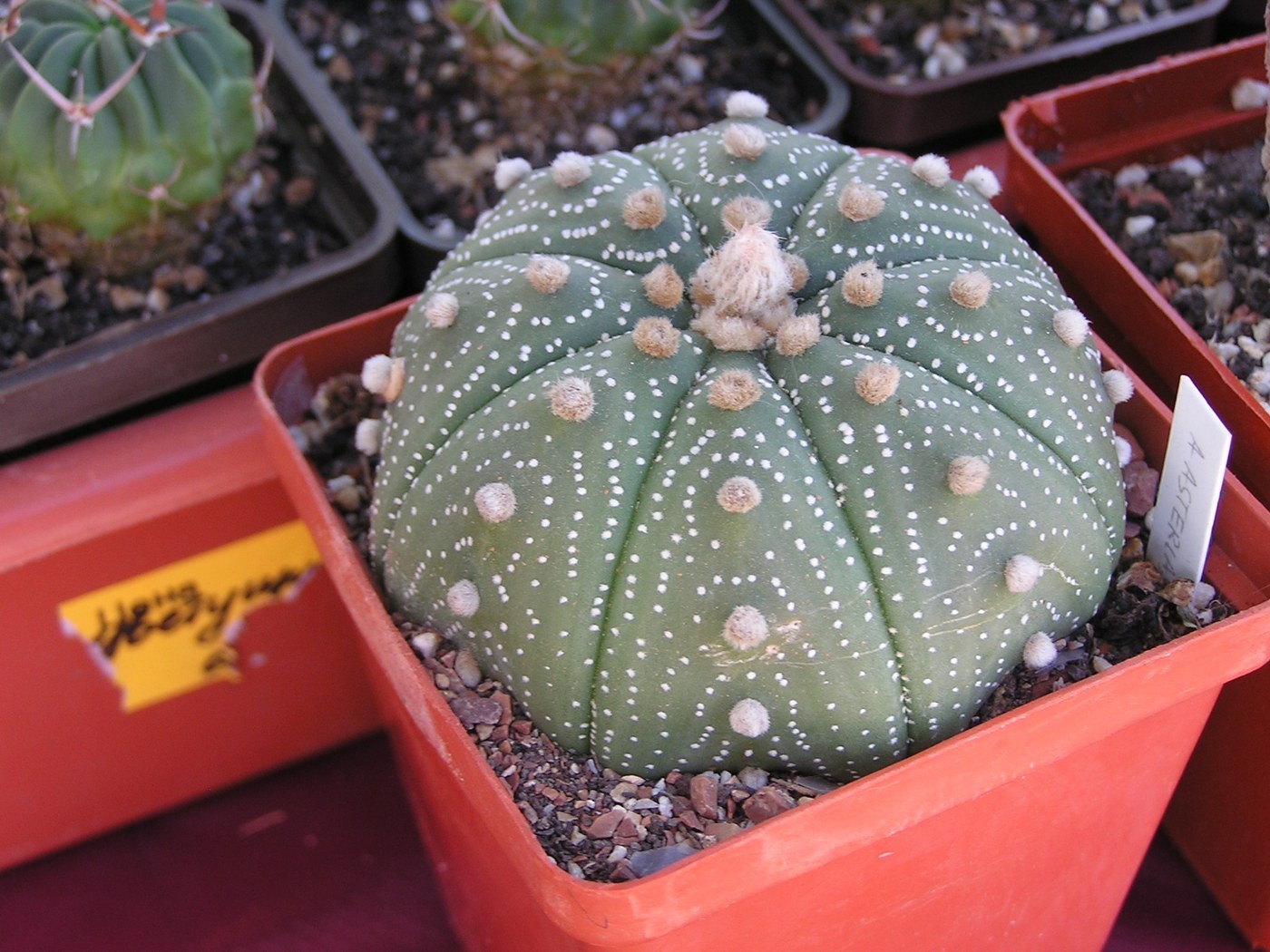
A small, flattened, spineless cactus divided into neat segments that resemble a star or sand dollar, dotted with white woolly flecks. It bears yellow flowers with red centers and is a coveted collector's plant.
- Light
- Bright light to some direct sun
- Water
- Sparingly; dry between waterings
- Difficulty
- Moderate
Got a plant like this?
Identify any plant from a photo, free.
Overview
The Star Cactus is a low, disc-shaped, spineless cactus whose body is divided into (typically eight) flat ribbed segments, giving it a striking star or sand-dollar appearance when viewed from above. Each segment is dotted with small white woolly tufts.
It produces glossy yellow flowers with orange-red throats from the woolly crown in spring and summer. Its lack of spines and tidy geometry make it a favorite among cactus collectors.
The wild species is rare and protected in its limited native range, but it is widely propagated horticulturally and is the parent of many prized cultivars.
How to identify it
- Body: Flattened, round, disc-like, divided into about 8 ribbed segments forming a star pattern
- Surface: Green to grey-green dotted with small white woolly flecks (areoles)
- Spines: None - spineless
- Flowers: Yellow with an orange to red center, opening from the crown in spring and summer
- Size: Small, often only 2-6 in (5-15 cm) across; slow growing
Care & growing
Light: Bright light with some gentle direct sun; avoid scorching midday rays.
Water: Water only when soil is fully dry; very prone to rot if overwatered. Keep dry in winter.
Soil: Extremely gritty, mineral, fast-draining mix; good drainage is critical.
Temperature: Warm with a cool, dry winter rest.
Feeding: Light, occasional low-nitrogen cactus feed in summer.
Propagation: Usually from seed, as it rarely offsets; grafting is also used by collectors.
Habitat & origin
Astrophytum asterias is native to a small region of southern Texas and adjacent northeastern Mexico, where it grows low to the ground in sparse, gravelly desert scrub.
It is endangered in the wild due to habitat loss and overcollection, but is extensively propagated by enthusiasts and nurseries worldwide.
Frequently asked questions
Why does my Star Cactus have no spines?
It is naturally spineless. The flat segments and white woolly flecks, not spines, give it its distinctive star or sand-dollar look.
Is the Star Cactus rare?
The wild species is endangered and protected, but nursery-propagated plants are common and the responsible choice for collectors.
Why did my plant rot?
Almost always overwatering or poor drainage. This cactus needs a very gritty mix and water only when the soil is completely dry.
When does it flower?
It produces yellow, red-centered flowers from its crown in spring and summer once mature.
Star Cactus guides
In-depth guides for identifying, growing, and caring for Star Cactus.
How to Care for Star Cactus
Grow the geometric, spineless Astrophytum asterias with bright light, a gritty mineral mix, and careful dry-between-watering timing in this care guide.
Star Cactus Identification Guide
Identify the Star Cactus (Astrophytum asterias) by its flat, spineless, button-shaped body divided into segments like a sand dollar.