Woolly Senecio
Senecio haworthii
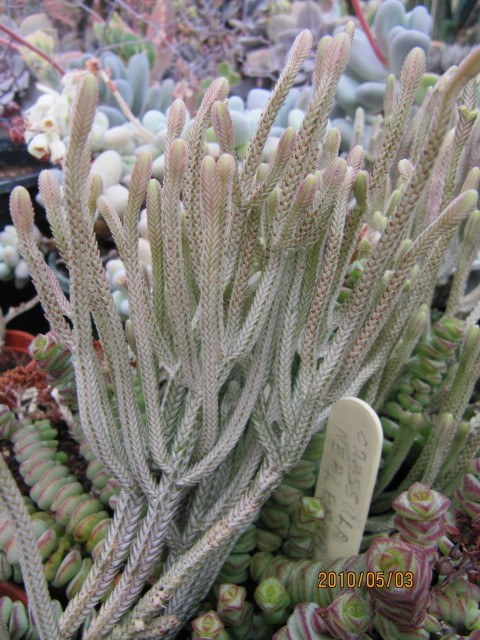
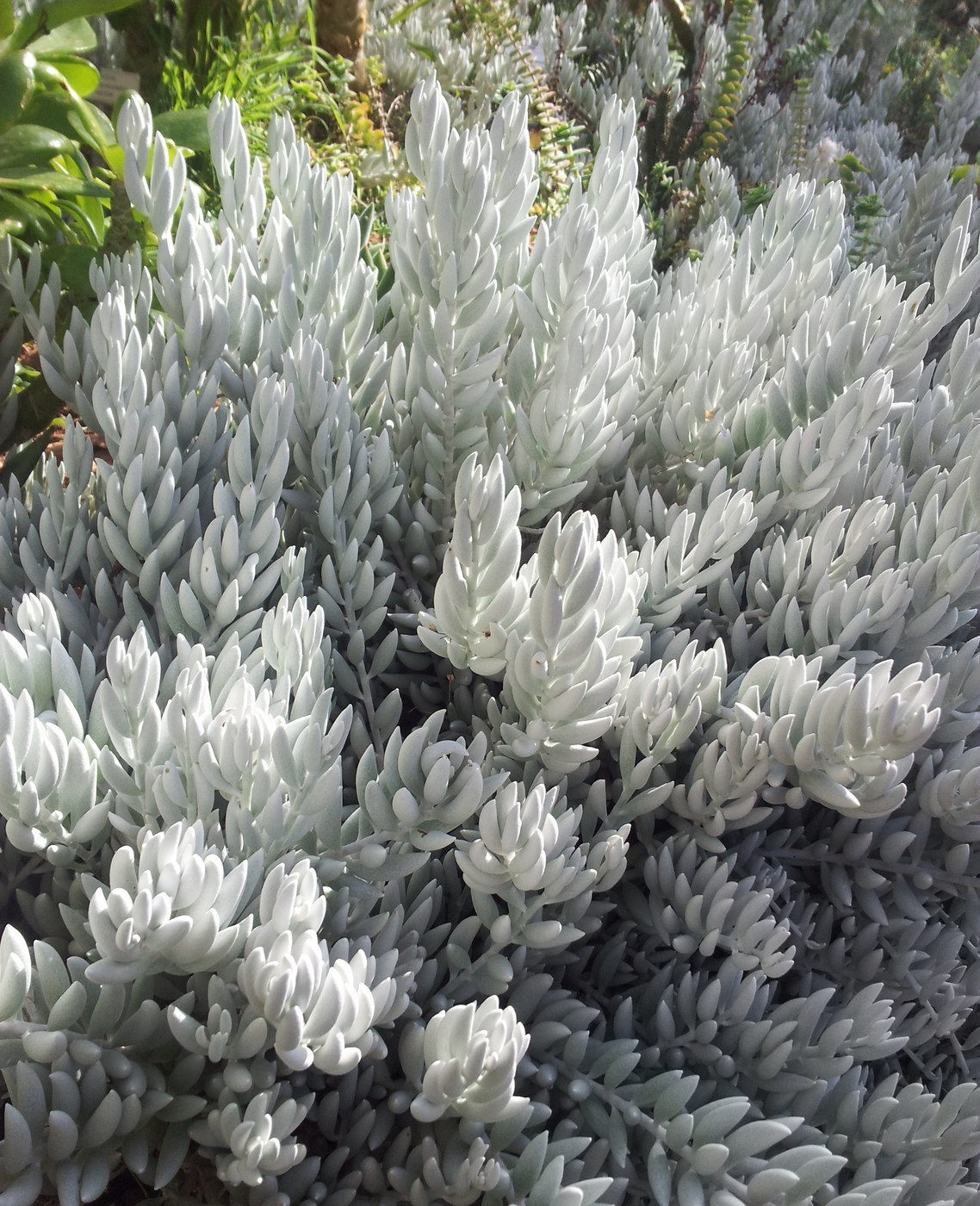
A striking succulent whose cylindrical leaves are wrapped in dense, silvery-white felt, like little woolly cocoons. The bright white woolly coating makes it one of the whitest of all succulents.
- Light
- Full sun to bright light
- Water
- Very sparingly; dry out fully
- Difficulty
- Hard
Got a plant like this?
Identify any plant from a photo, free.
Overview
Woolly Senecio is one of the most distinctive of all succulents, its upright, spindle-shaped leaves cloaked in a thick, snowy-white felt of fine hairs that look like spun wool or silk cocoons. The dense coating reflects intense sun and conserves moisture in its harsh native climate.
It forms a small, branching shrublet of these felted, finger-like leaves. The wool is so bright and complete that the plant reads as pure white from a distance.
Beautiful but demanding, it resents excess moisture and humidity, making it one of the trickier succulents to keep long-term — a prized challenge for collectors.
How to identify it
- Cylindrical, spindle-shaped leaves standing upright, densely wrapped in white wool
- Overall brilliant silvery-white appearance, among the whitest of succulents
- Small, branching shrubby habit, typically under 12 in (30 cm)
- The felt is thick and intact, hiding the green leaf body beneath
- Bears small yellow to orange thistle-like flower heads (it's in the daisy family)
Care & growing
Light: Full sun to very bright light is essential to maintain the dense white wool and compact form.
Water: Water very sparingly, allowing the soil to dry out completely; it is extremely rot-prone and hates moisture sitting on the leaves.
Soil: Extremely gritty, fast-draining mineral mix with plenty of pumice or grit.
Temperature: Warm, dry, airy conditions; protect from frost and avoid humidity and stagnant air.
Feeding: Minimal — very dilute feeding rarely, if at all.
Propagation: From stem cuttings (callus well before planting) or seed; cuttings can be slow and finicky to root.
Habitat & origin
Native to the arid Great Karoo region of South Africa, where it grows on hot, sun-baked, rocky slopes with very low rainfall and excellent drainage.
The brilliant white wool is an adaptation to extreme sun and aridity, reflecting heat and reducing water loss. In cultivation it needs dry, airy, mineral conditions that mimic this habitat, and is grown mainly by specialist collectors.
Frequently asked questions
Why is my Woolly Senecio rotting or losing its wool?
Almost always from too much water or humidity. It needs a very gritty mineral mix, sparing watering with full dry-out, strong sun, and good airflow.
Why is it so hard to keep alive?
It comes from an extremely arid, sunny habitat and is intolerant of moisture, humidity, and low light. Replicating dry, bright, airy conditions is the key and the challenge.
Can I get the wool to come back if it rubs off?
New growth emerges freshly woolly, but damaged older leaves don't regrow their felt, so handle the plant as little as possible.
Woolly Senecio guides
In-depth guides for identifying, growing, and caring for Woolly Senecio.
How to Care for Woolly Senecio
Grow Woolly Senecio (Senecio haworthii), a felted white succulent: bright sun, very sparse watering and gritty, fast-draining soil.
Woolly Senecio Identification Guide
Recognize the Woolly Senecio (Senecio haworthii) by its cylindrical, spindle-shaped leaves wrapped in a dense, felted, pure-white wool.