
Woolly Senecio Identification Guide
Recognize the Woolly Senecio (Senecio haworthii) by its cylindrical, spindle-shaped leaves wrapped in a dense, felted, pure-white wool.
Read the full Woolly Senecio encyclopedia entry →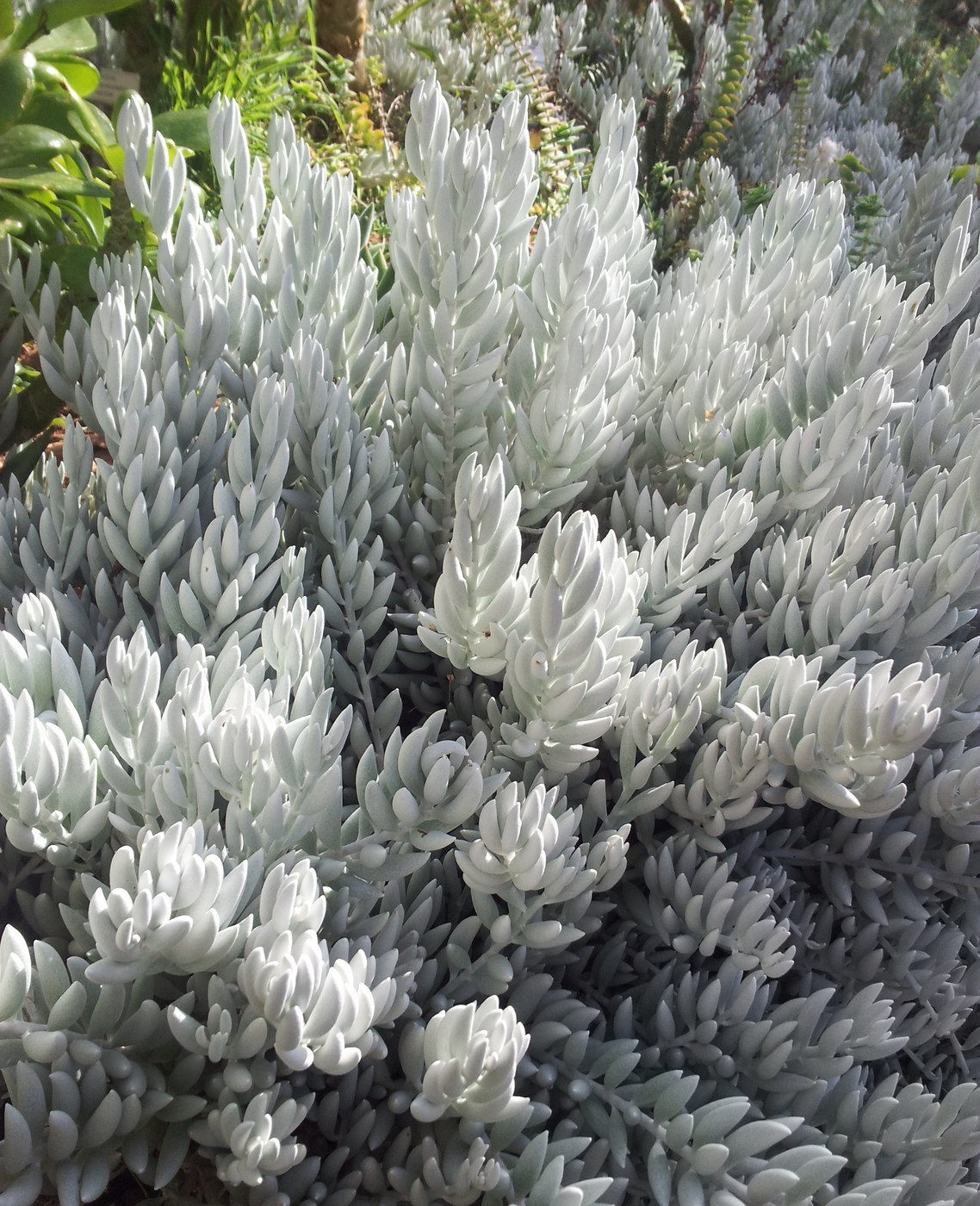
Key Identifying Features
Woolly Senecio (Senecio haworthii, also called Cocoon Plant) is a small shrubby succulent that looks dipped in white felt. Look for:
- Cylindrical, spindle-shaped (fusiform) leaves tapering at both ends.
- A dense, snow-white woolly coating over the entire leaf.
- A small, branching, upright shrub form.
Leaves & Stems
The leaves are fat, fleshy, and spindle-like — pointed at both ends and swollen in the middle, each typically 1-2 in (2.5-5 cm) long. Their entire surface is wrapped in a thick mat of brilliant white, felty hairs (tomentum) that gives the plant a cottony, cocoon-like look and reflects intense desert sun. The wool is so dense the green tissue barely shows. Leaves point upward and outward around the stems.
Stems are short, branching, and also woolly-white, forming a compact upright shrublet usually under 12 in (30 cm) tall. The pure-white, felted, spindle-leaved look is essentially unmistakable.
Flowers & Fruit
In the growing season it produces small, rounded yellow-to-orange flower heads typical of the daisy family (the genus is related to ragworts and groundsels). The blooms sit on short stalks above the white foliage and are secondary to the dramatic leaves.
How to Tell It Apart from Look-Alikes
- Senecio scaposus: also white-woolly and spindle-leaved, but its wool tends to peel/flake off older leaves revealing green, and leaves are often flatter at the tip; S. haworthii stays uniformly densely white.
- Cotyledon tomentosa (Bear Paw): fuzzy but with flat, paw-shaped leaves bearing reddish teeth, not white cylindrical spindles.
- Tylecodon / Kalanchoe tomentosa (Panda Plant): fuzzy gray-green leaves with brown-edged tips, not pure white spindles.
- Senecio rowleyanus (String of Pearls): trailing with round bead leaves and no wool.
Where You'll Find It
Native to arid parts of South Africa's Karoo, it is a prized collector succulent grown for its striking white wool. Hardy in USDA 9-11; elsewhere a potted plant demanding bright light, very gritty fast-draining soil, and careful, sparse watering from below (overhead water mats the wool and invites rot). It is a winter-season grower that rests in summer.
Quick ID Checklist
- Spindle-shaped leaves pointed at both ends
- Dense pure-white felted wool over the whole plant
- Small branching upright shrublet
- Yellow/orange daisy-type flower heads
- Wool stays uniformly white (vs. flaking in S. scaposus)
Frequently asked questions
What is the white fuzz on the Woolly Senecio?
It is a dense felt of fine white hairs (tomentum) covering every leaf. This wool reflects harsh sunlight and reduces water loss in its arid native habitat, and gives the plant its 'cocoon' look.
Should I water it from above?
No. Water at the soil level. Wetting the white wool mats it, causes it to discolor or peel, and can lead to rot. Use gritty, fast-draining soil and water sparingly.
How do I tell it from Senecio scaposus?
S. scaposus tends to shed its wool from older leaves, revealing green tissue, and has flatter leaf tips. S. haworthii stays uniformly, densely white over spindle-shaped leaves.
Is it a cactus?
No. It is a succulent in the daisy family (Asteraceae) and produces small yellow-orange daisy-like flower heads. It has true leaves, unlike cacti.